

Southern Field Cricket - Gryllus bimaculatus
African Field Cricket
Mediterranean Field Cricket
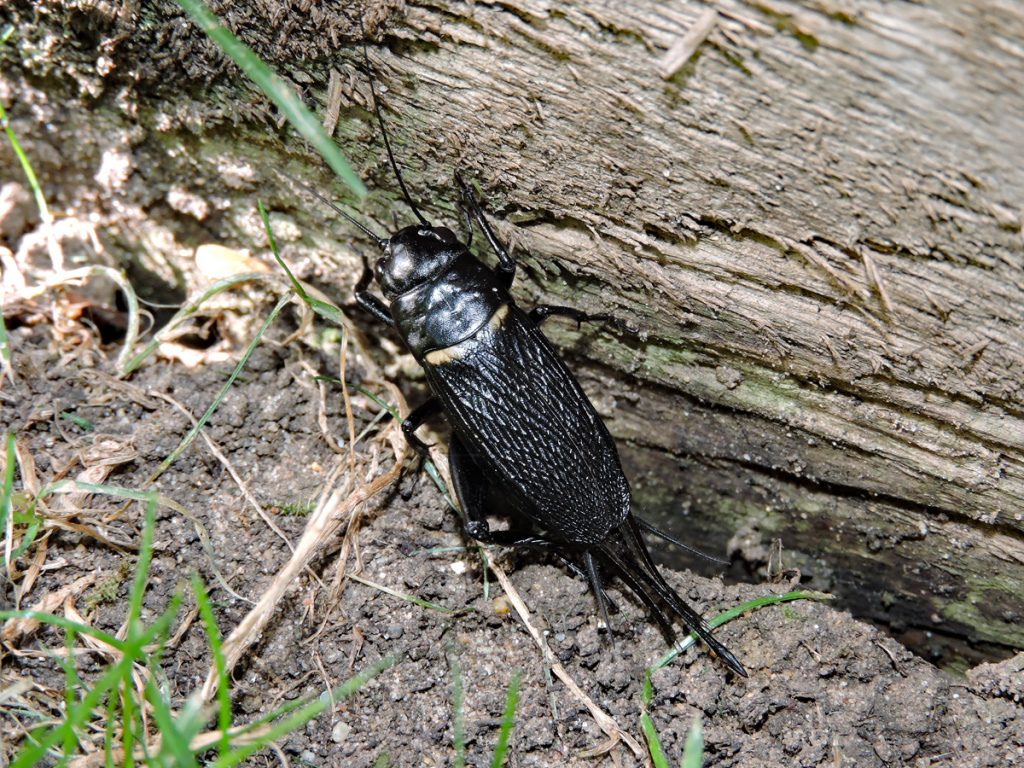
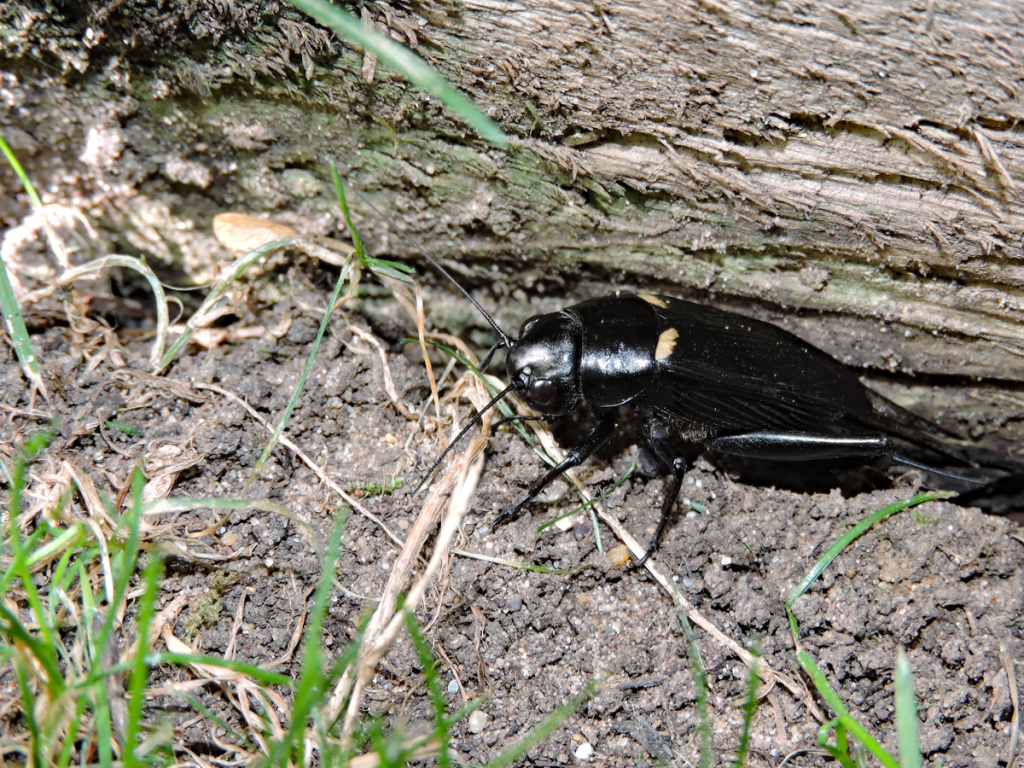
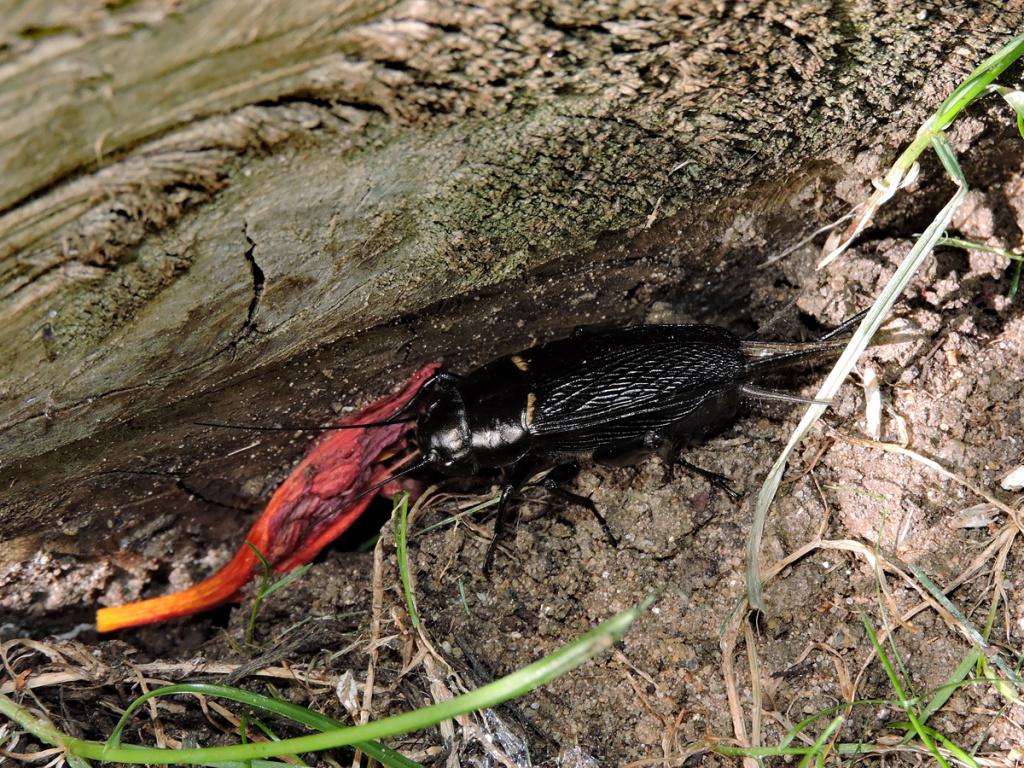
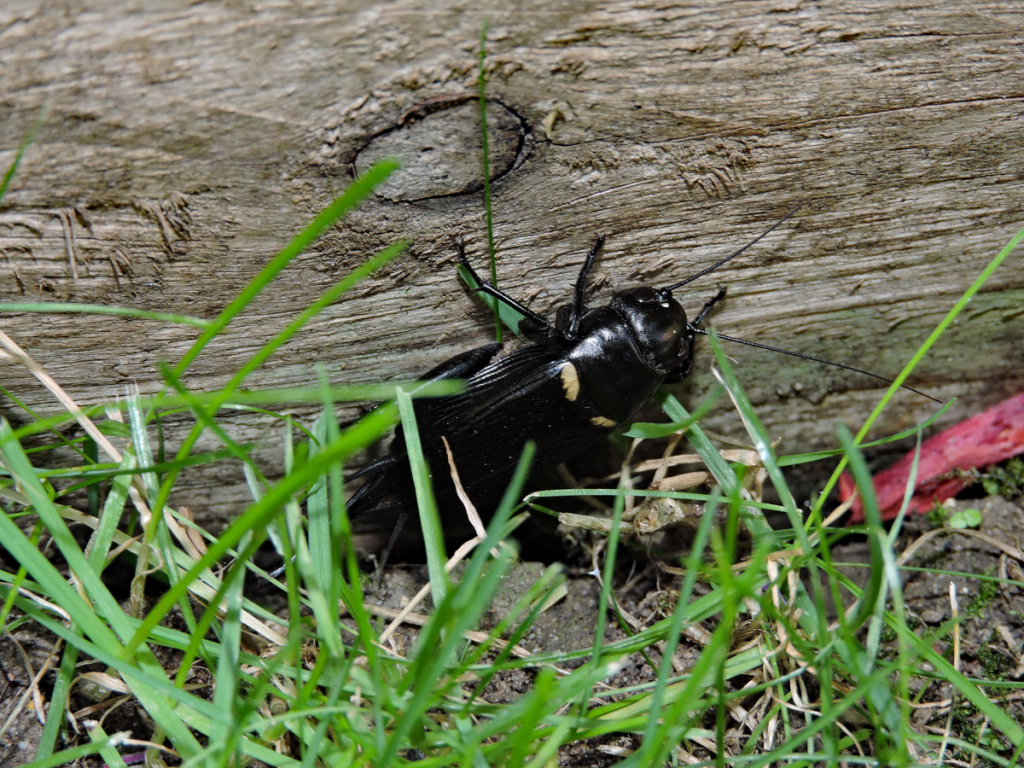
A distinctive Field Cricket. The elytra are black with a yellow spot at the base of each elytron.

The species is popular for use as a food source for insectivorous animals like spiders and reptiles kept as pets or in zoos. It is most likely to be encountered as an escapee, although it may now be established in southern England.
Most likely to be encountered in the warmer months of the year.
Females have a tubular organ at the rear, known as an ovipositor, which is used to lay eggs into the ground. They lay their eggs into humid soil or sand and hatchlings emerge from the eggs in about two weeks. These crickets hide under logs, in grasses, and in crevices. They also create homes by digging holes in the ground or live in holes created by other animals.
The spread of records suggest that it may be established in southern England.
Rarely recorded in Leicestershire and Rutland.
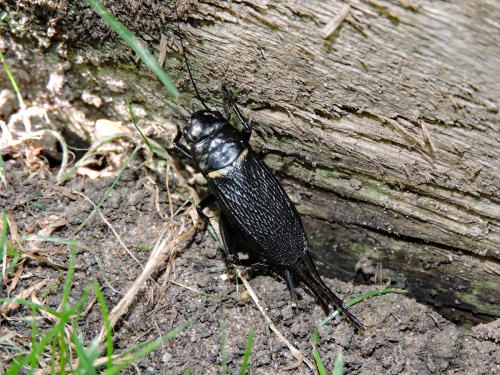 Mark Skevington
Whetstone
24 August 2025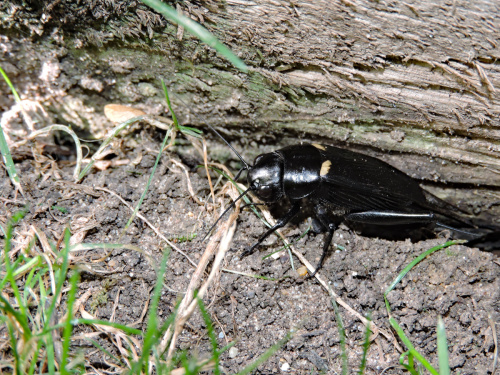 Mark Skevington
Whetstone
24 August 2025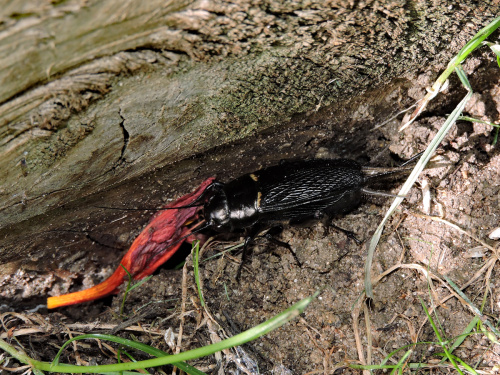 Mark Skevington
Whetstone
24 August 2025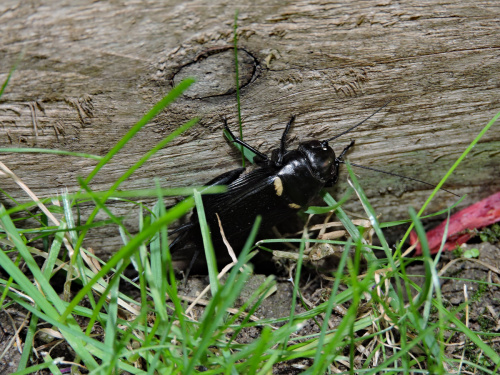 Mark Skevington
Whetstone
24 August 2025
Leicestershire & Rutland Map
Enter a town or village to see local records
MAP KEY:
Yellow squares = NBN records (all known data)
Coloured circles = NatureSpot records: 2025+ | 2020-2024 | pre-2020
UK Map
Species profile
- Common names
- Southern Field Cricket
- Species group:
- insect - orthopteran
- Kingdom:
- Animalia
- Order:
- Orthoptera
- Family:
- Gryllidae
- Records on NatureSpot:
- 1
- First record:
- 24/08/2025 (Skevington, Mark)
- Last record:
- 24/08/2025 (Skevington, Mark)
Total records by month
% of records within its species group
10km squares with records
The latest images and records displayed below include those awaiting verification checks so we cannot guarantee that every identification is correct. Once accepted, the record displays a green tick.
In the Latest Records section, click on the header to sort A-Z, and again to sort Z-A. Use the header boxes to filter the list.