

Grey Poplar - Populus alba x tremula = P. x canescens
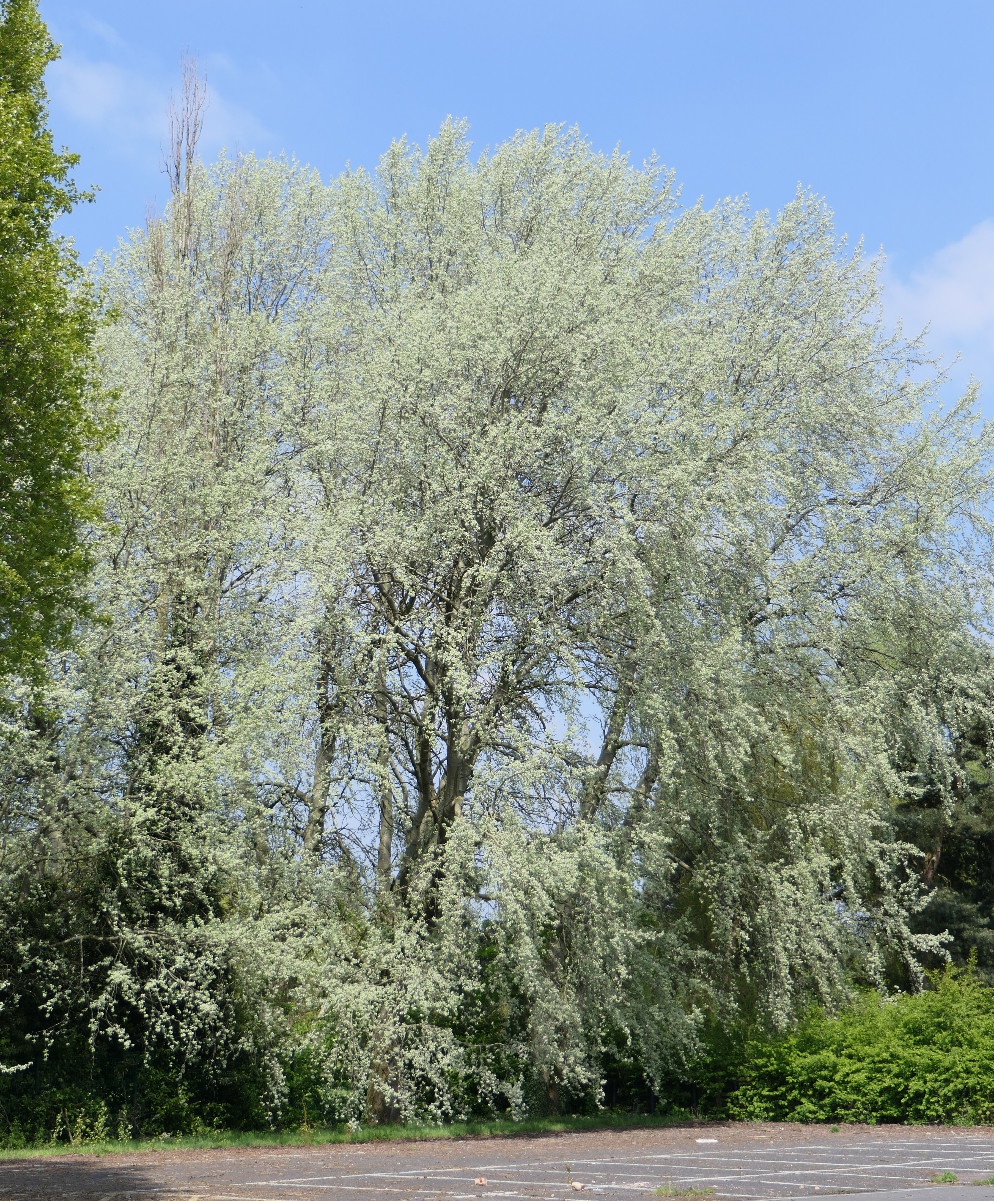
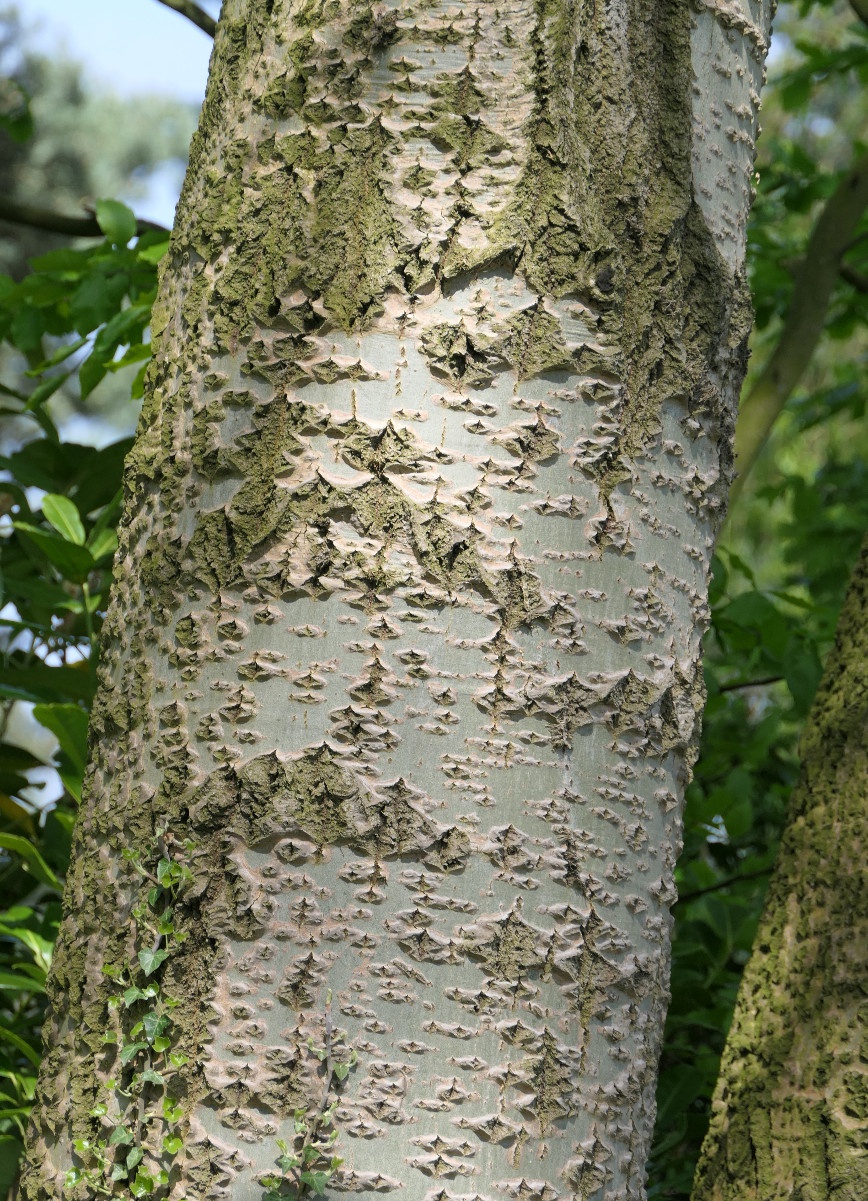
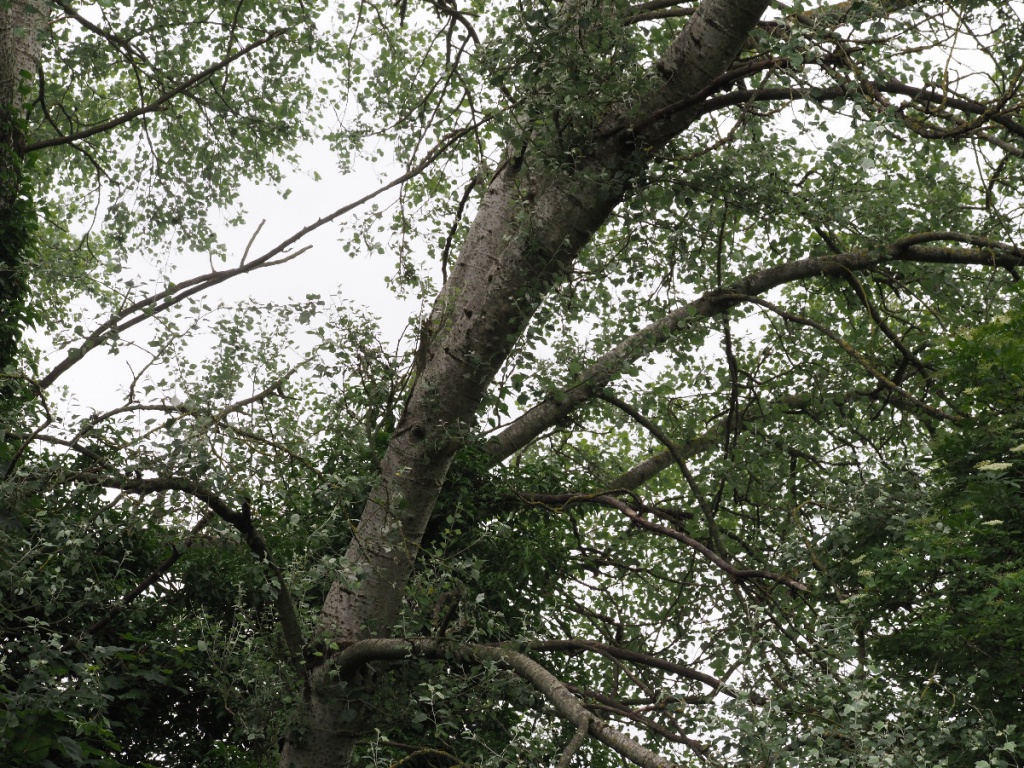
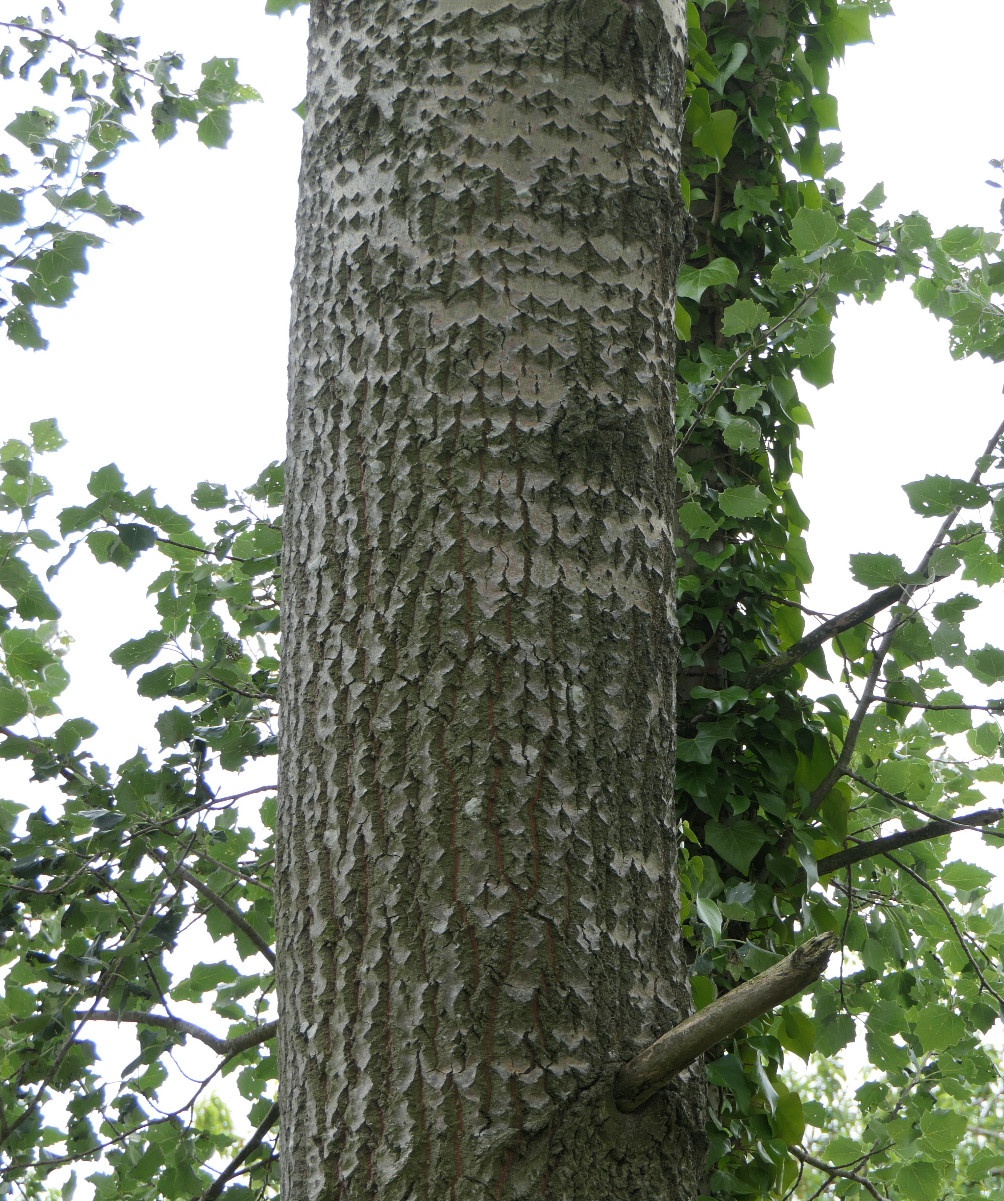
A natural hybrid between White Poplar and Aspen, and rather variable but intermediate in character between the two. It exhibits 'hybrid vigour', and can outgrow both parent species, becoming a large tree to 40 metres or more.
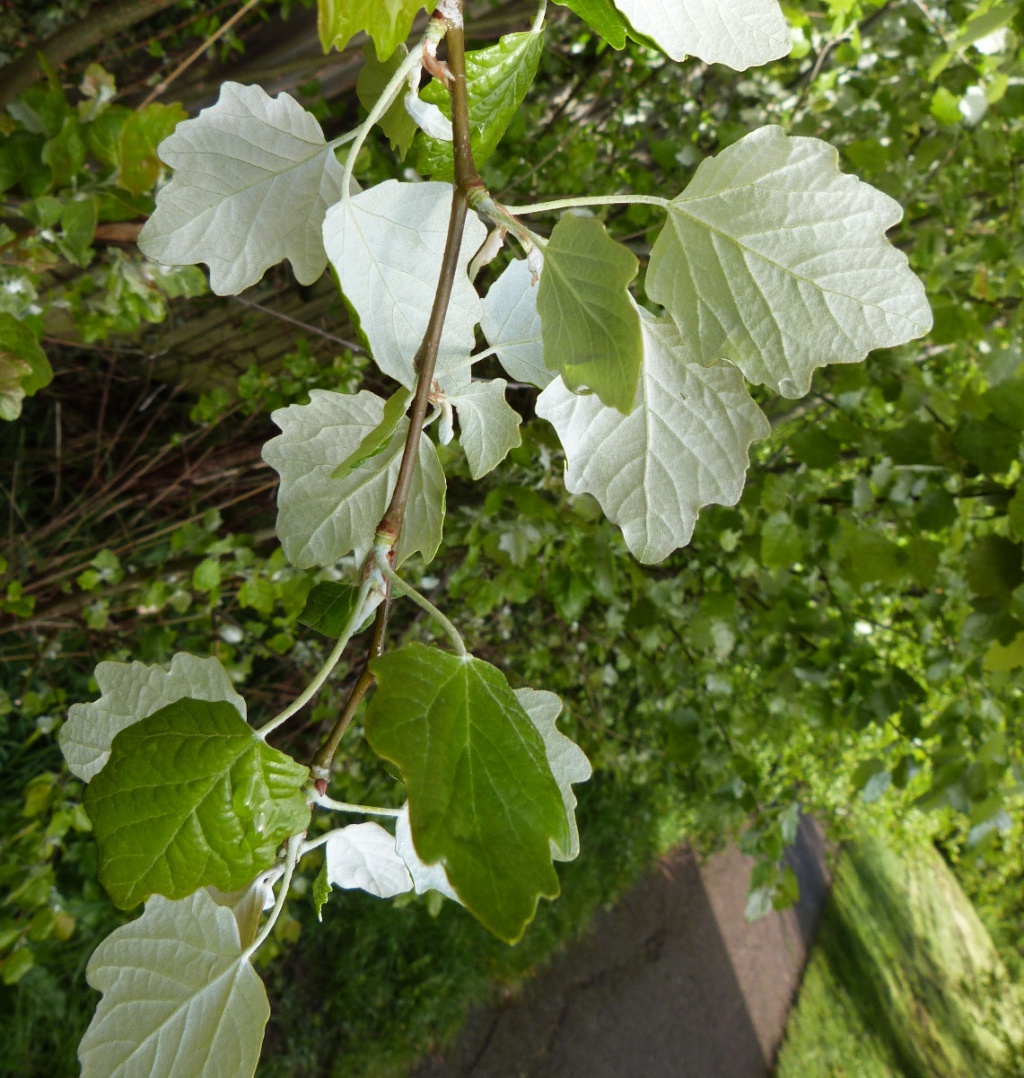
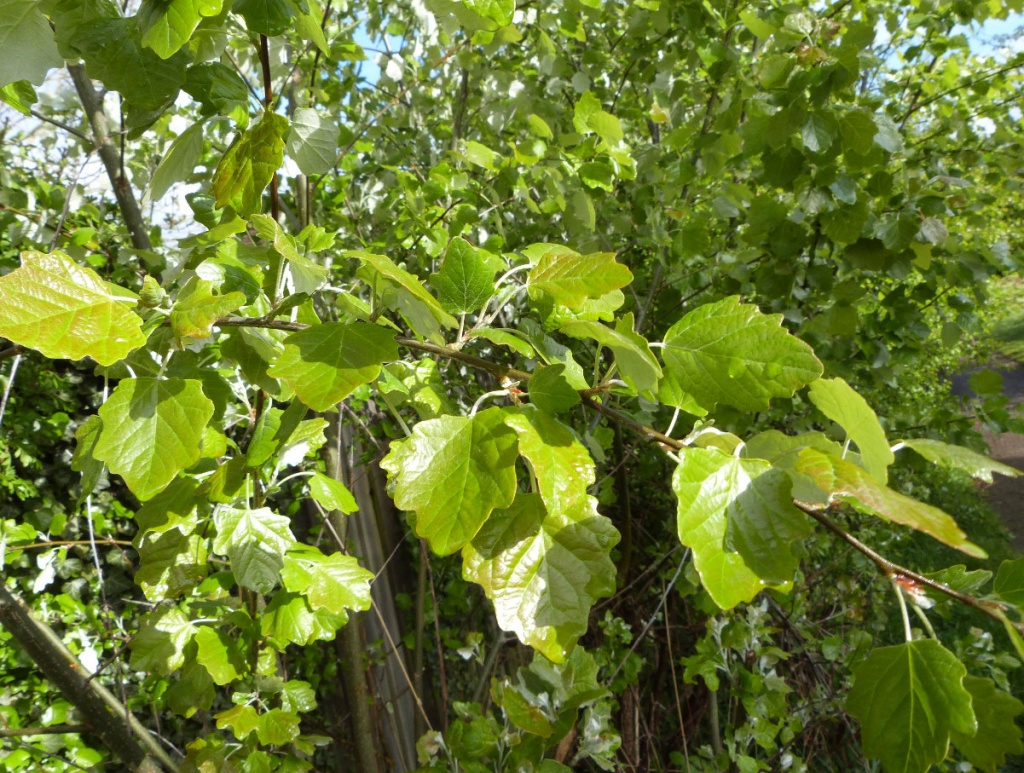
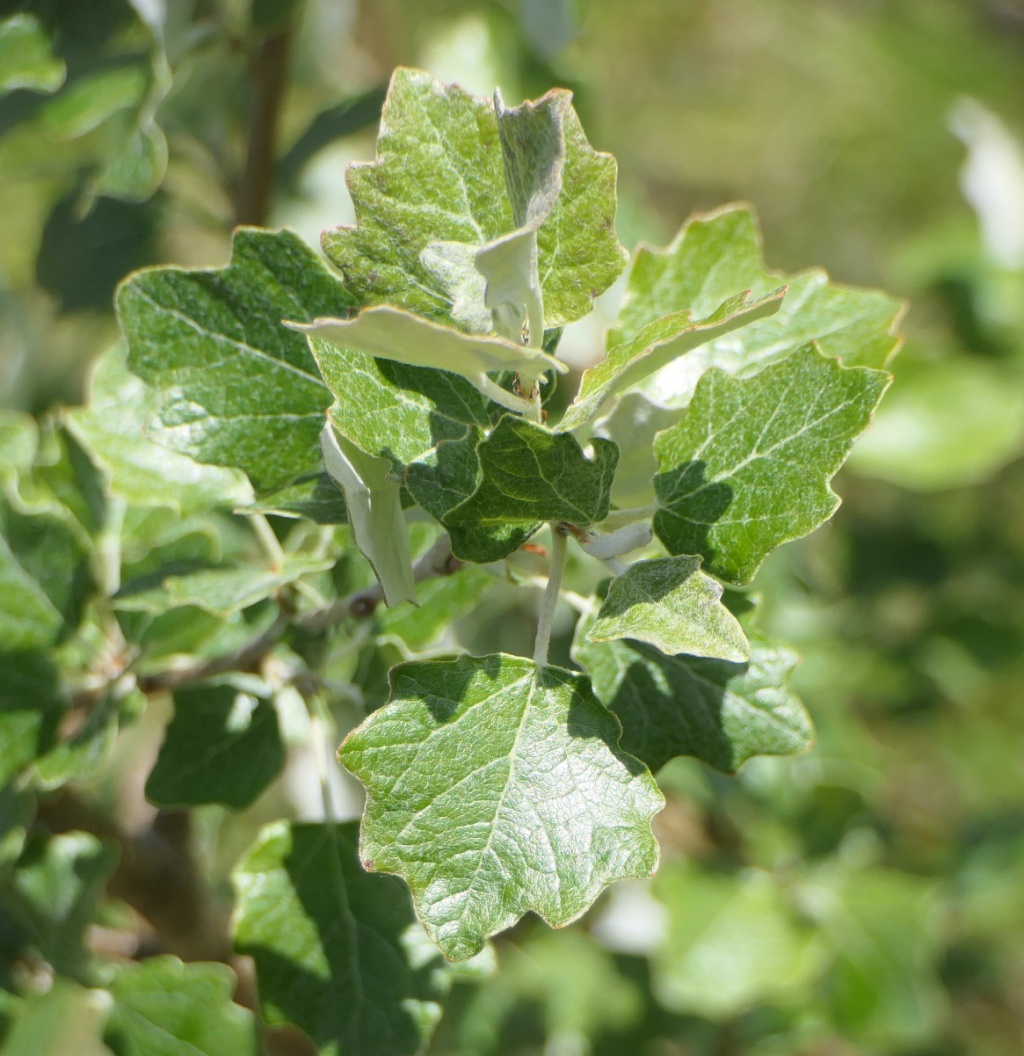
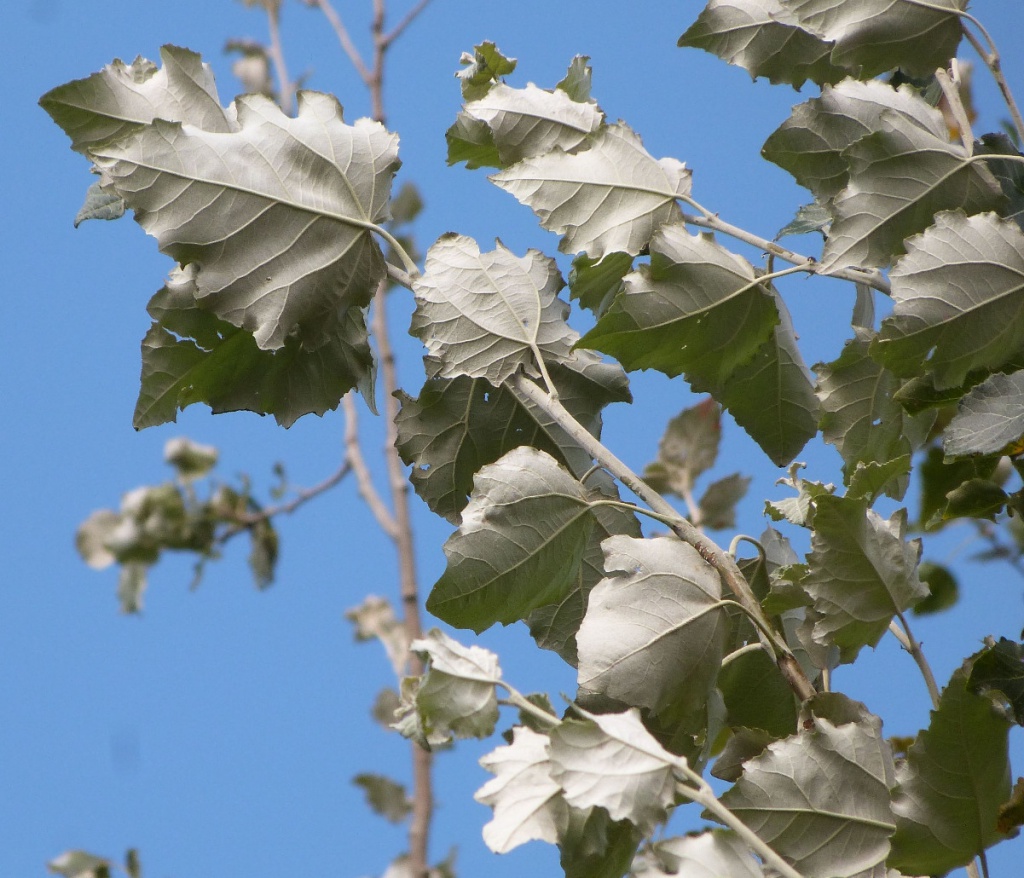
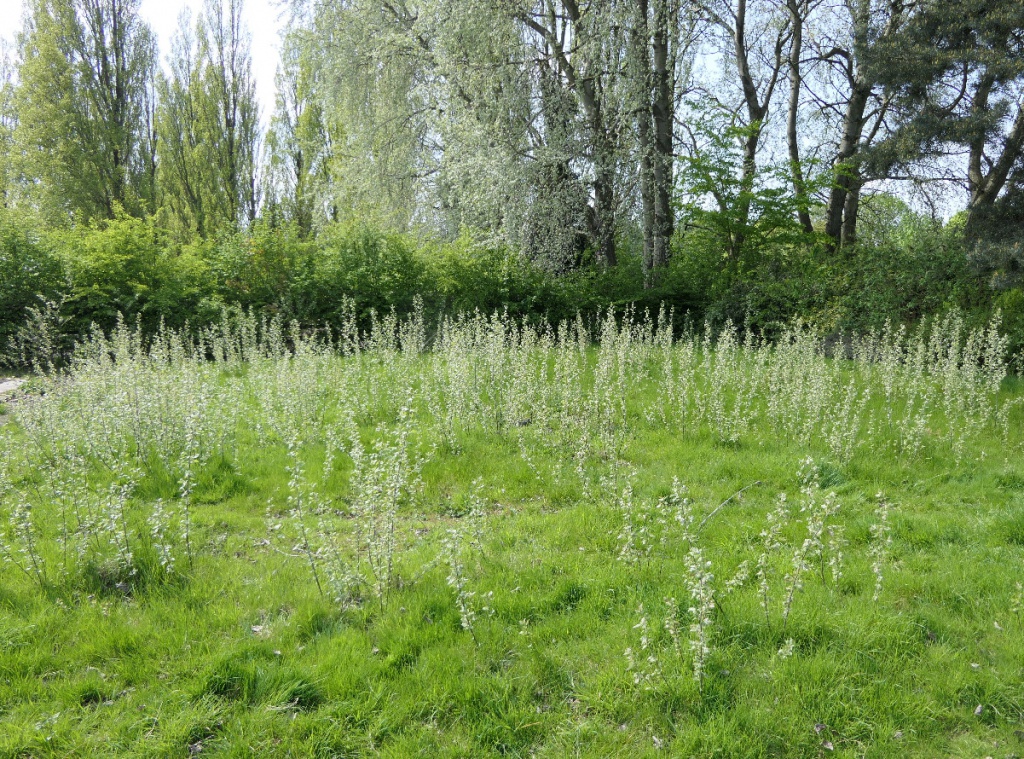
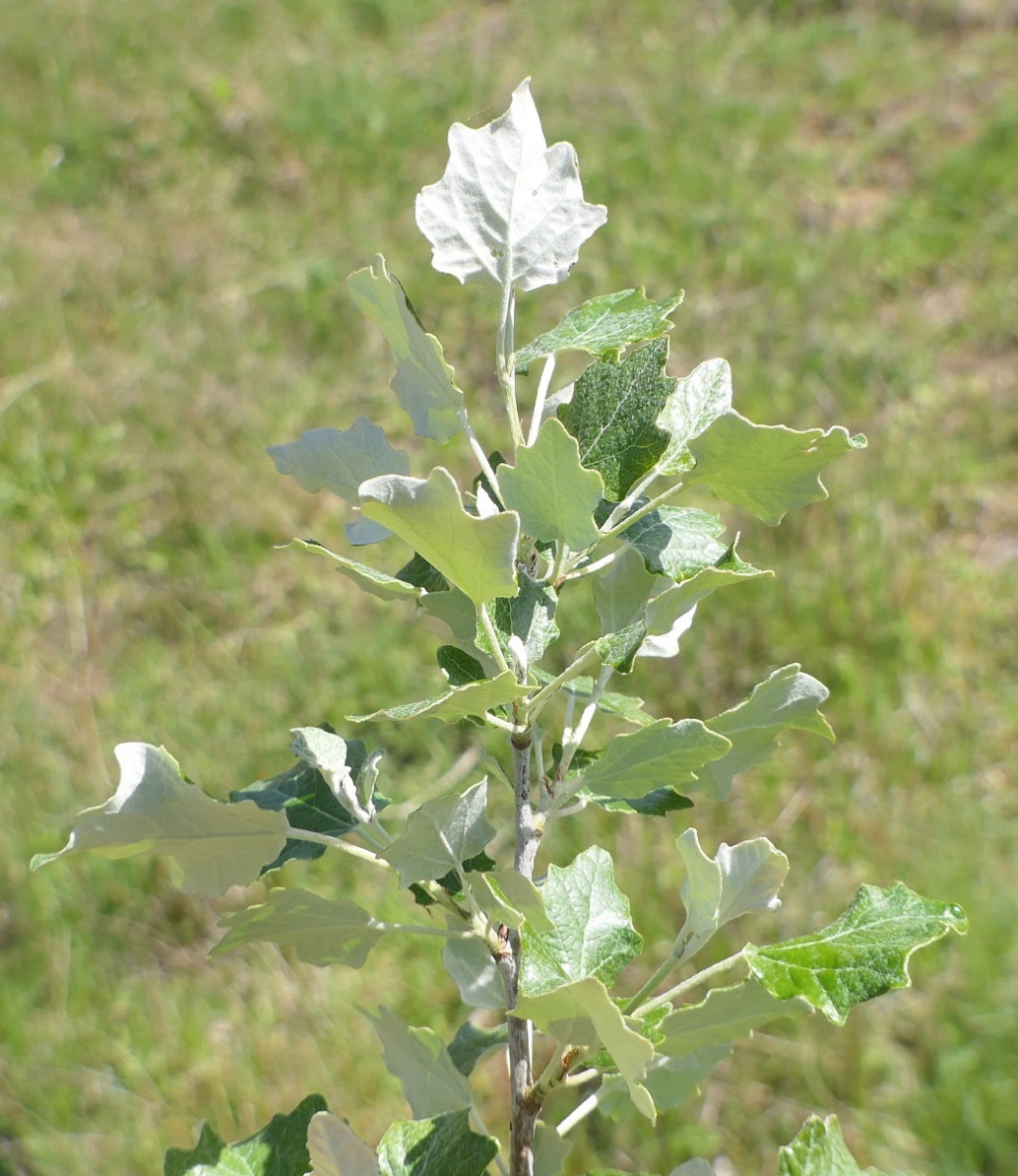
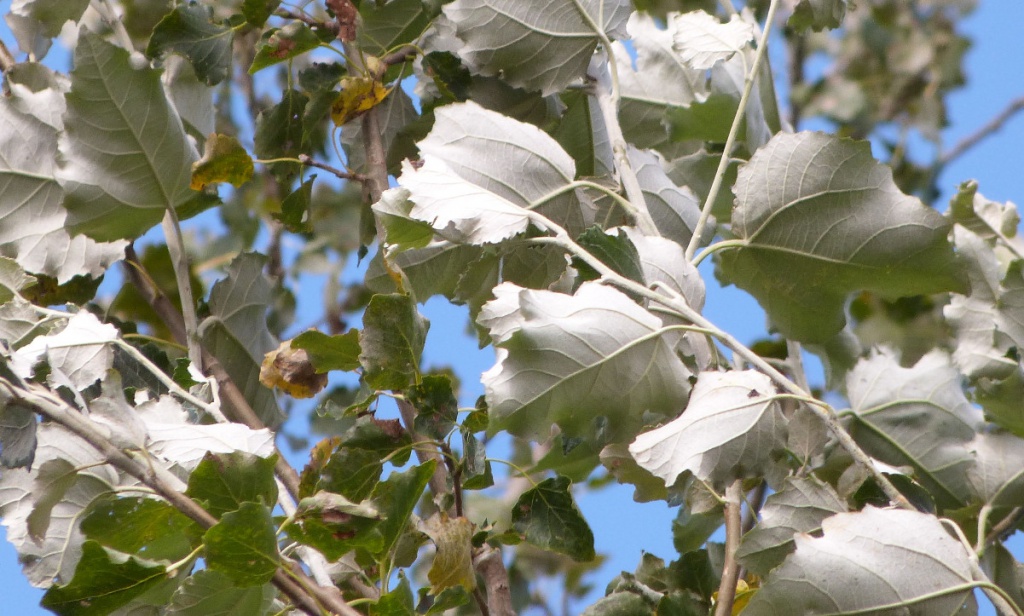
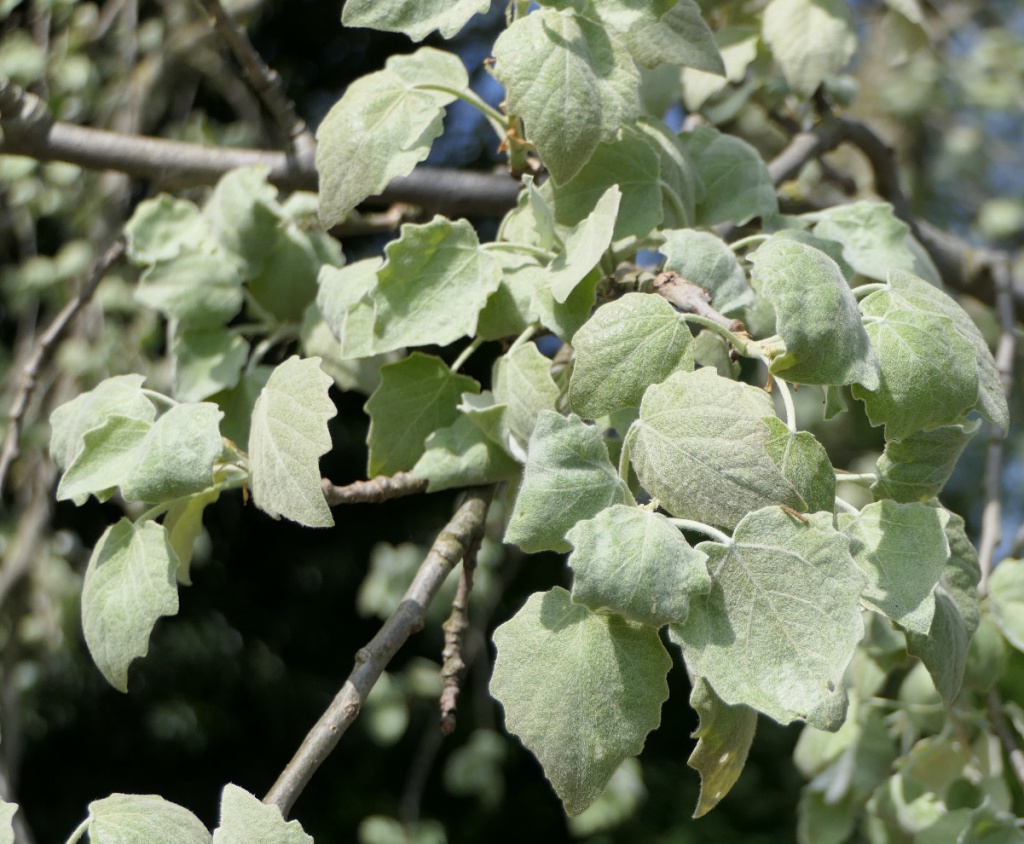
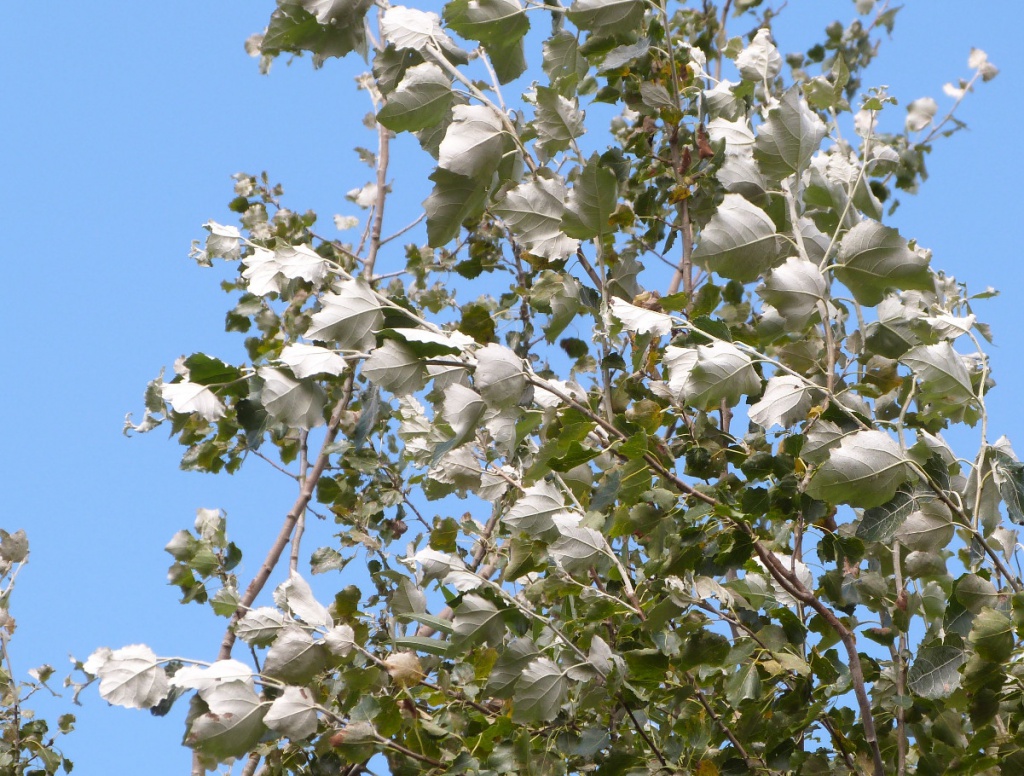
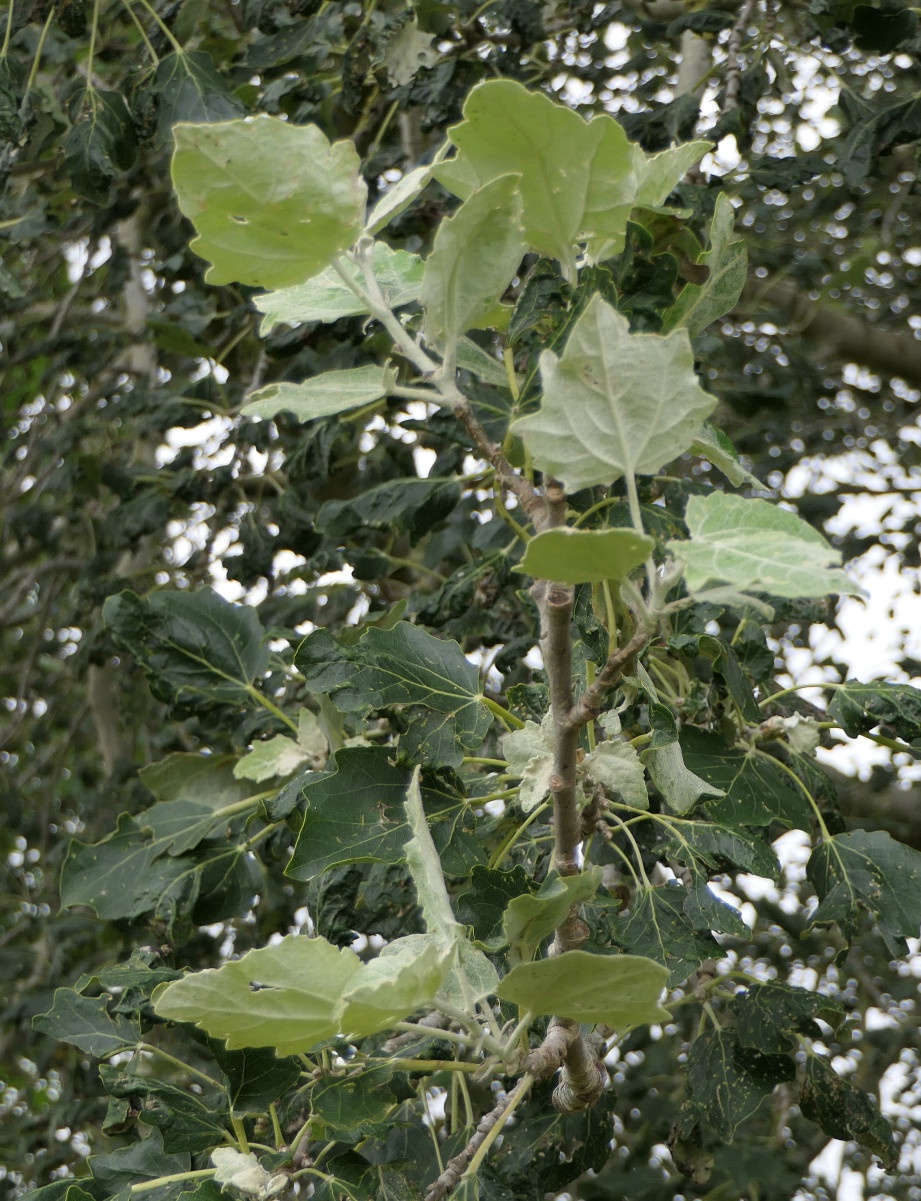
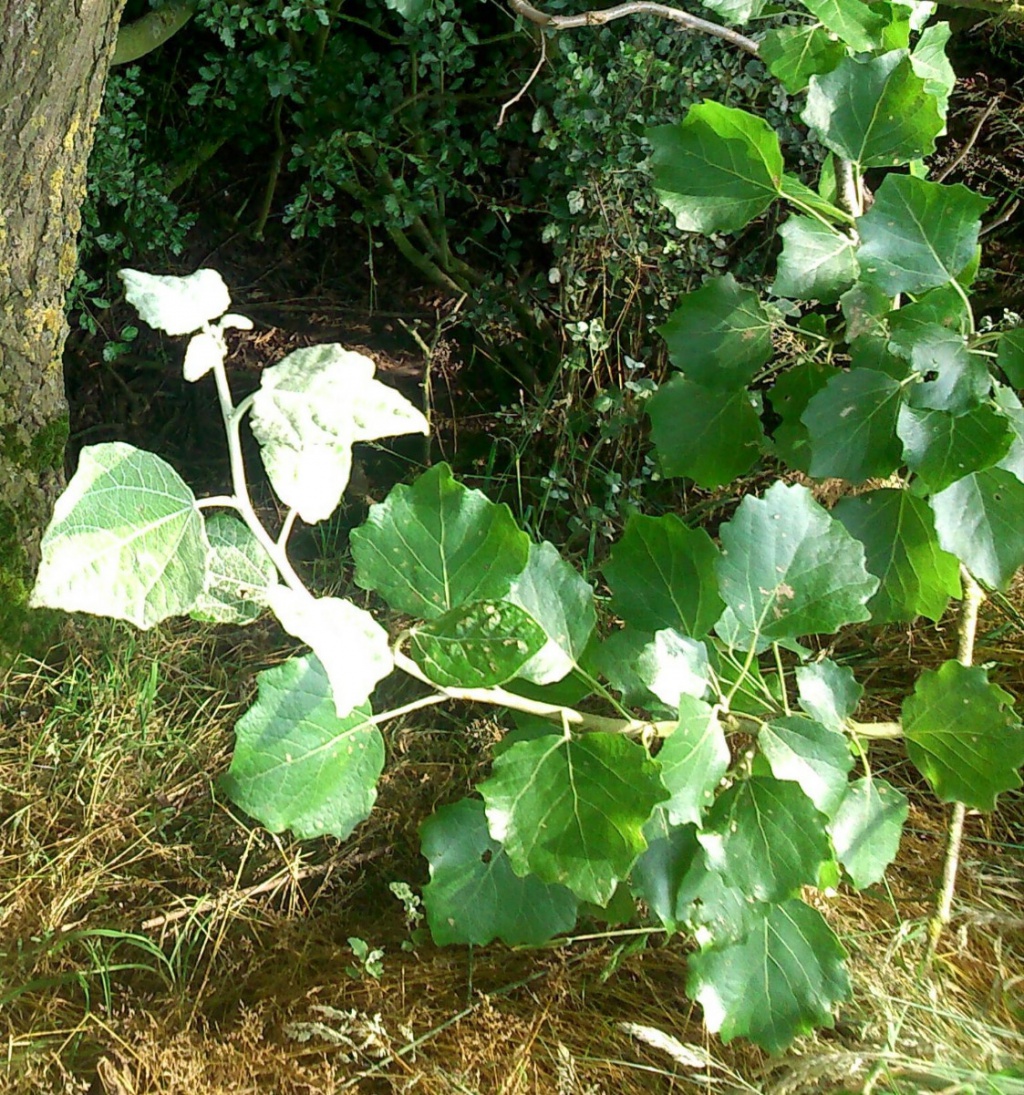
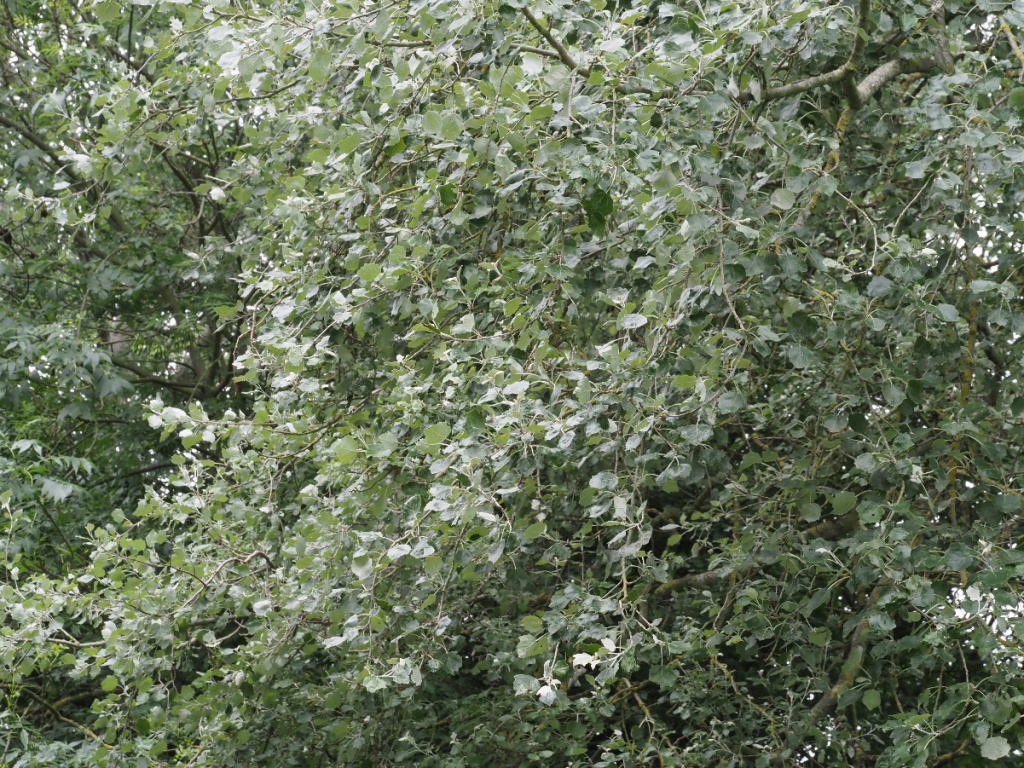
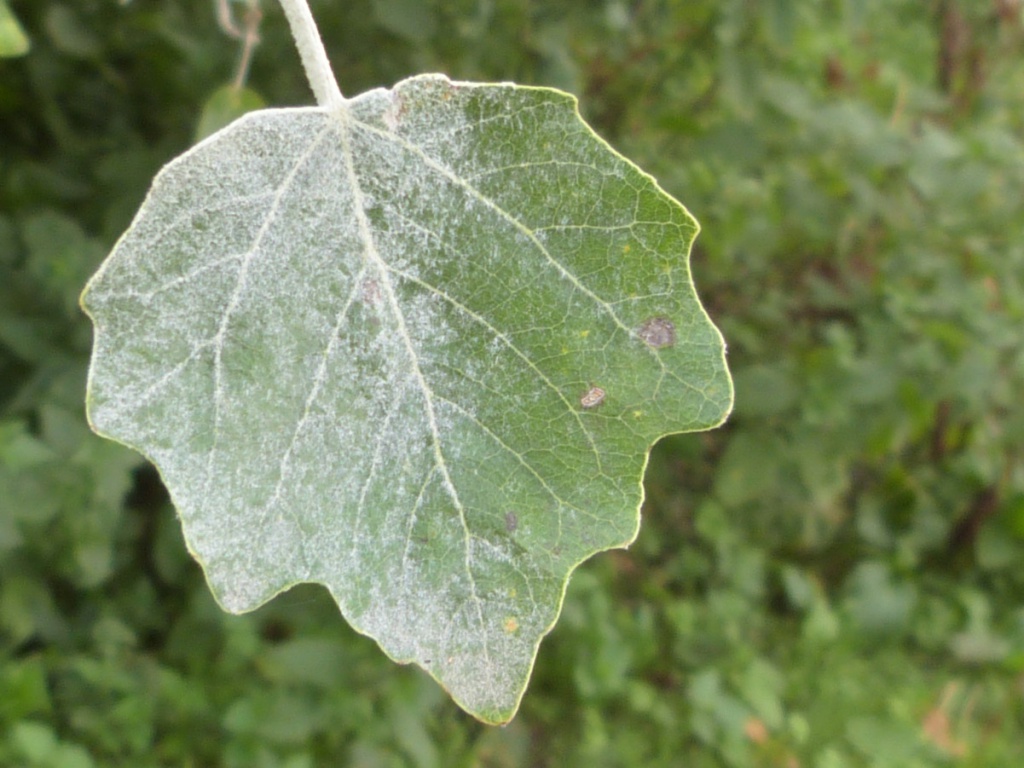
Shoots white downy at first. Leaves rounded-triangular, coarsely and irregularly toothed, not lobed, dark green above, grey downy beneath. Bracts are laciniate. As with all poplars, the leaves from suckers and epicormic growth are often atypical and should not be used to identify the species.
Most trees are male, and the male catkins are greyish becoming red-purple as they mature. Female trees are rare, and have greenish catkins.

Photos of leaves, upper and under-side, from crown long-shoots NOT epicormic/sucker growth.
Thrives in damp places such as water margins and damp woods, but also found in hedgerows.
Flowers in March or April.
Deciduous.
Widespread, particularly in the southern half of Britain.
Occasional and local in Leicestershire and Rutland. In the 1979 Flora survey of Leicestershire it was found in 67 of the 617 tetrads.
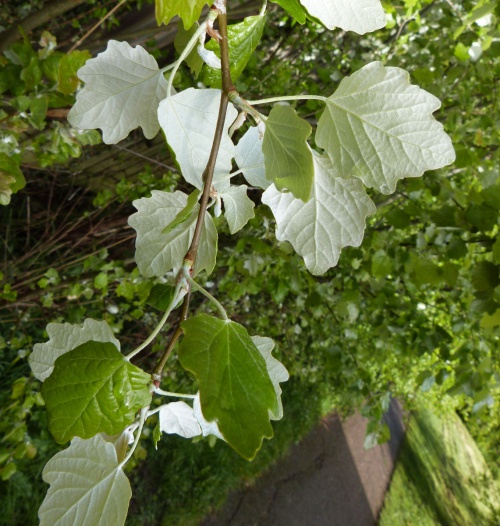 Graham Calow
Near Geveze Way, Broughton Astley
28 April 2017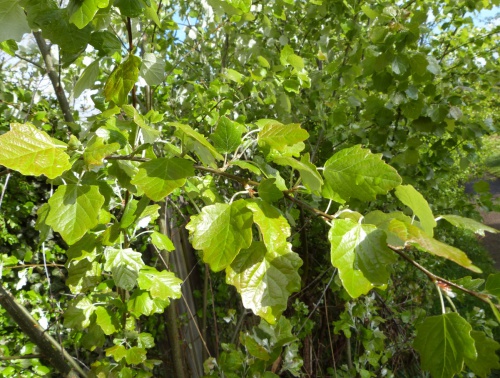 Graham Calow
Near Geveze Way, Broughton Astley
28 April 2017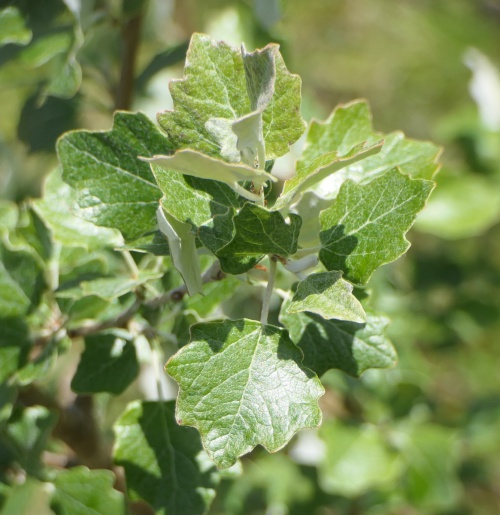 David Nicholls
Ratby Pond
14 May 2020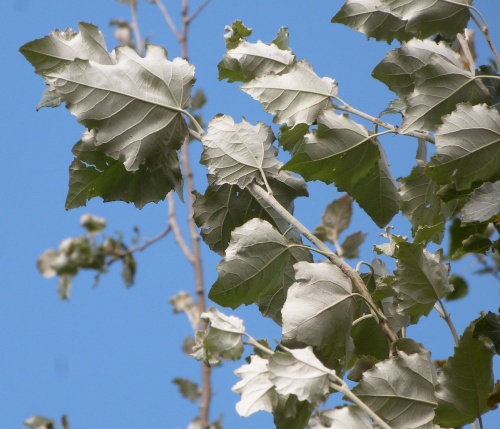 Graham Calow
Near High Cross
18 August 2016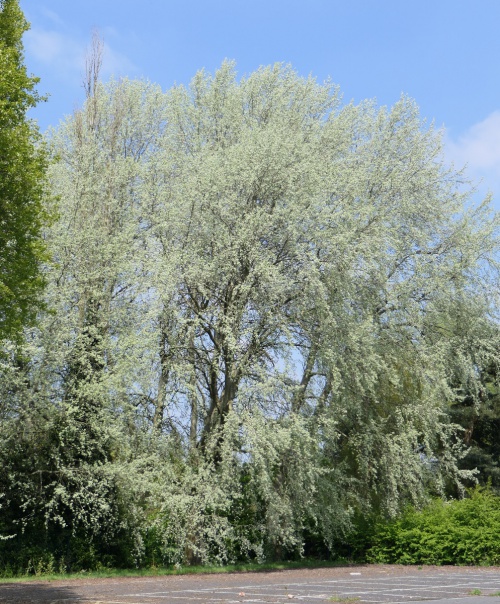 David Nicholls
Western Golf Course
05 May 2018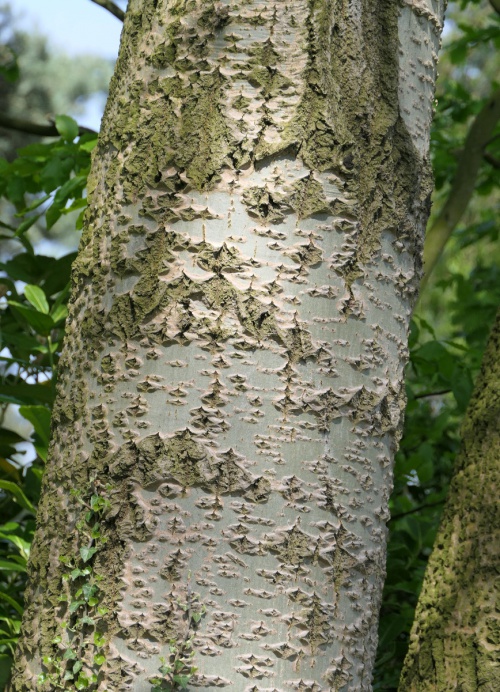 David Nicholls
Western Golf Course
05 May 2018
Leicestershire & Rutland Map
Enter a town or village to see local records
MAP KEY:
Yellow squares = NBN records (all known data)
Coloured circles = NatureSpot records: 2025+ | 2020-2024 | pre-2020
UK Map
Species profile
- Common names
- Grey Poplar
- Species group:
- flowering plant
- Kingdom:
- Plantae
- Order:
- Malpighiales
- Family:
- Salicaceae
- Records on NatureSpot:
- 16
- First record:
- 21/09/1998 (Anthony Fletcher)
- Last record:
- 09/09/2025 (Smith, Peter)
Total records by month
% of records within its species group
10km squares with records
The latest images and records displayed below include those awaiting verification checks so we cannot guarantee that every identification is correct. Once accepted, the record displays a green tick.
In the Latest Records section, click on the header to sort A-Z, and again to sort Z-A. Use the header boxes to filter the list.
Latest images
Latest records
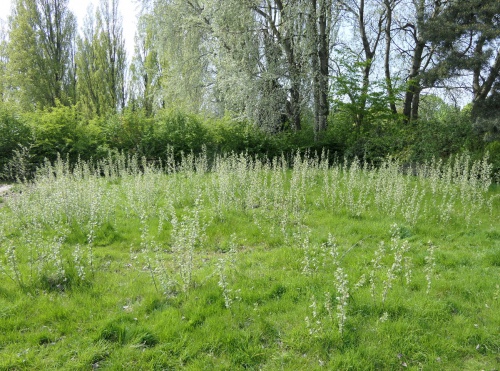 David Nicholls
Western Golf Course
05 May 2018
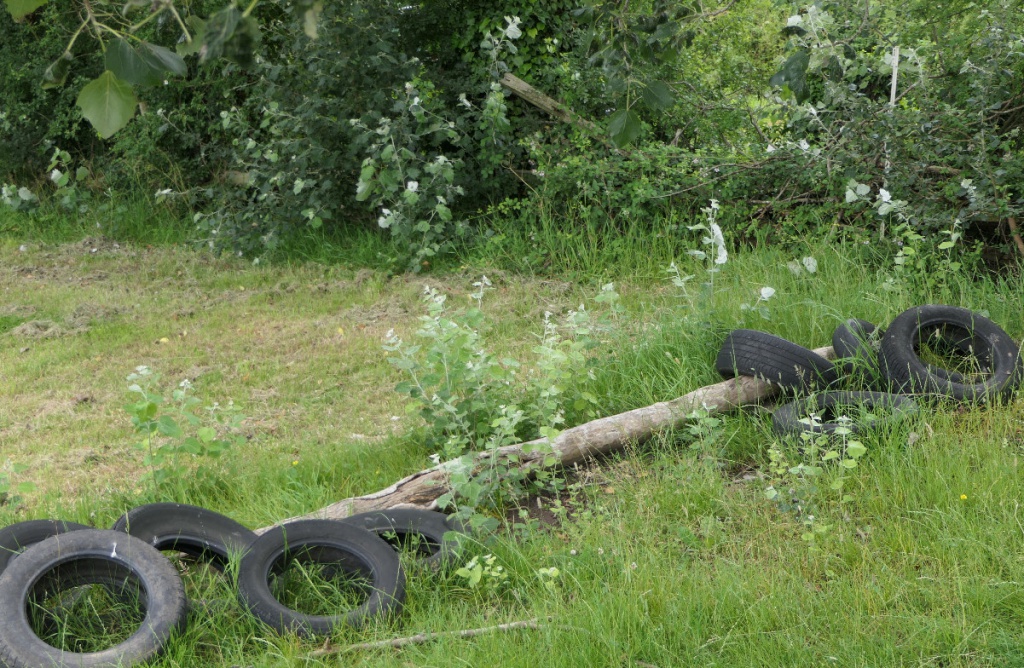
suckers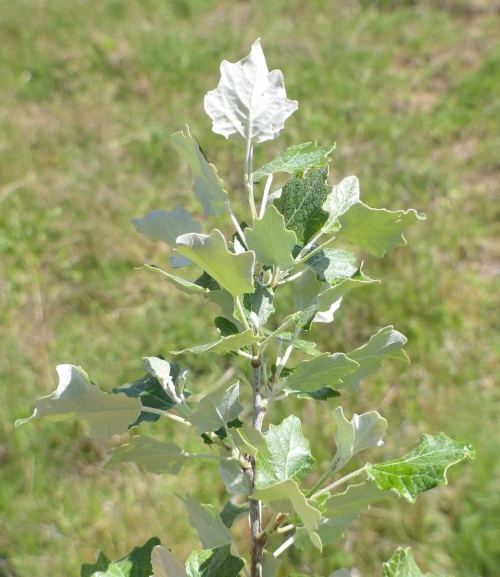 David Nicholls
Ratby Pond
14 May 2020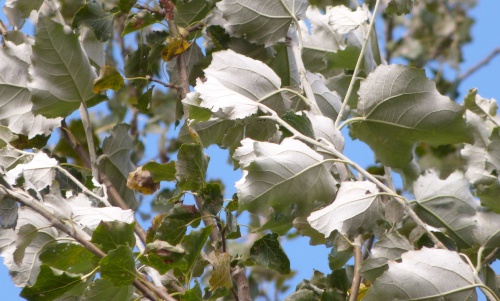 Graham Calow
Near High Cross
18 August 2016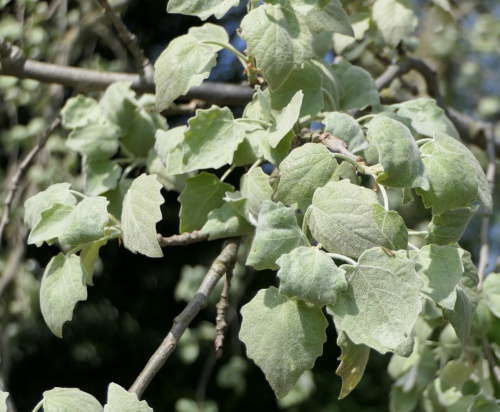 David Nicholls
Western Golf Course
05 May 2018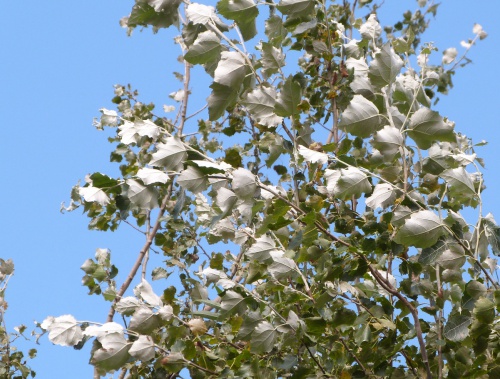 Graham Calow
Near High Cross
18 August 2016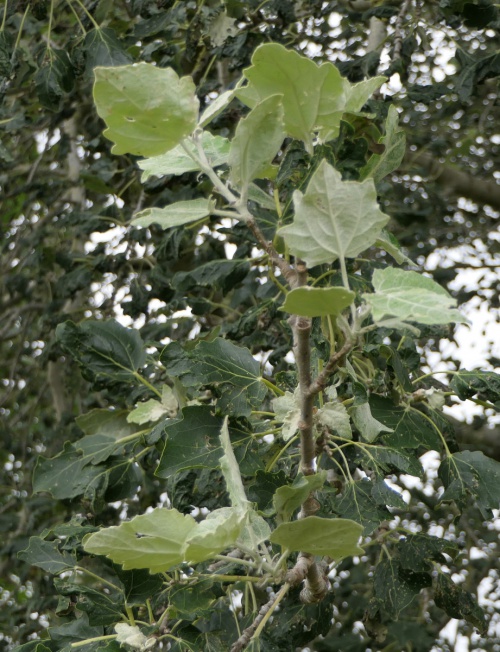 David Nicholls
Atterton, field D19
08 July 2019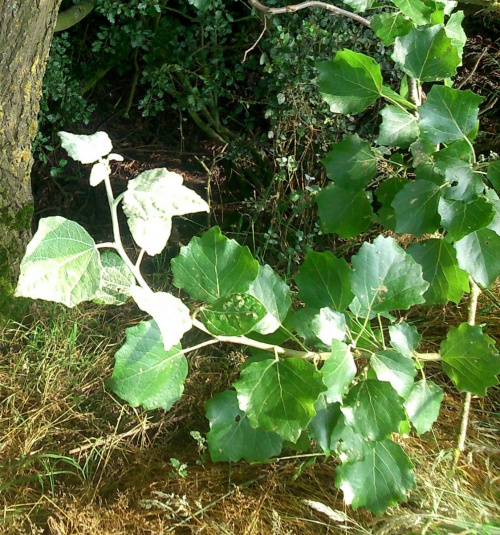 steven lewis
Welby
19 July 2016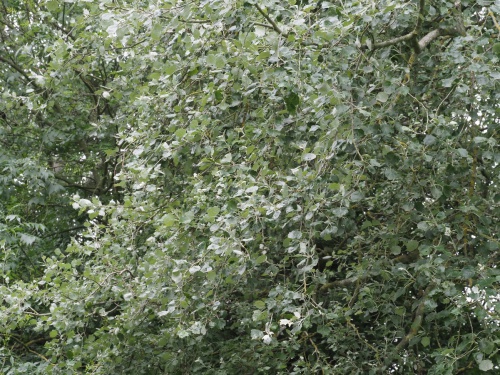 David Nicholls
Leicester, Ellis Meadows
30 June 2021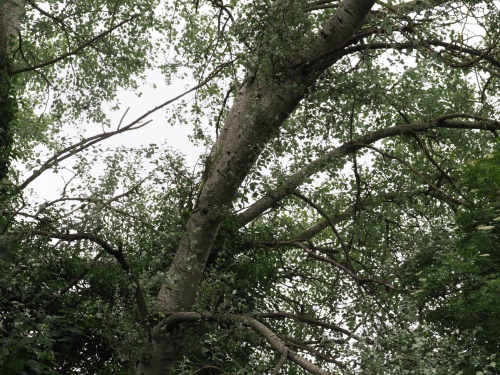 David Nicholls
Leicester, Ellis Meadows
30 June 2021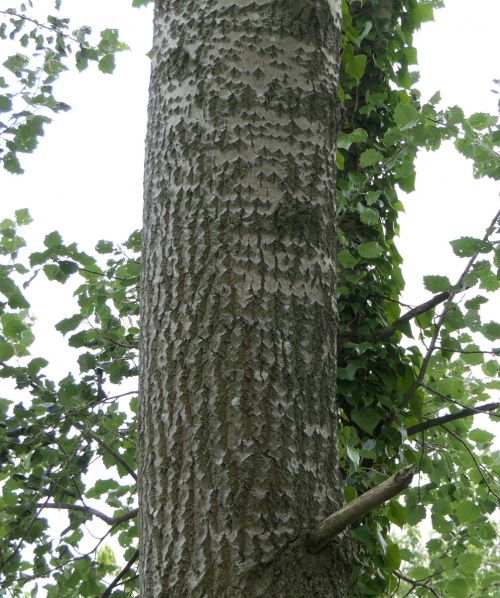 David Nicholls
Atterton, field D19
08 July 2019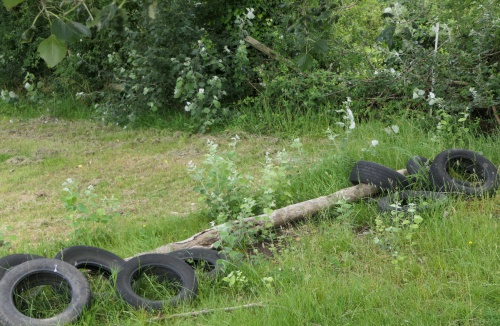 David Nicholls
Atterton, field D19
08 July 2019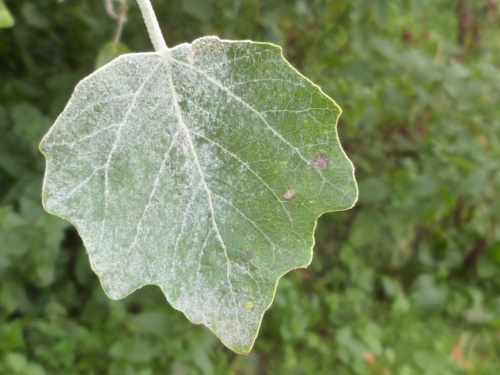 Graham Calow
Sharnford, field off Aston Lane
30 August 2022
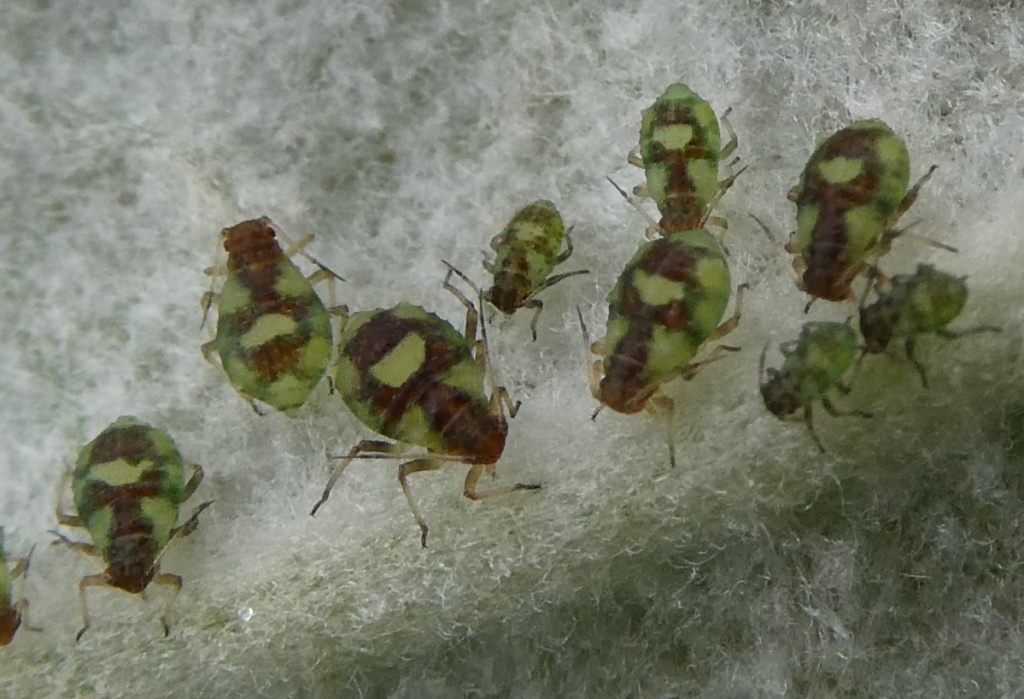
Chaitophorus populeti
The aphid Chaitophorus populeti lives on the young shoots and terminal leaf petioles of various Poplar species, especially those of Aspen and White Poplar and their hybrid Grey Poplar. The body length is 1.5 to 2.9 mm. The nymphs of this species are distinctively patterned, the adult apterae are black and more difficult unless recorded in association with nymphs.
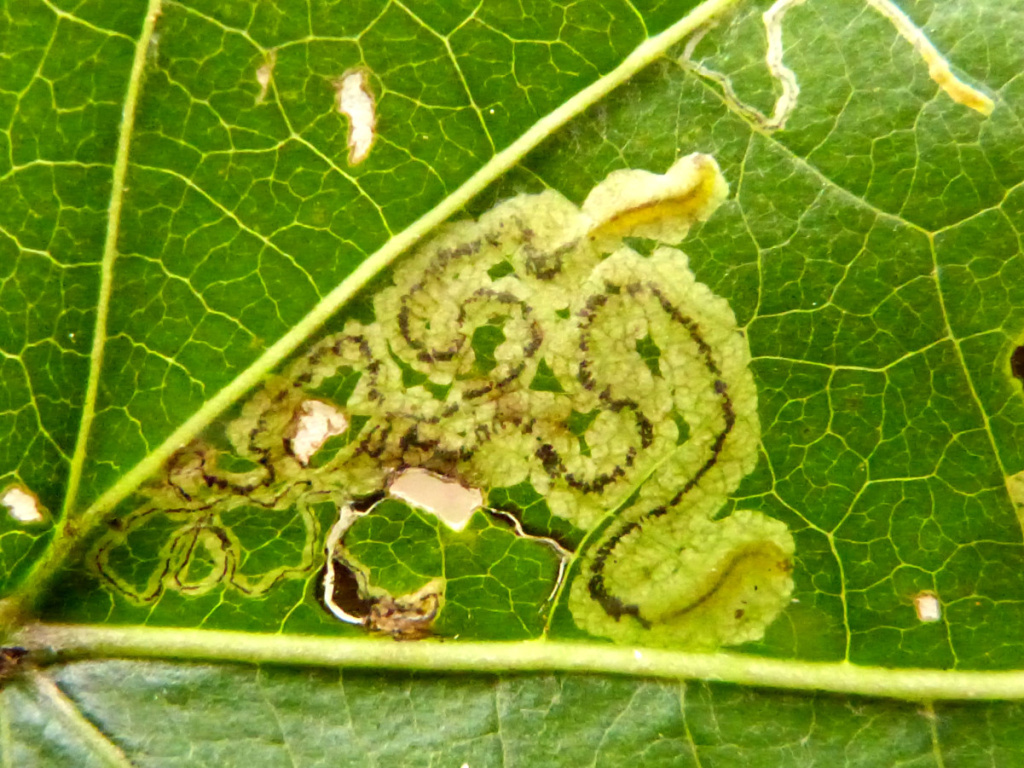
Stigmella assimilella
A small moth with a wingspan of 5.4 to 6.2 mm. Adults difficult to distinguish from other Stigmella species, and more frequently recorded in the larval stage where it creates a leaf mine on the leaves of Aspen (Populus tremula) and occasionally Grey Poplar or White Poplar. The initial corridor is contorted, then widening into a blotch-like corridor; central frass line leaving a clear zone either side.
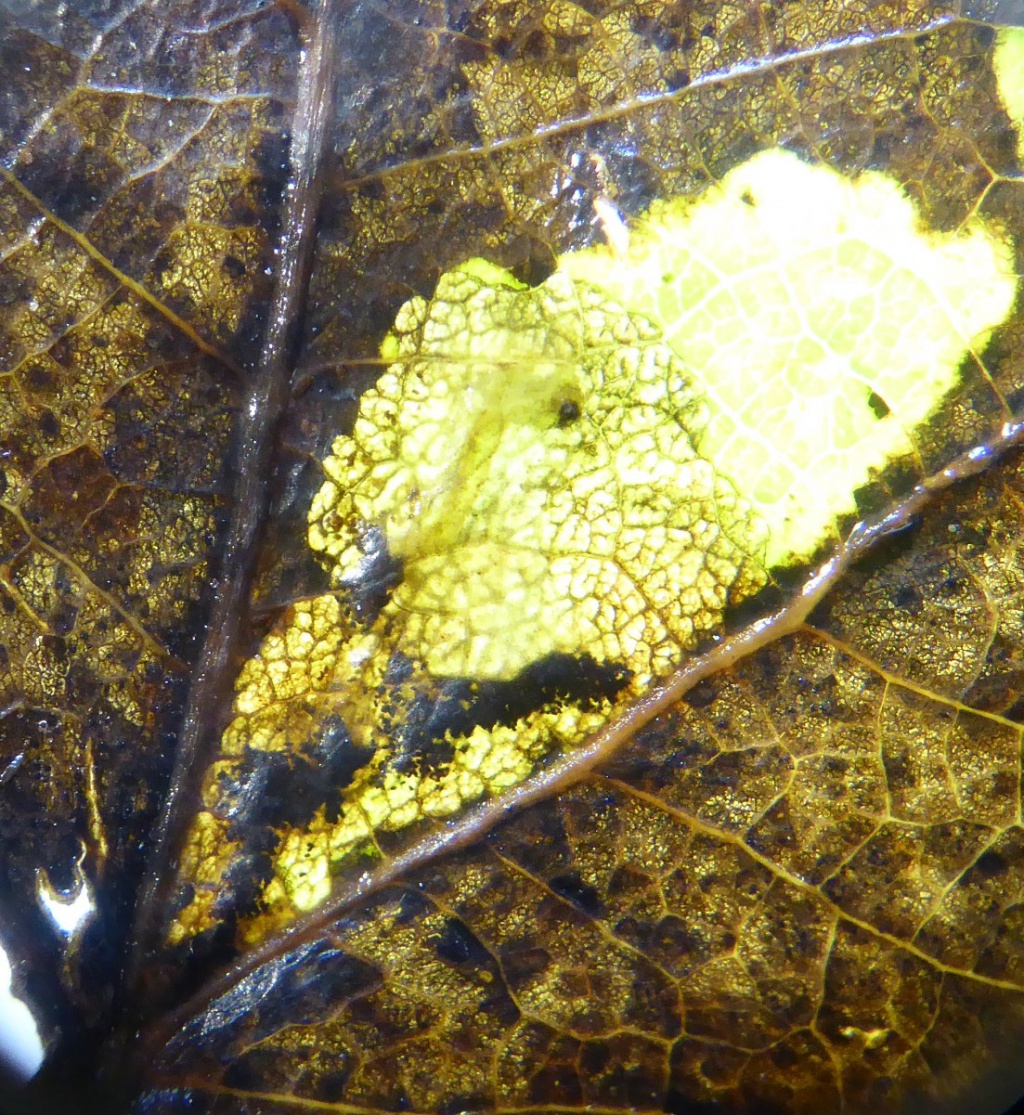
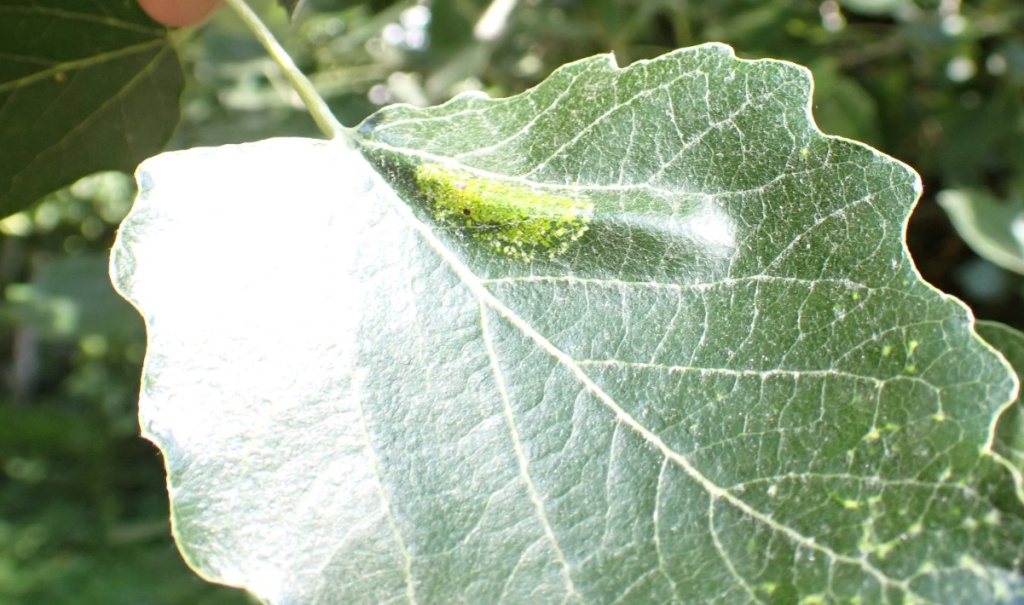
Phyllonorycter comparella
The larva of the moth Phyllonorycter comparella makes a mine on the underside of leaves of Grey Poplar, White Poplar and occasionally Hybrid Black Poplar. The mines are small and hard to find on the commonest hosts, Grey or White Poplar; there is little contraction or distortion of the leaf, and the underneath of the mine is hidden in the woolly undersurface of the leaf.
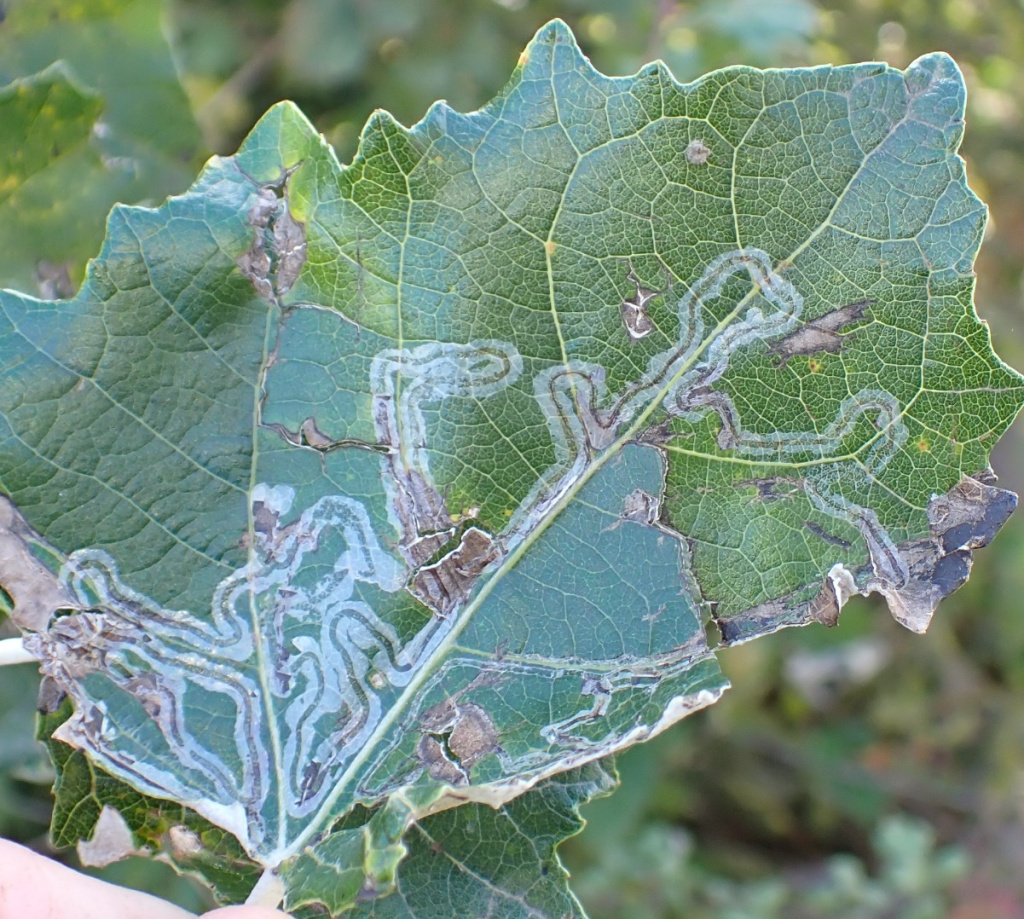
Phyllocnistis xenia
The larva of the moth Phyllocnistis xenia mines the leaves of Grey Poplar and White Poplar forming a winding, thin, silvery translucent gallery resembling a 'snail trail' on the upper surface of the leaves which leads towards the leaf edge. It then folds the leaf edge over and pupates in a cocoon in the fold.
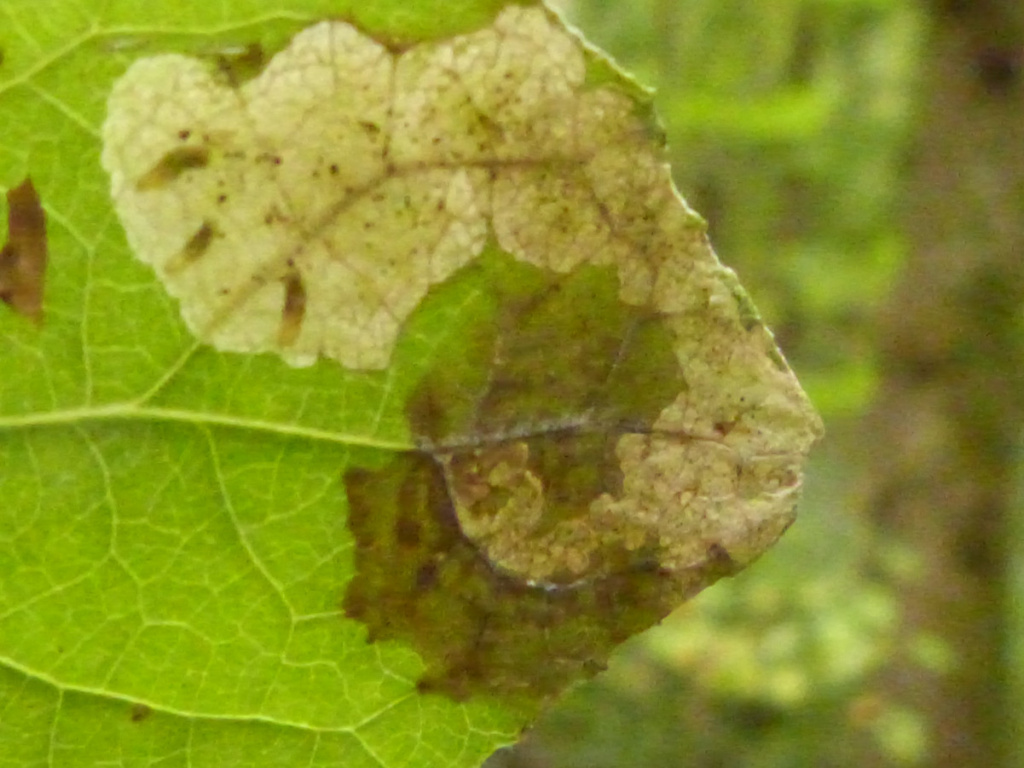
Agromyza albitarsis
The larvae of the fly Agromyza albitarsis mine the leaves of Aspen, hybrid Black Poplar, other poplars and willows, forming a large greenish blotch mine which turns brown.