

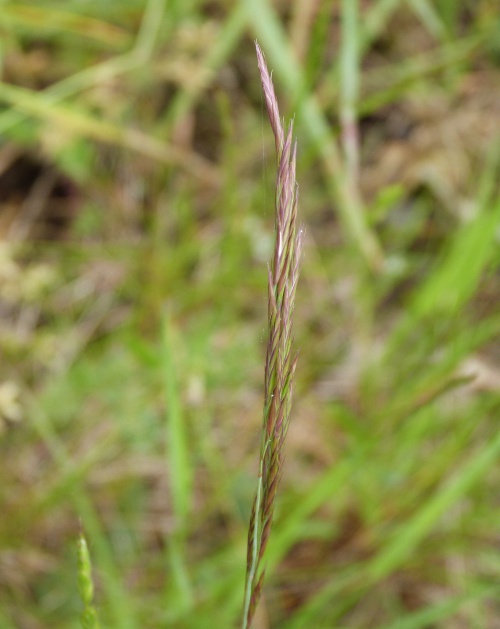
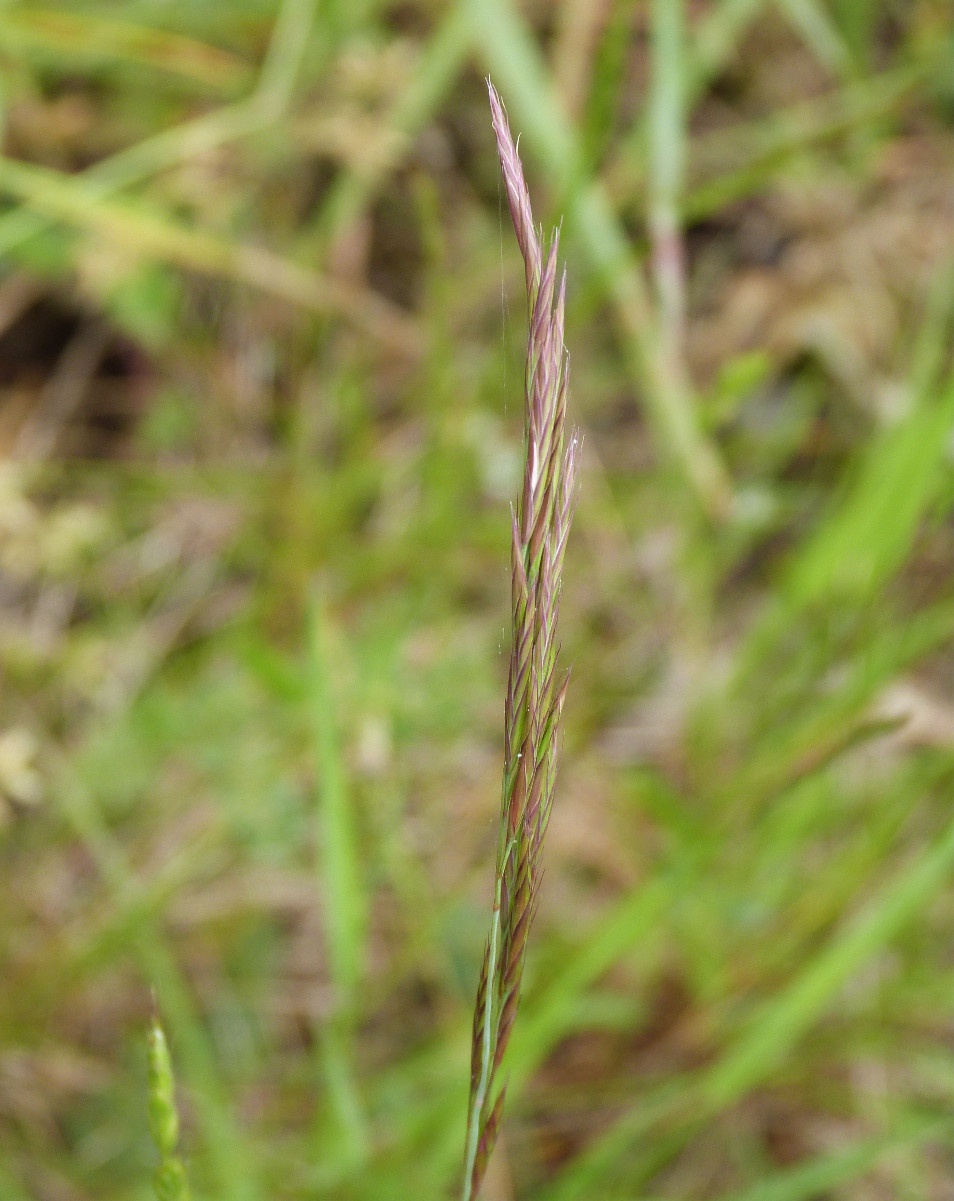
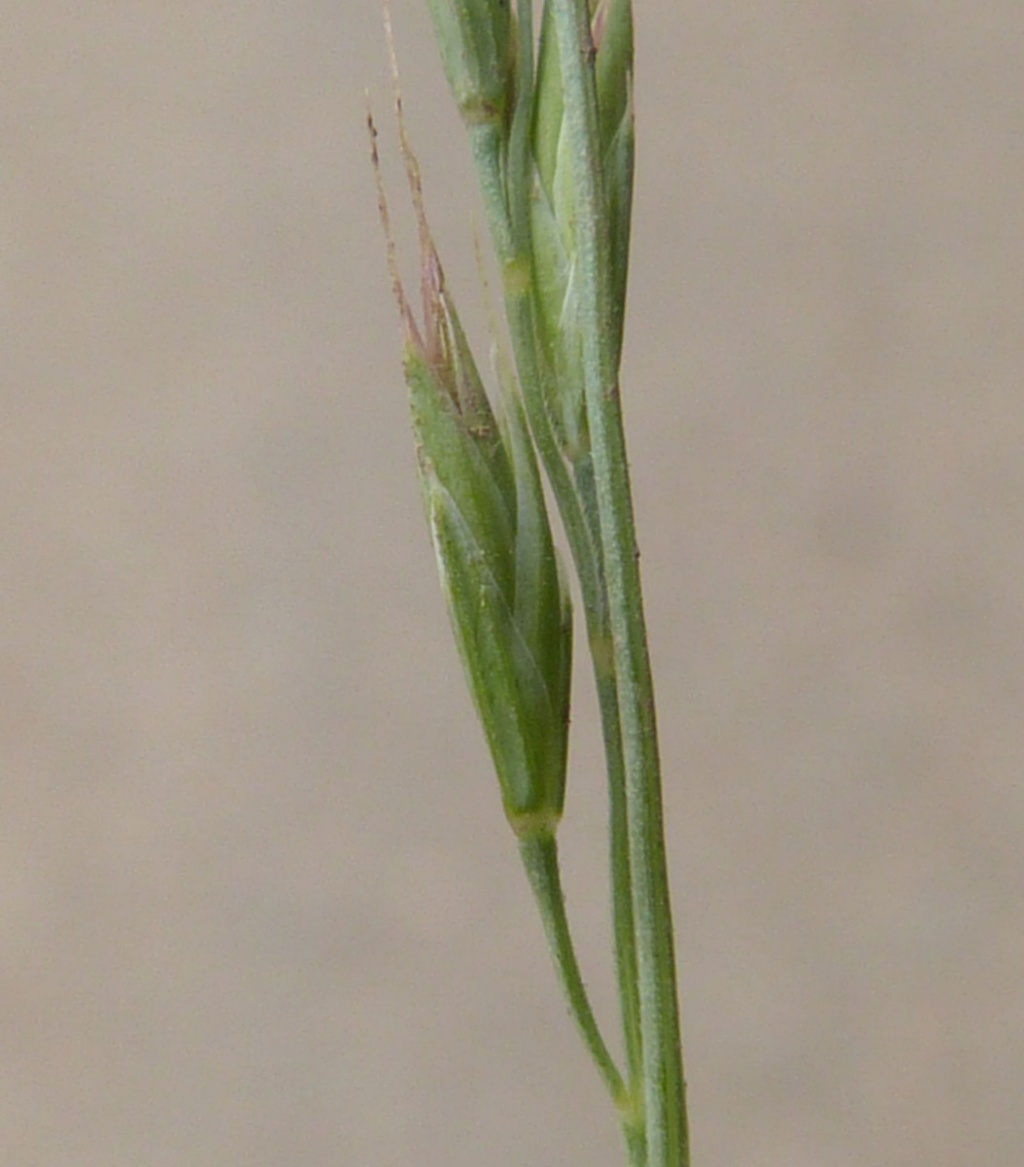
Red Fescue - Festuca rubra
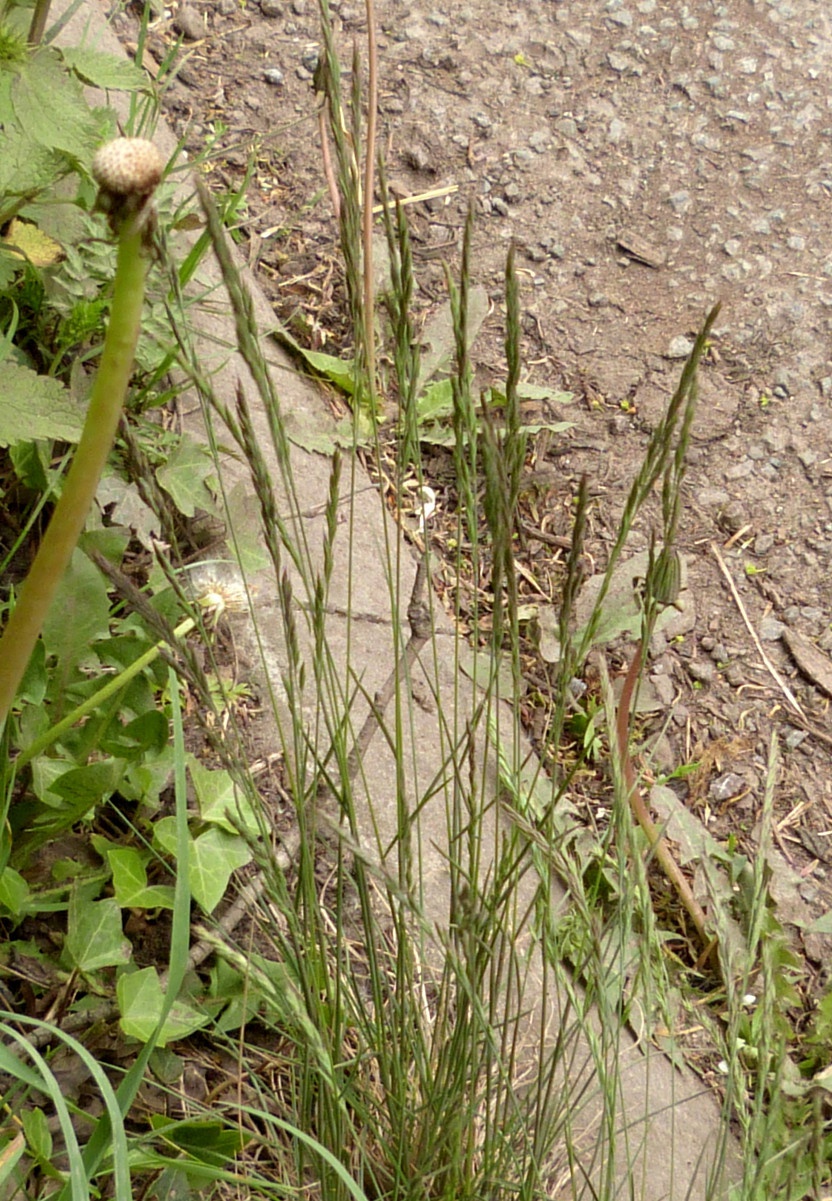
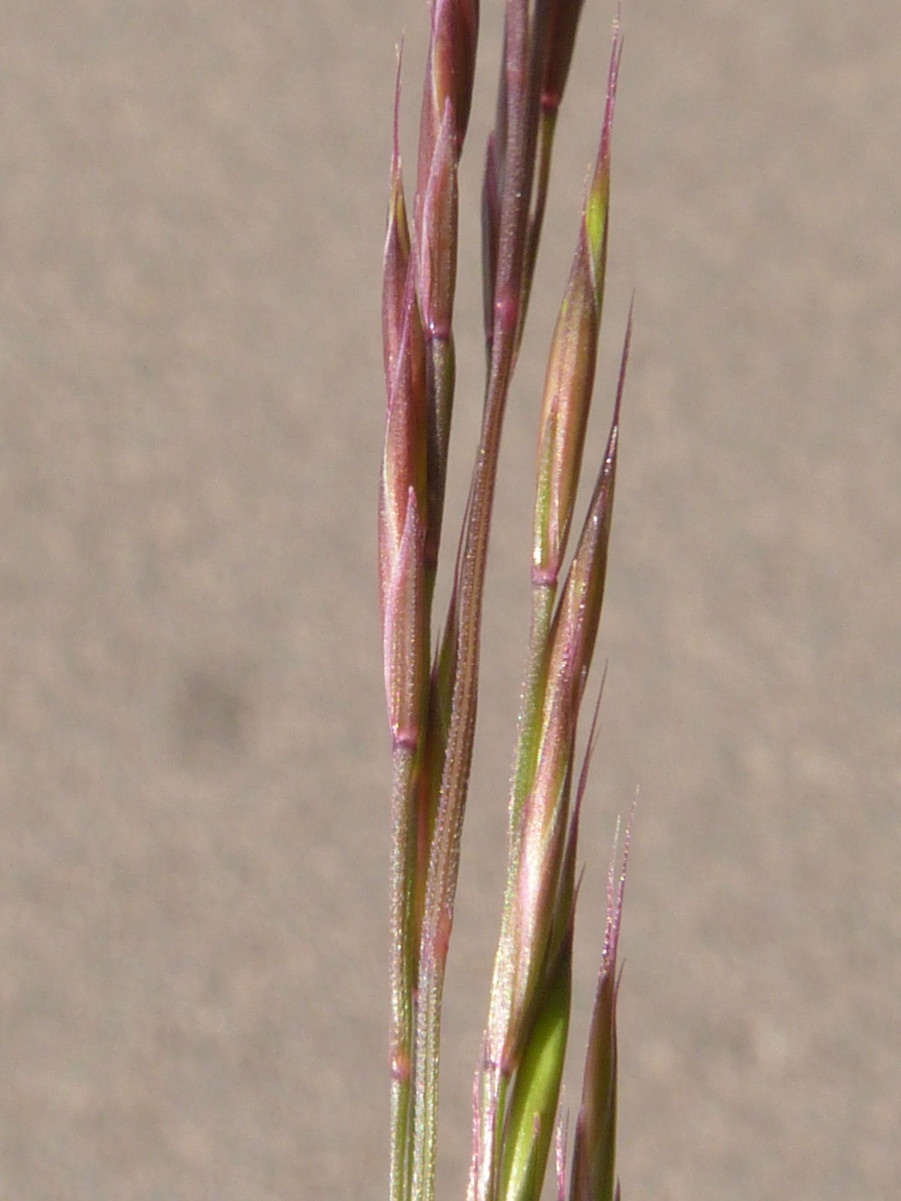
Tuft forming, 15 to 80 cm tall usually with creeping rhizomes and surface runners. Basal leaves and those of runners are all bristle like and up to 40 cm long with groove on upper side. Those of the flowering stems are flat when fresh 0.5 to 3 mm wide. Not always red tinged. The young leaves on tillers have sheaths fused almost to the top, and some or all of the tillers are extravaginal (i.e. arise at right angles to the parent shoot, breaking through the parental sheath at the base.)
Festuca ovina

The young leaves on tillers have sheaths fused almost to the top
Some or all of the tillers are extravaginal (i.e. arise at right angles to the parent shoot, breaking through the parental sheath at the base.)
Check leaf sheaths of young leaves on tillers
Meadows, roadside verges, dry grassland etc.
May to July.
Perennial.
Very common throughout Britain.
Very common in Leicestershire and Rutland. In the 1979 Flora survey of Leicestershire it was found in 542 of the 617 tetrads.
 Start of M69 Island Sapcote SP 4660 9379 (taken 21.4.2008).JPG) Graham Calow
Graham Calow
M69 Island, Sapcote
21 April 2008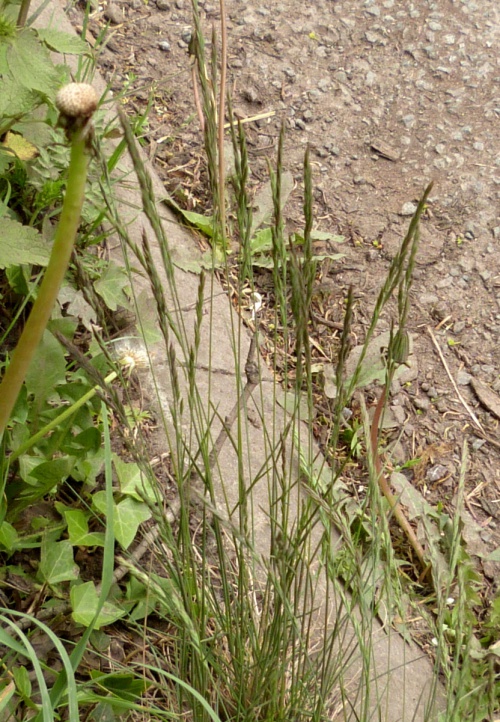 Graham Calow
Wykin
12 May 2015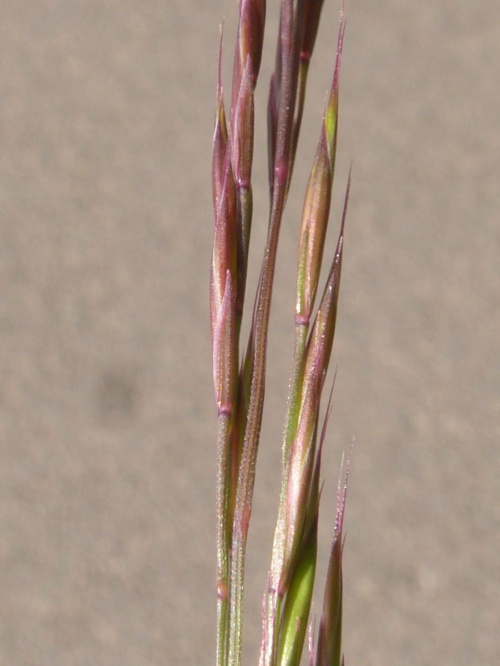 Graham Calow
Frolesworth Lane, Claybrooke Magna
03 May 2016
with awns Start of M69 Island Sapcote SP 4660 9379 taken 21.4.2008)..JPG) Graham Calow
Graham Calow
M69 Island, Sapcote
21 April 2008
 Start of M69 Island Sapcote SP 4660 9379 (taken 21.4.2008).JPG)
 Start of M69 Island Sapcote SP 4660 9379 taken 21.4.2008)..JPG)
Leicestershire & Rutland Map
Enter a town or village to see local records
MAP KEY:
Yellow squares = NBN records (all known data)
Coloured circles = NatureSpot records: 2025+ | 2020-2024 | pre-2020
UK Map
Species profile
- Common names
- Red Fescue
- Species group:
- flowering plant
- Kingdom:
- Plantae
- Order:
- Poales
- Family:
- Poaceae
- Records on NatureSpot:
- 210
- First record:
- 21/09/1998 (Anthony Fletcher)
- Last record:
- 01/06/2026 (Nicholls, David)
Total records by month
% of records within its species group
10km squares with records
The latest images and records displayed below include those awaiting verification checks so we cannot guarantee that every identification is correct. Once accepted, the record displays a green tick.
In the Latest Records section, click on the header to sort A-Z, and again to sort Z-A. Use the header boxes to filter the list.
Latest images
Latest records
 Graham Calow
M69 motorway footbridge, Sapcote
26 May 2016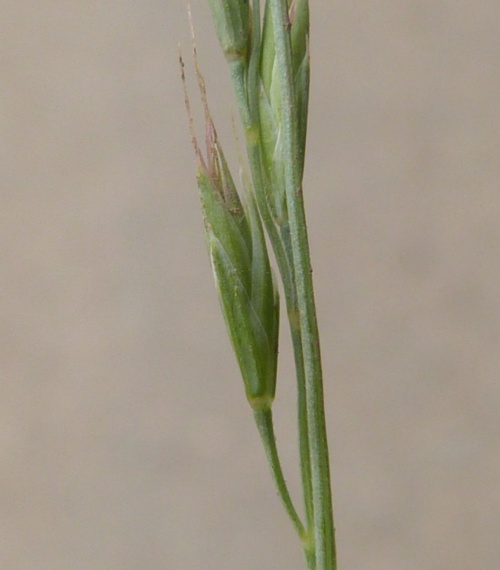 Graham Calow
Wykin
12 May 2015
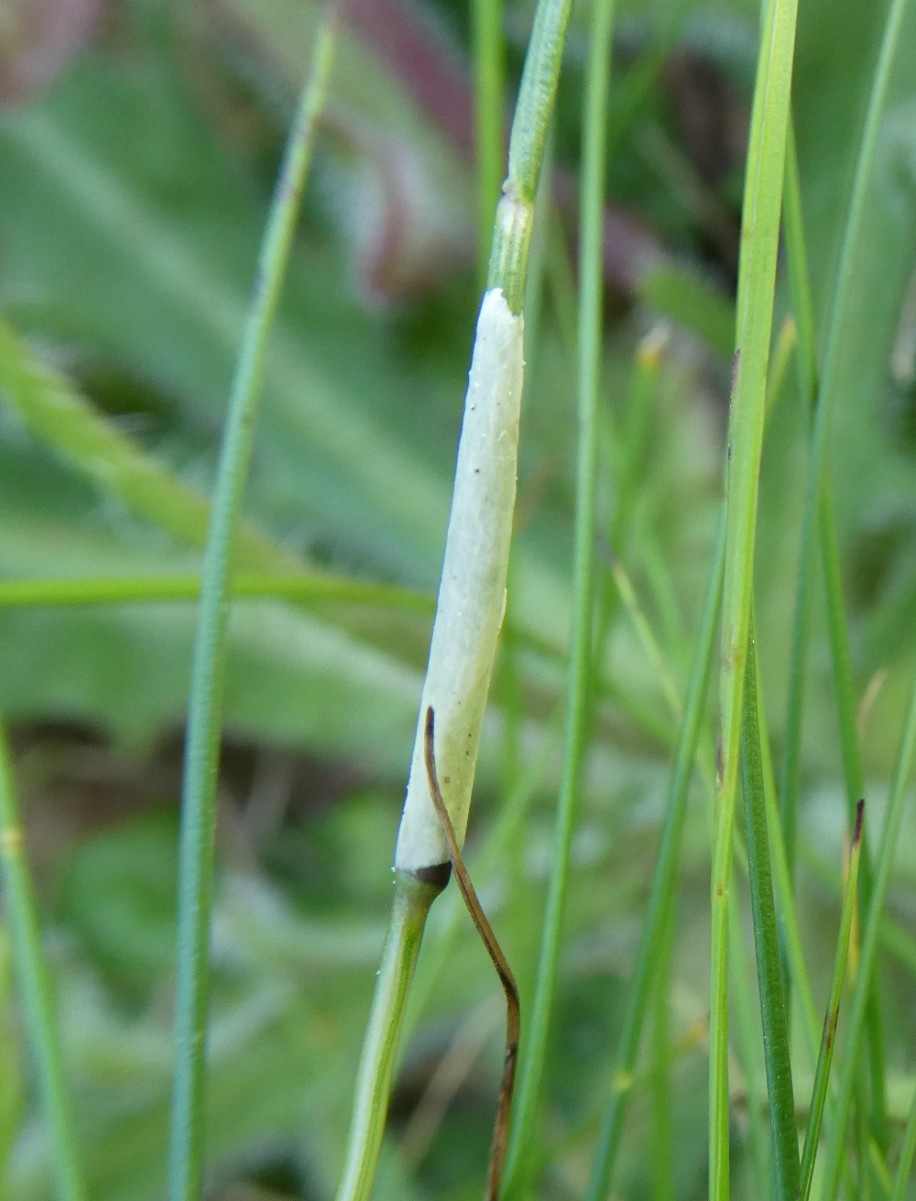
Epichloe festucae
Epichloe festucae galls the stems of Festuca species, Koeleria species and Schedonorus species. The gall often has a rather tubular appearance. It is white in the early stages, yellowing when mature.