

Rose-of-Sharon - Hypericum calycinum
Hypericum calycinum is a fast growing shrub to 60 cm in height, with creeping rhizomatous rootstock, often forming extensive patches. Leaves opposite, oblong to elliptical, scarcely stalked. Flowers yellow, 70 to 80 mm, terminal, solitary or 2 or 3 together with reddish anthers.

Low growing shrub rooting at rhizomes, so usually forming large patches; 5 styles; stamens long (about three-quarters as long as petals)
Photo of plant in its habitat
Often found as an escape from cultivation and near to habitation, usually on disturbed ground. It can be persistent where it occurs.
Flowers June to September.
Evergreen.
Widespread and fairly frequent in Britain.
Uncommon or under recorded as a naturalised plant in Leicestershire and Rutland. In the 1979 Flora survey of Leicestershire it was only found in 1 of the 617 tetrads.
Leicestershire & Rutland Map
Enter a town or village to see local records
MAP KEY:
Yellow squares = NBN records (all known data)
Coloured circles = NatureSpot records: 2025+ | 2020-2024 | pre-2020
UK Map
Species profile
- Common names
- Rose-of-Sharon, Creeping St. John's Wort
- Species group:
- flowering plant
- Kingdom:
- Plantae
- Order:
- Malpighiales
- Family:
- Hypericaceae
- Records on NatureSpot:
- 2
- First record:
- 08/07/2016 (Calow, Graham)
- Last record:
- 29/04/2019 (Parry, Russell)
Total records by month
% of records within its species group
10km squares with records
The latest images and records displayed below include those awaiting verification checks so we cannot guarantee that every identification is correct. Once accepted, the record displays a green tick.
In the Latest Records section, click on the header to sort A-Z, and again to sort Z-A. Use the header boxes to filter the list.
Latest images
Latest records
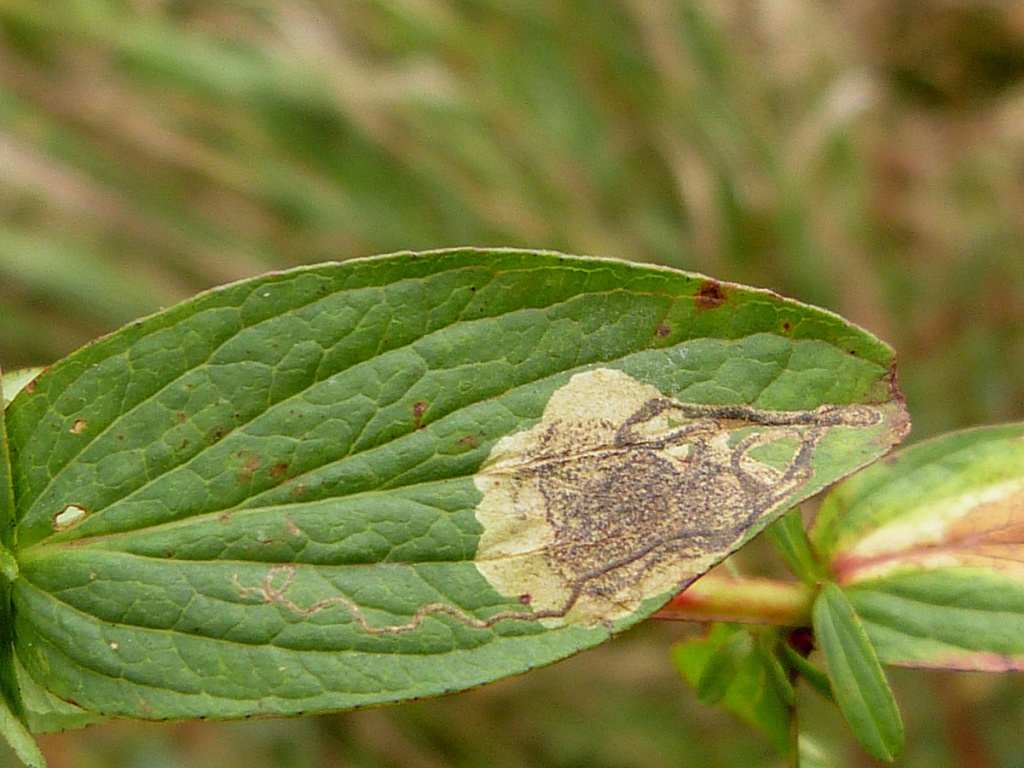
Fomoria septembrella
The larva of the moth Fomoria septembrella mines the leaves of Hypericum species, most commonly Perforate St John's-wort at first in a narrow gallery, later becoming a blotch mine.