

Cep - Boletus edulis
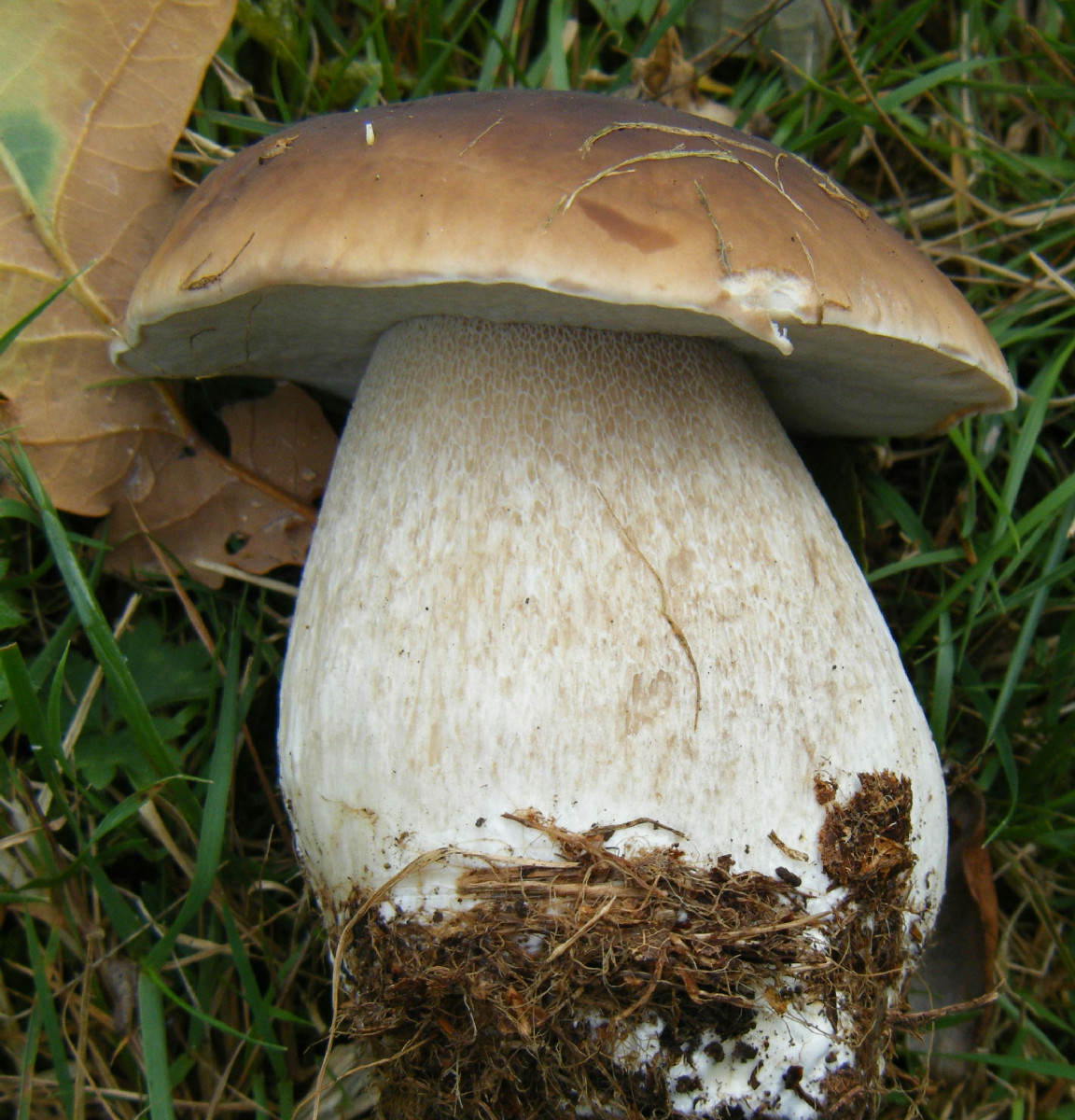
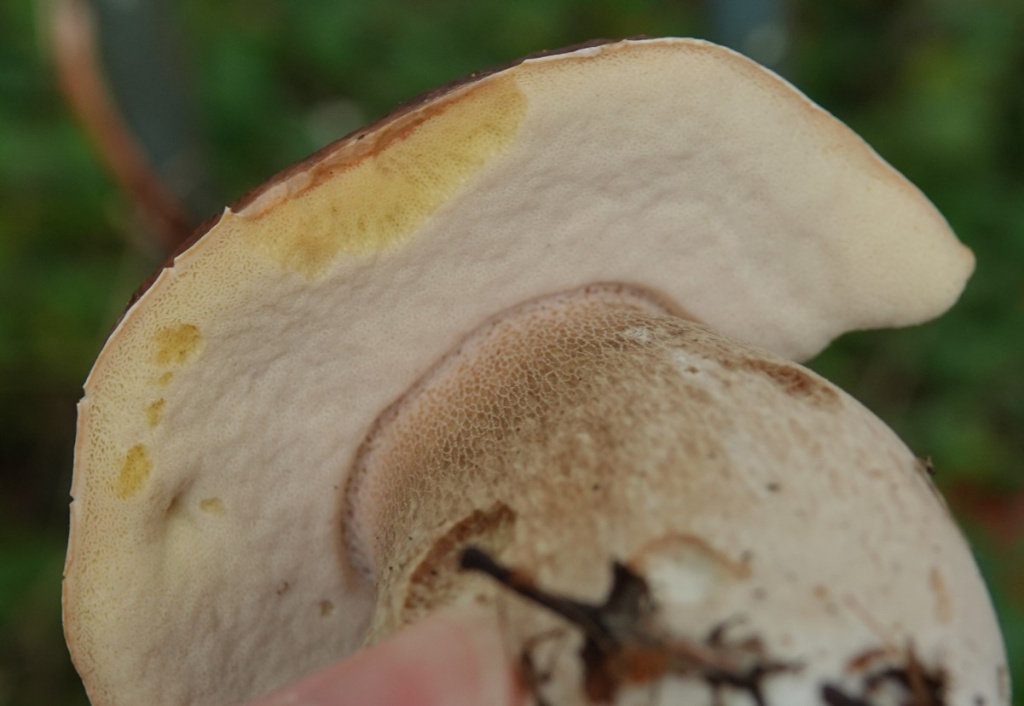
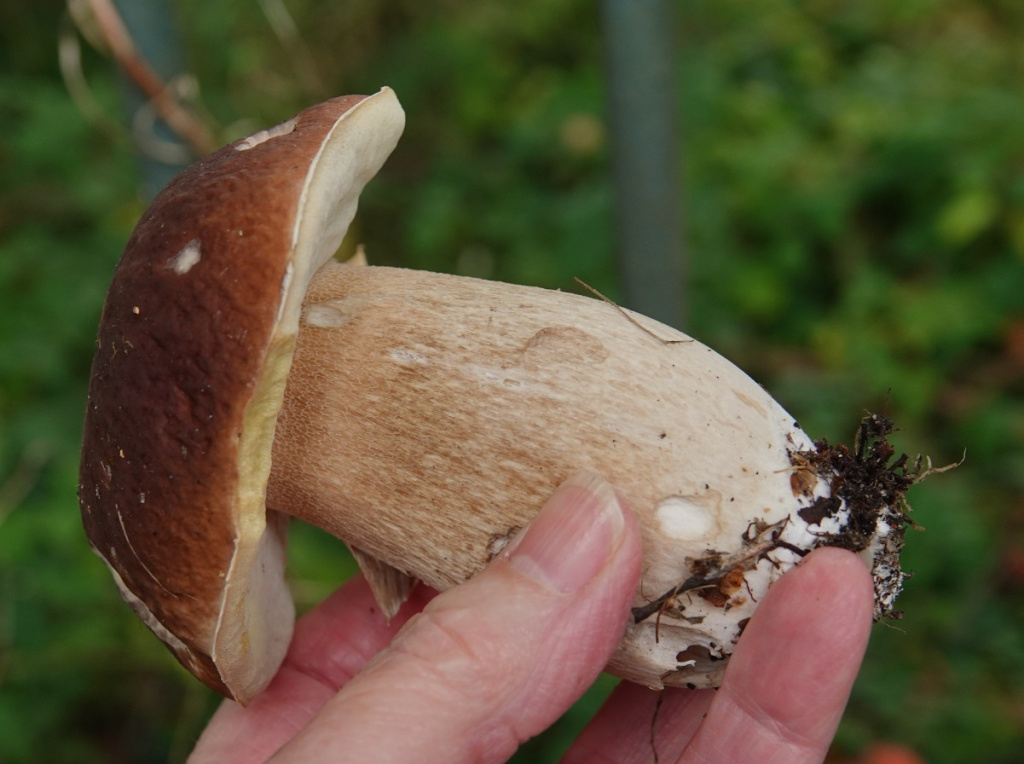
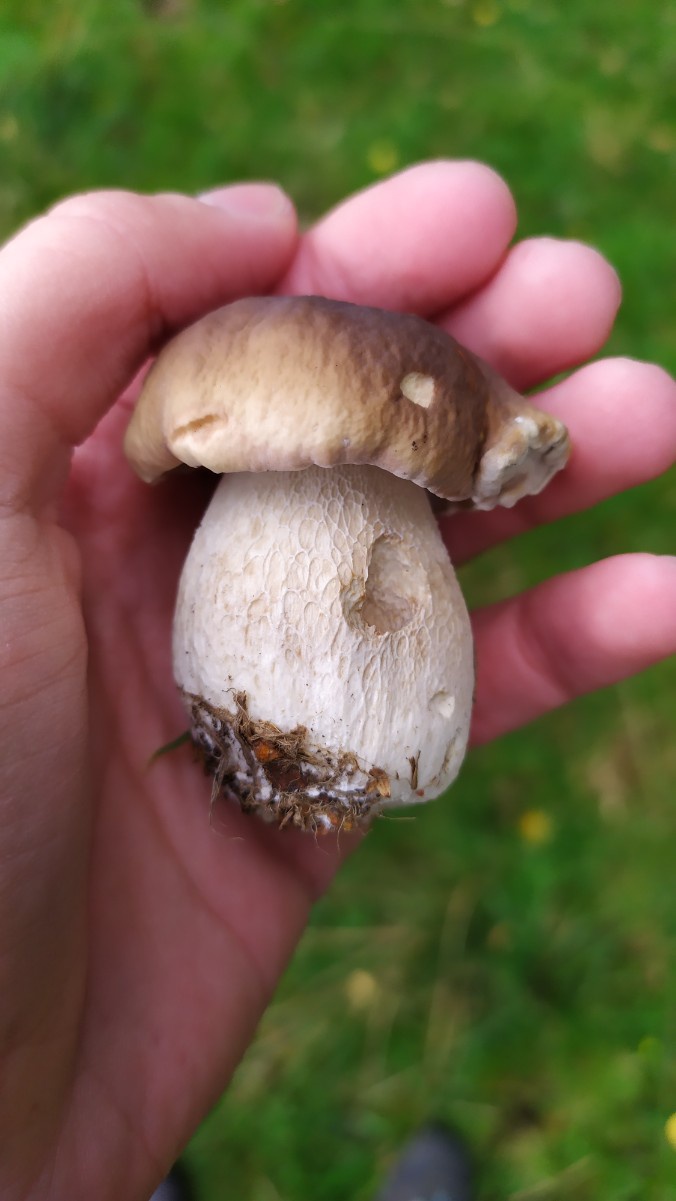
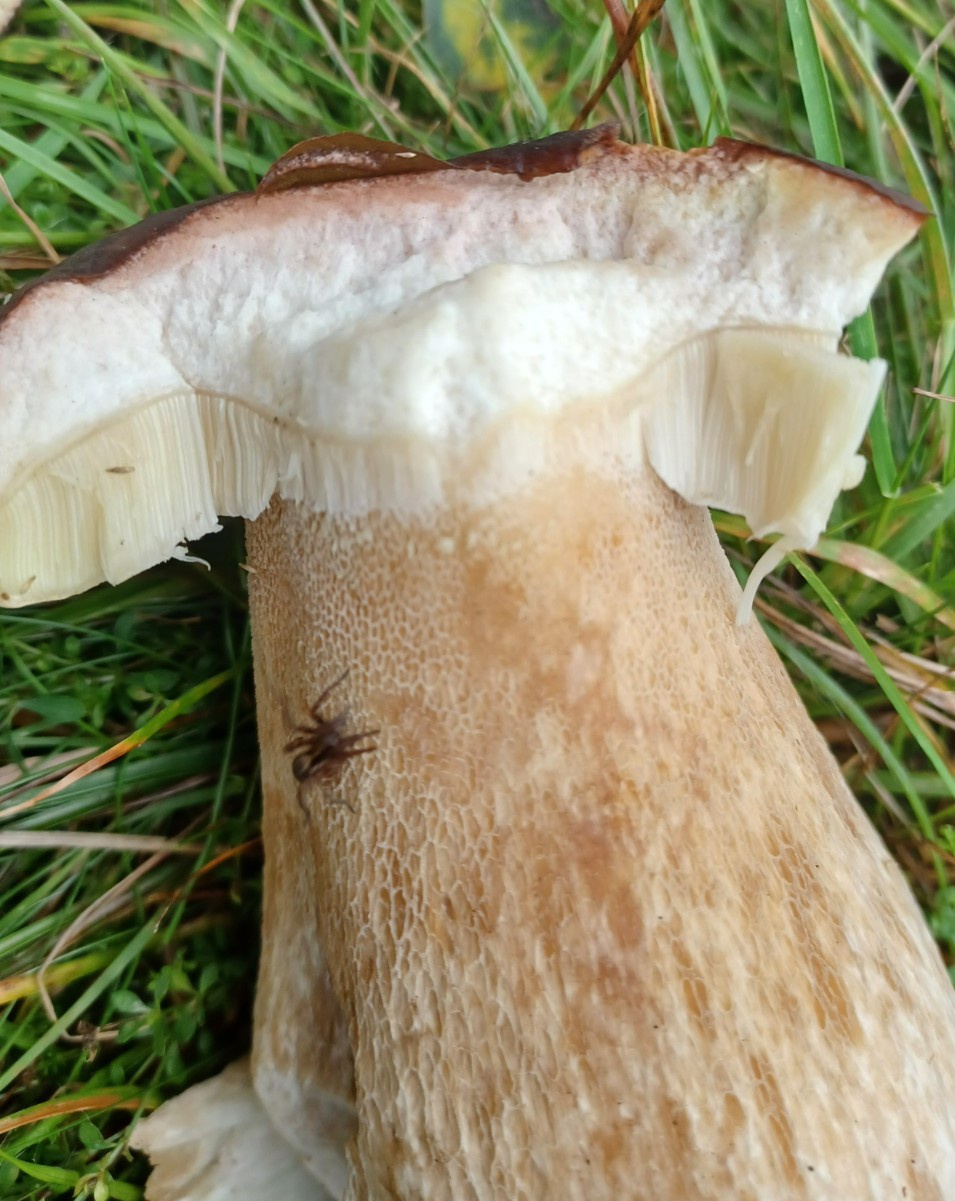
The cap is rounded and sticky when wet, and variable in colour from pale to dark brown or reddish brown or greyish, often with paler margin. The pores are initially white, becoming greenish-yellow. The stem is often fat and swollen, pale brown or whitish, with a white net-like reticulation that is most evident at the top. The pores and flesh do not stain blue when cut or bruised.
Depending on the host tree, this species is very variable in form and colour, it may be a species complex. A paler form found under Birch is given the name Boletus reticulata by some authors. [See Kibby, 2017. British Boletes with keys to species.]
The Bay Bolete Imleria badius can be similar, but does not have a reticulate (net-like) pattern on the stipe and the pores quickly stain blue when bruised. There are several other Boletus species with pale non-staining pores.

Photograph a fresh specimen from top down and in side view, and underneath to show pores and full length of stipe. Note habitat and substrate. Check for staining on cap and pores when bruised. We also recommend cutting vertically through cap and stem to show flesh colour and any staining.
Broadleaved and coniferous woods
June to October
Widespread and fairly common in Britain
Fairly common in Leicestershire and Rutland.
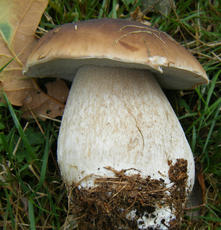 Graham Calow
Ulverscroft
08 September 2011
det. R Iliffe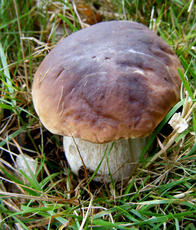 Graham Calow
Ulverscroft
08 September 2011
det. R Iliffe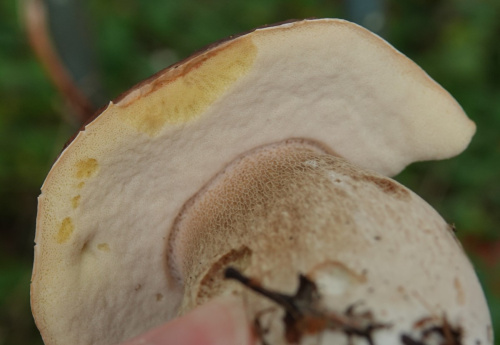 Jane Hollingworth
Kinchley Lane, Reservoir edge
06 October 2024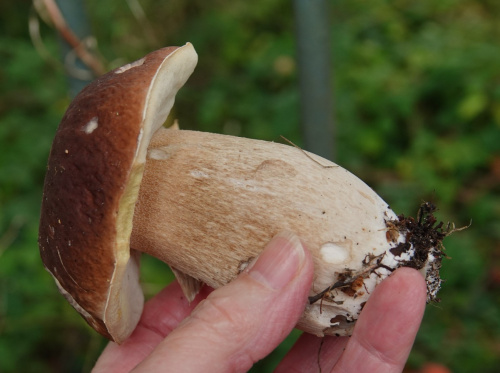 Jane Hollingworth
Kinchley Lane, Reservoir edge
06 October 2024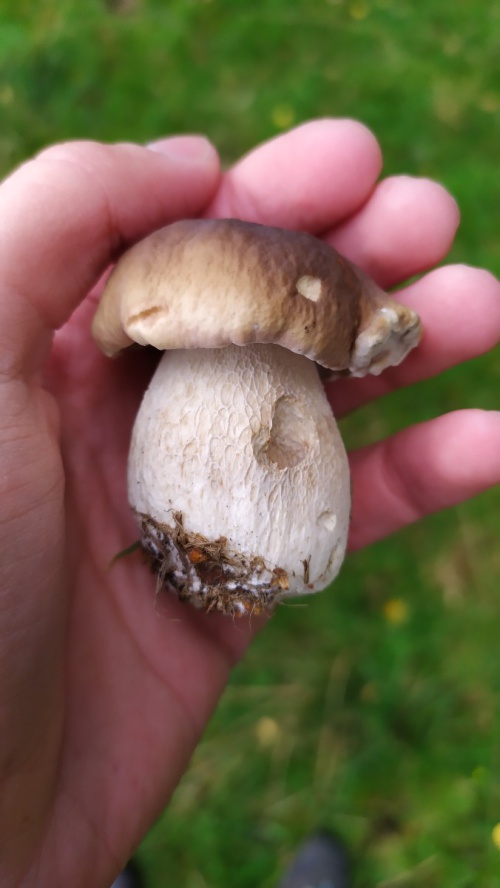 stepgray4
Charnwood Lodge
25 September 2022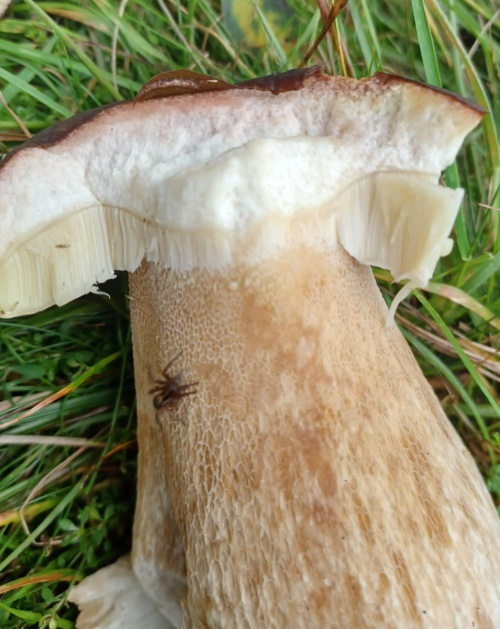 Margaret McLoughlin
Charnwood Lodge NNR
28 September 2023

Leicestershire & Rutland Map
Enter a town or village to see local records
MAP KEY:
Yellow squares = NBN records (all known data)
Coloured circles = NatureSpot records: 2025+ | 2020-2024 | pre-2020
UK Map
Species profile
- Common names
- Cep, Penny Bun
- Species group:
- fungus
- Kingdom:
- Fungi
- Order:
- Boletales
- Family:
- Boletaceae
- Records on NatureSpot:
- 17
- First record:
- 02/10/2005 (Nicholls, David)
- Last record:
- 24/10/2024 (Mabbett, Craig)
Total records by month
% of records within its species group
10km squares with records
The latest images and records displayed below include those awaiting verification checks so we cannot guarantee that every identification is correct. Once accepted, the record displays a green tick.
In the Latest Records section, click on the header to sort A-Z, and again to sort Z-A. Use the header boxes to filter the list.