

Rhinophora lepida
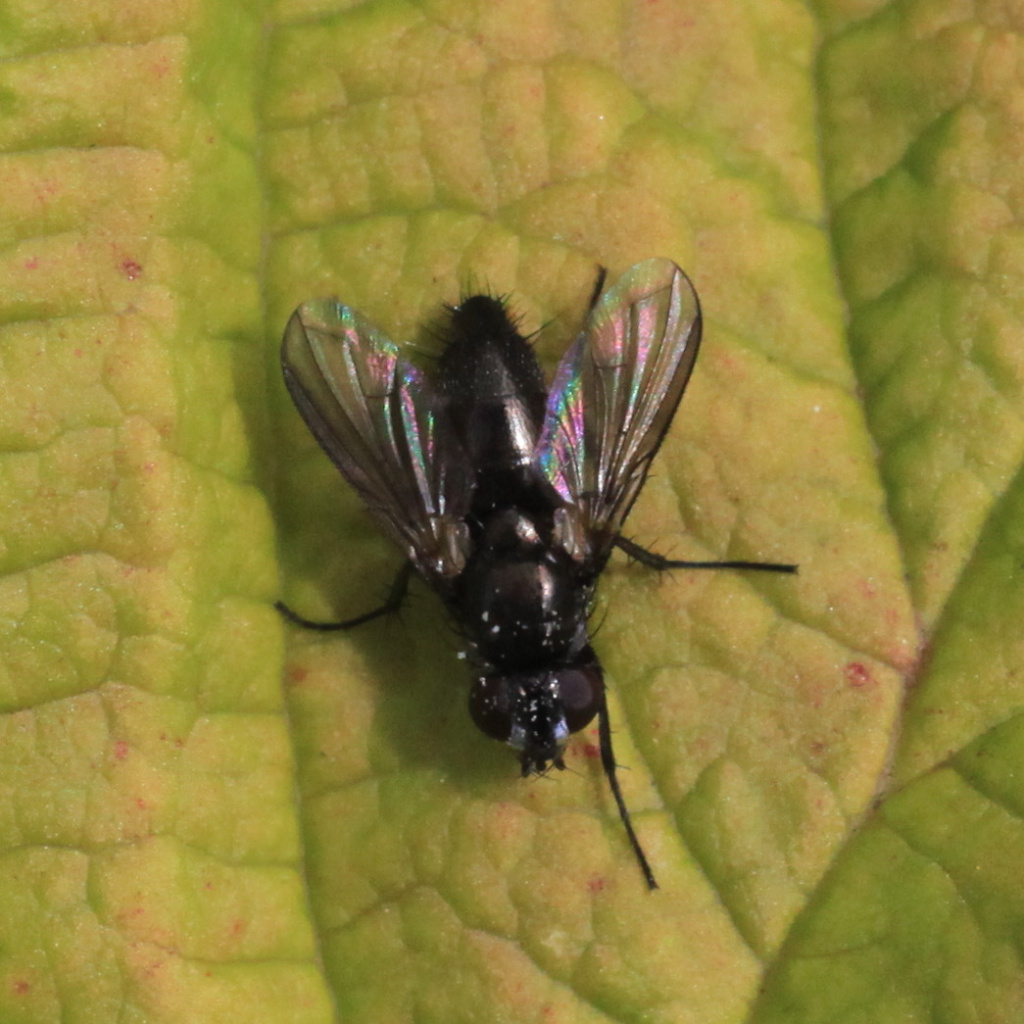
This small rhinophorid fly is shiny black and has a protruding mouth-edge, giving it the occasional common name of Pouting Woodlouse Fly. It has white parafacialia, yellow halteres, and the wings have a moderately-long stalk on vein R4+5. Males have paired dust spots on tergites 3 and 4, but these are less visible in females.

Detailed photographs showing the key characters if not identified by a recognised expert.
Can be found in many habitats including grasslands, post-industrial sites, coastal areas and arable margins.
Adults can be found on sunlit foliage or visiting flowers such as Oxeye Daisy, Yarrow and umbellifers.
Rhinophorid flies are parasitic on woodlice and for this species Porcellio scaber is thought to be a major host.
Widespread and locally common.
Uncommon or under-recorded.
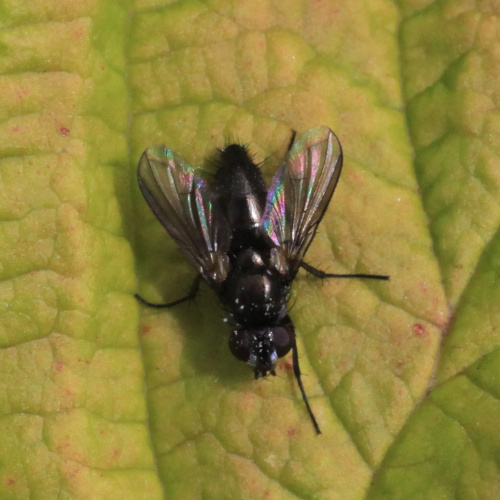 GHunt
GHunt
Oadby garden
23 July 2023
Leicestershire & Rutland Map
Enter a town or village to see local records
MAP KEY:
Yellow squares = NBN records (all known data)
Coloured circles = NatureSpot records: 2025+ | 2020-2024 | pre-2020
UK Map
Species profile
- Common names
- Pouting Woodlouse-fly
- Species group:
- insect - true fly (Diptera)
- Kingdom:
- Animalia
- Order:
- Diptera
- Family:
- Calliphoridae
- Records on NatureSpot:
- 3
- First record:
- 23/07/2023 (Hunt, Graham)
- Last record:
- 30/06/2025 (Hunt, Graham)
Total records by month
% of records within its species group
10km squares with records
The latest images and records displayed below include those awaiting verification checks so we cannot guarantee that every identification is correct. Once accepted, the record displays a green tick.
In the Latest Records section, click on the header to sort A-Z, and again to sort Z-A. Use the header boxes to filter the list.