Dicyphus pallidus
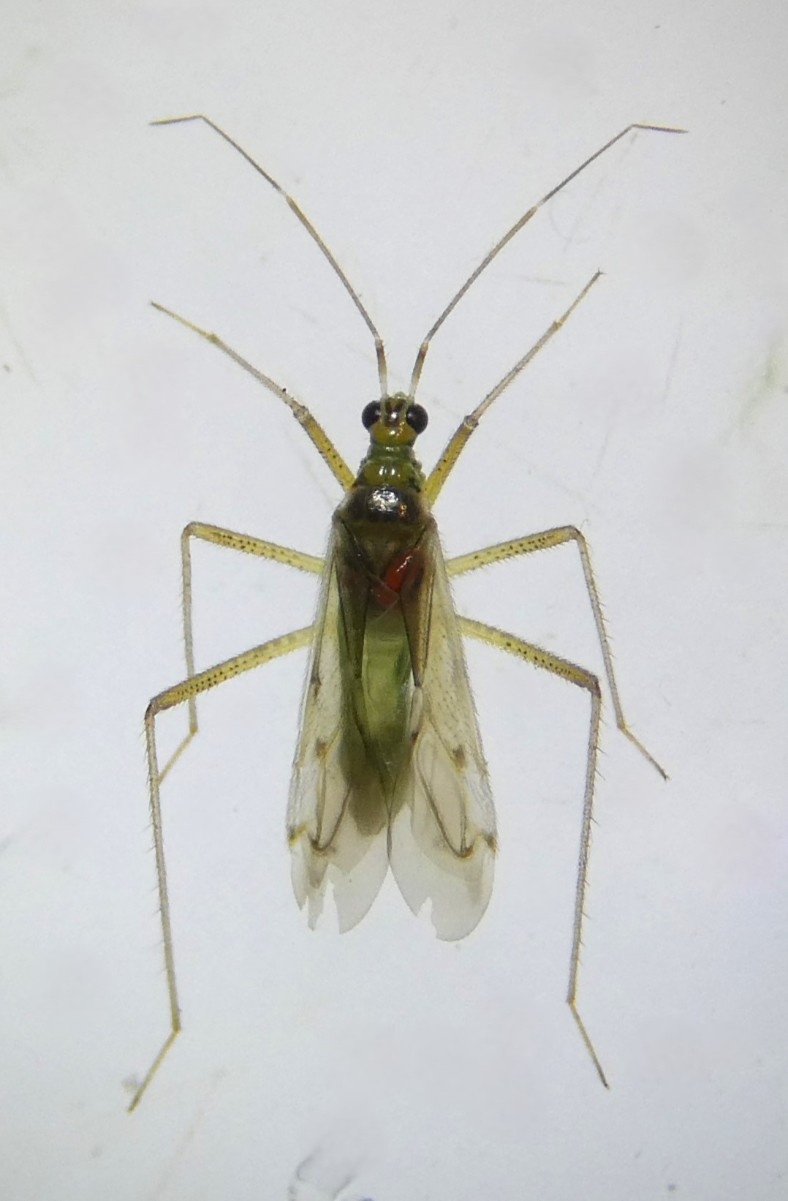
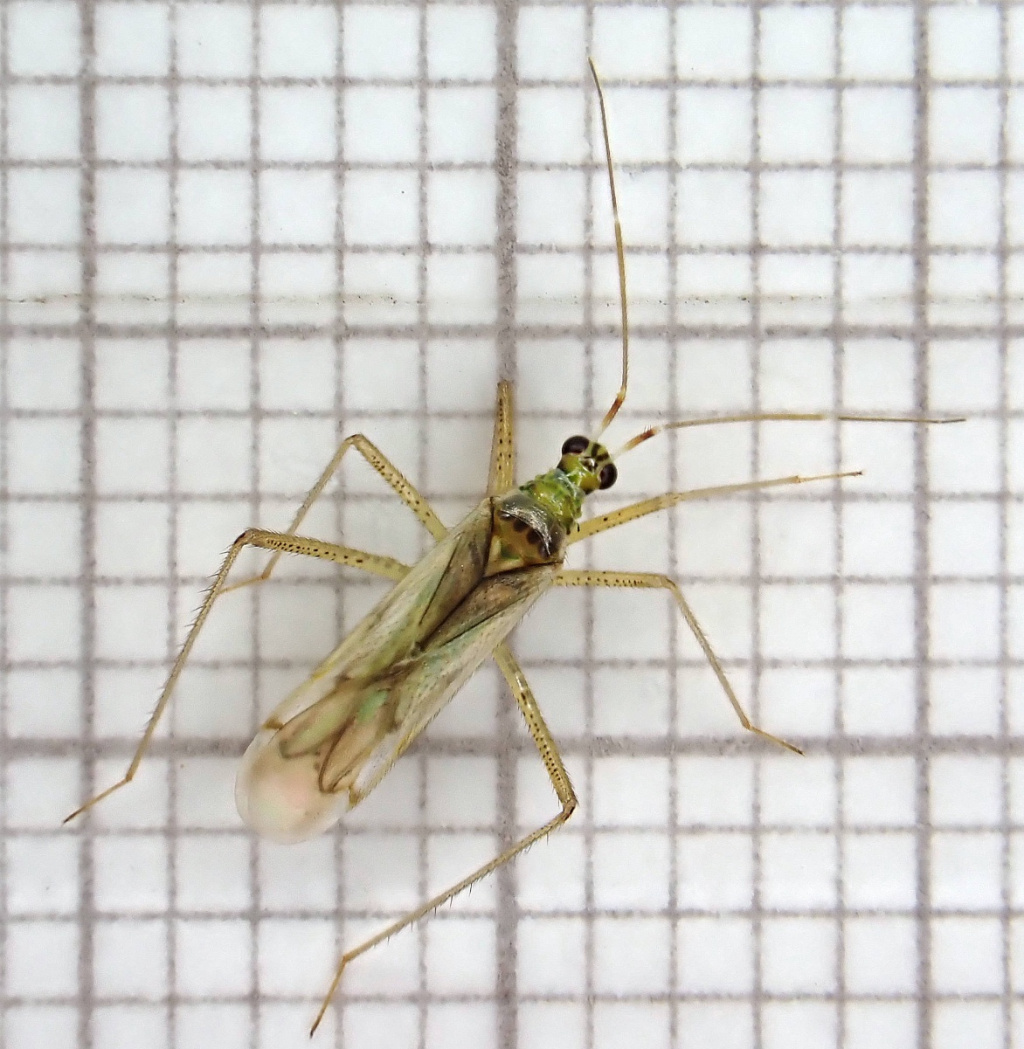
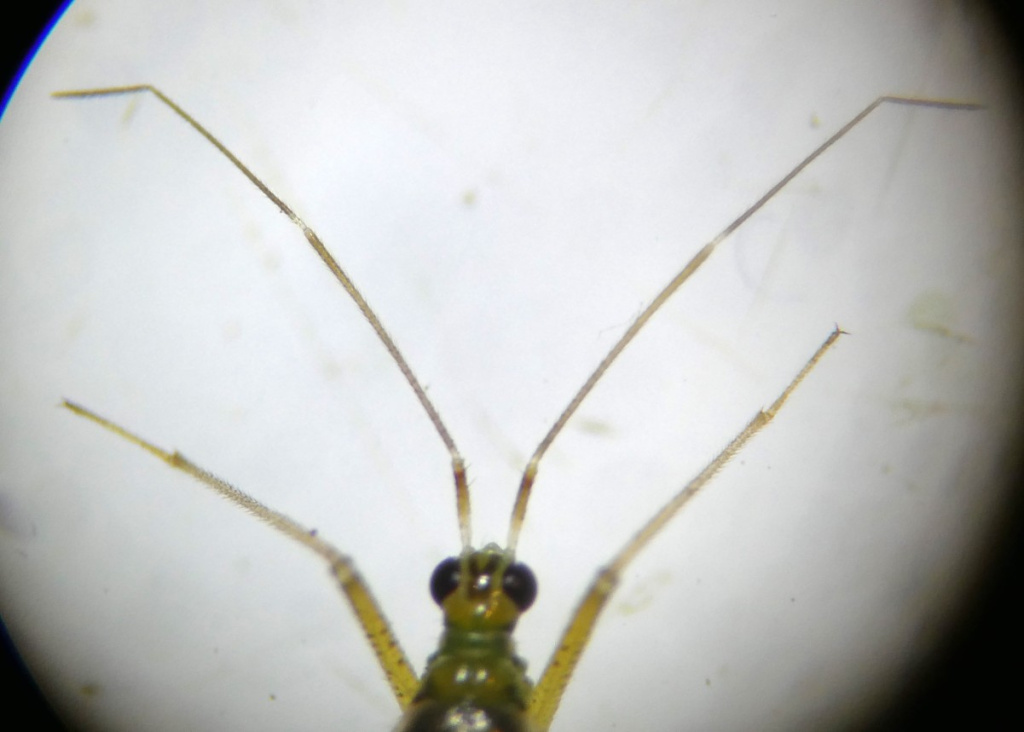
ant2 >2.1× longer than head width; body length 5.2–5.8mm in macropters, 4.3–5.1mm in brachypters; ant3 > head width across eyes; head, pronotum, ant1+2 largely pale (D. errans tenerals are ‘dusky’); ant1 marked with red;
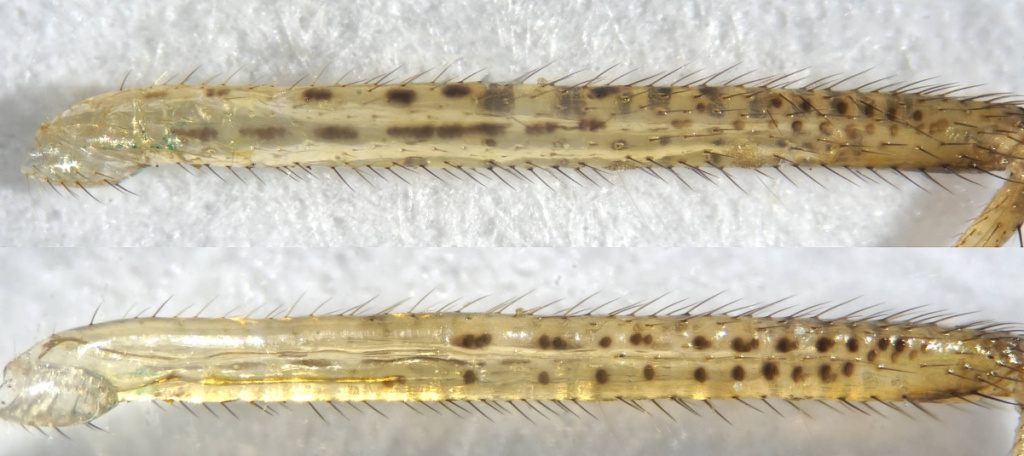
pronotal callosities large – 2x width of collar; hairs on the hind femur all dark (pale in D. constrictus).
(ref.: B S Nau, unpublished key to Miridae, 2012)
other Dicyphus species

Photographs of key ID features required. Please state the host-plant
On Hedge Woundwort and other plants.
Summer.
Dicyphus pallidus overwinters in the egg stage, as do most Mirids. This species is assumed to be at least partly predatory.
Not known in England prior to 2009, but is now considered to be widely distributed, at least in southern England.
Rarely recorded.
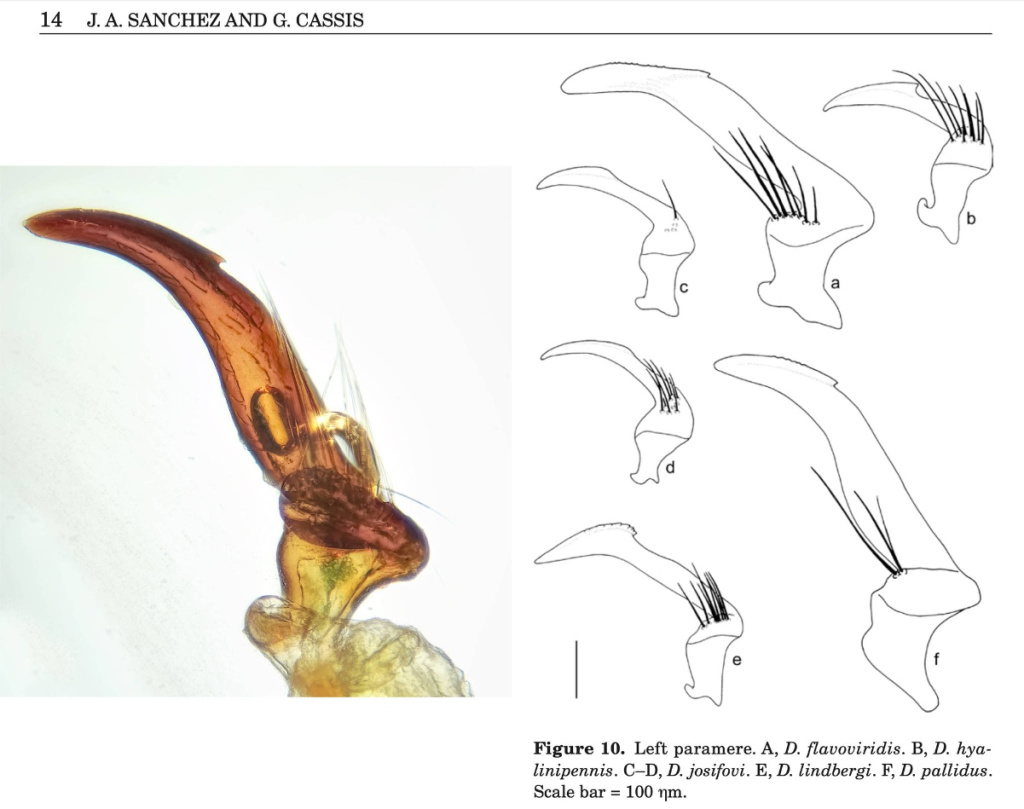
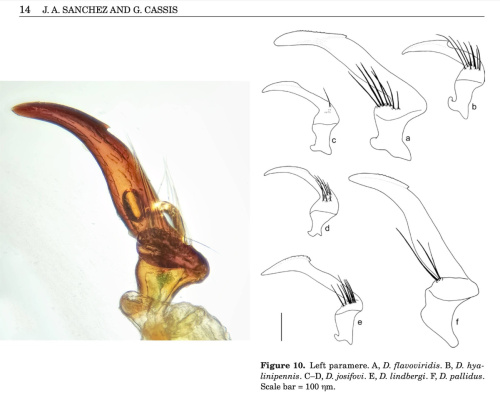
Sanchez, J.A. & Cassis, G. (2018) Towards solving the taxonomic impasse of the biocontrol plant bug subgenus Dicyphus (Dicyphus)(Insecta: Heteroptera: Miridae) using molecular, morphometric and morphological partitions. Zoological Journal of the Linnean Society, 184(2), 330-406.
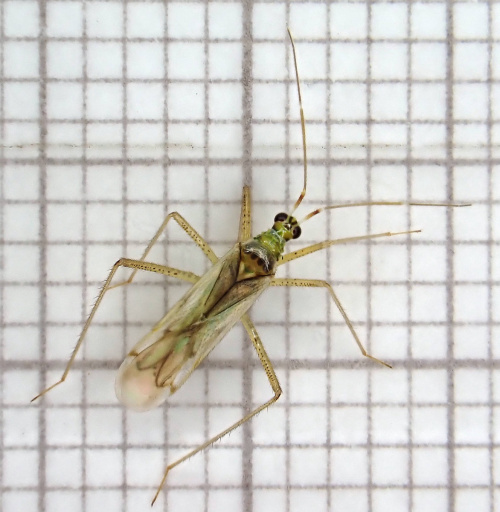 AJ Cann
Great Merrible
28 July 2024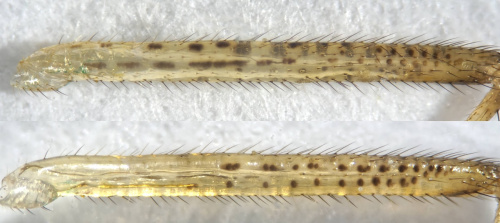 AJ Cann
Great Merrible
28 July 2024
Hind femur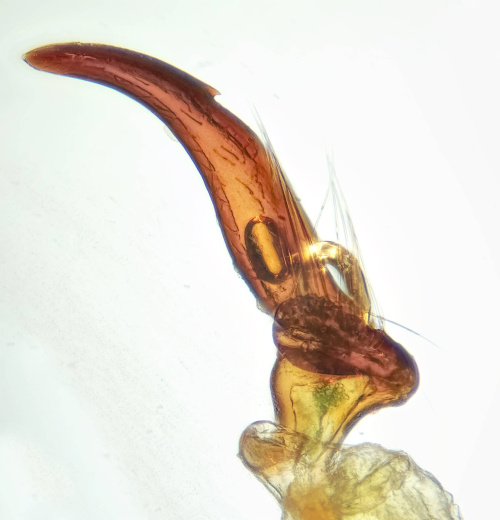 AJ Cann
Great Merrible
28 July 2024
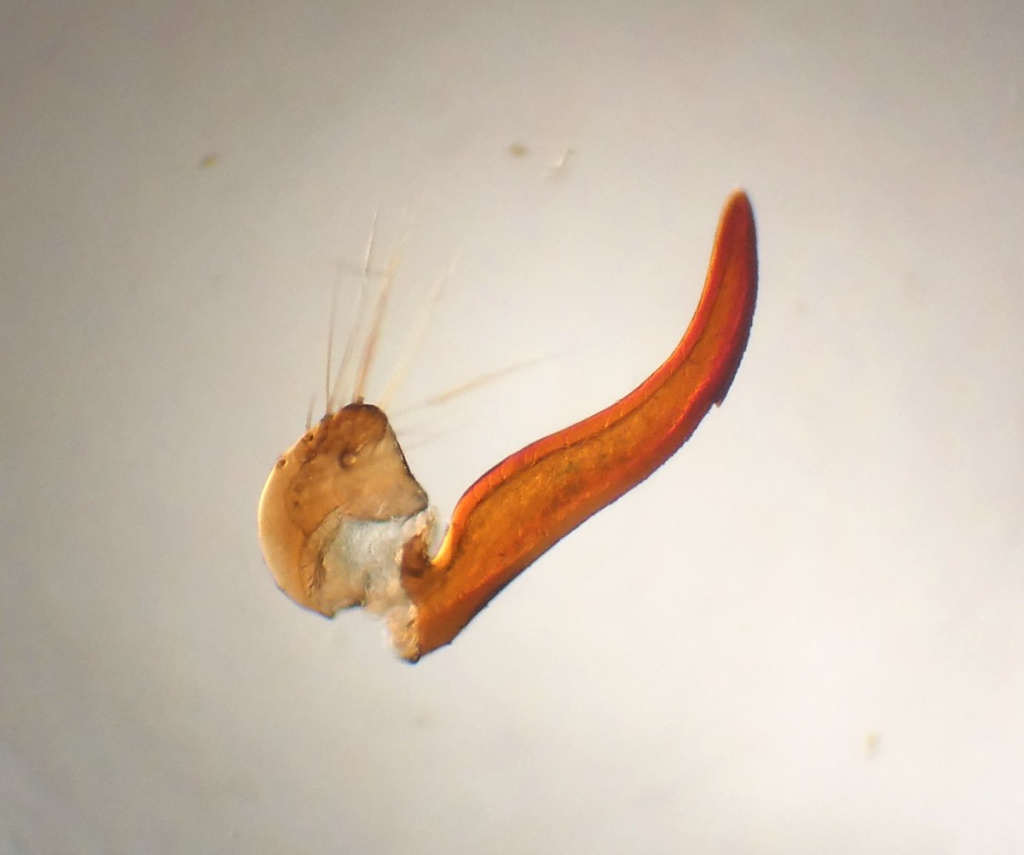
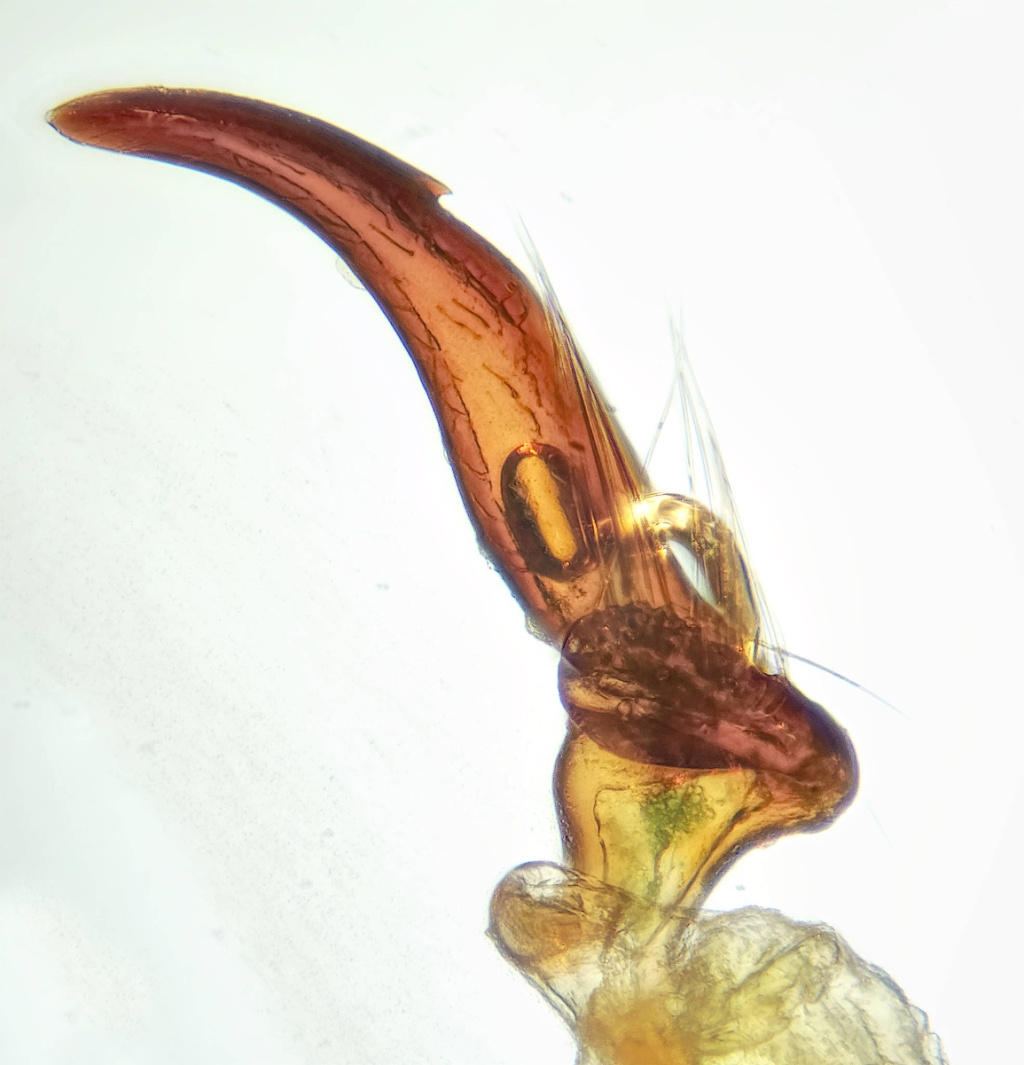
Left paramere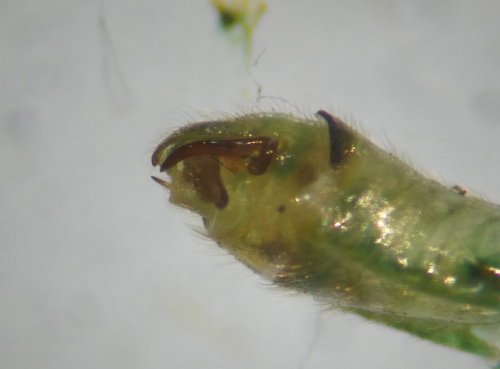 sue
sue
Ratby Burroughs
31 July 2024
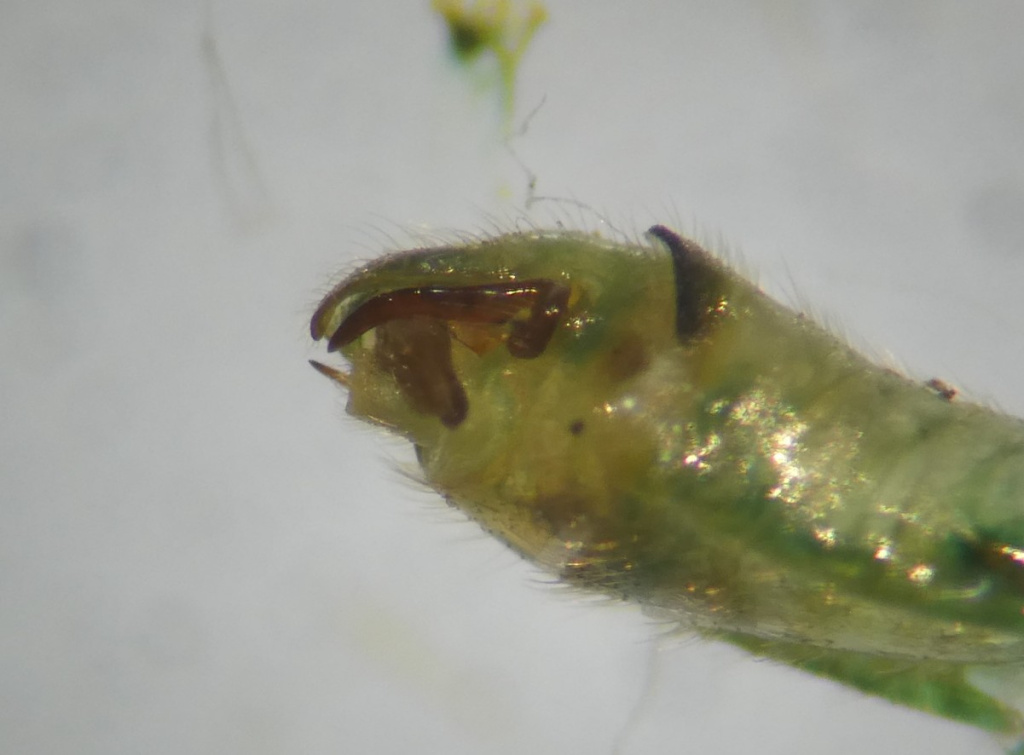
tip of abdomen showing paramere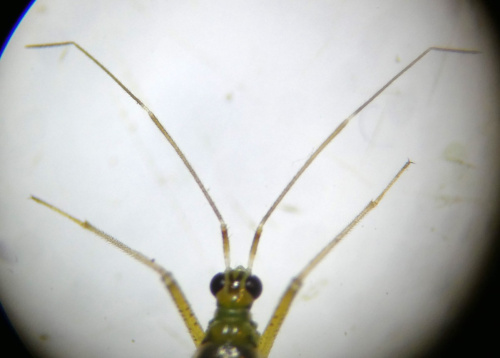 sue
sue
Ratby Burroughs
31 July 2024
A3> head width across eyes
Leicestershire & Rutland Map
Enter a town or village to see local records
MAP KEY:
Yellow squares = NBN records (all known data)
Coloured circles = NatureSpot records: 2025+ | 2020-2024 | pre-2020
UK Map
Species profile
- Species group:
- insect - true bug (Hemiptera)
- Kingdom:
- Animalia
- Order:
- Hemiptera
- Family:
- Miridae
- Records on NatureSpot:
- 4
- First record:
- 28/07/2024 (Cann, Alan)
- Last record:
- 31/07/2025 (Pugh, Dylan)
Total records by month
% of records within its species group
10km squares with records
The latest images and records displayed below include those awaiting verification checks so we cannot guarantee that every identification is correct. Once accepted, the record displays a green tick.
In the Latest Records section, click on the header to sort A-Z, and again to sort Z-A. Use the header boxes to filter the list.
Latest images
Latest records
 AJ Cann
Great Merrible
28 July 2024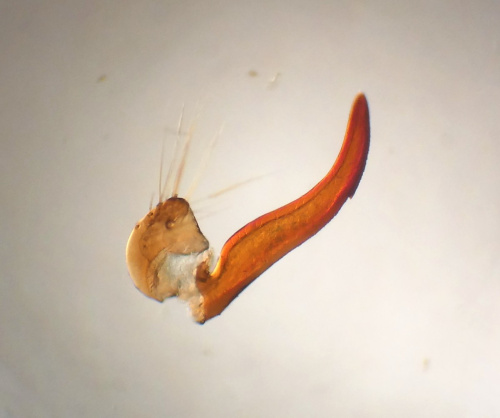 sue
sue
Ratby Burroughs
31 July 2024
paramere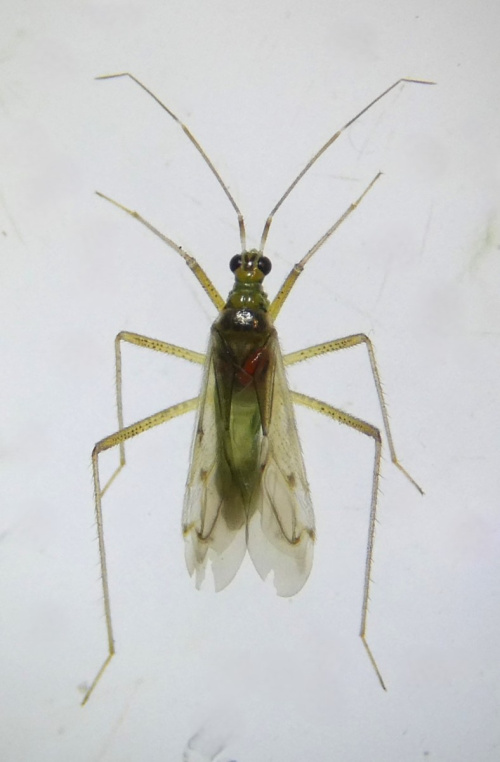 sue
sue
Ratby Burroughs
31 July 2024
male