Common Comfrey - Symphytum officinale
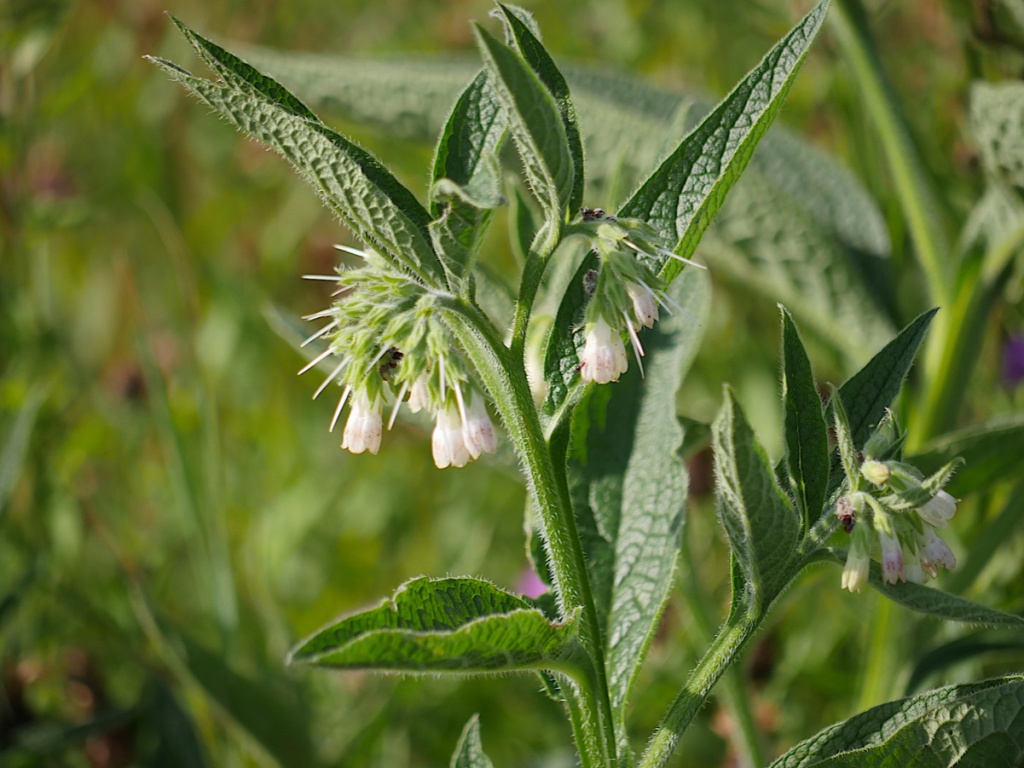
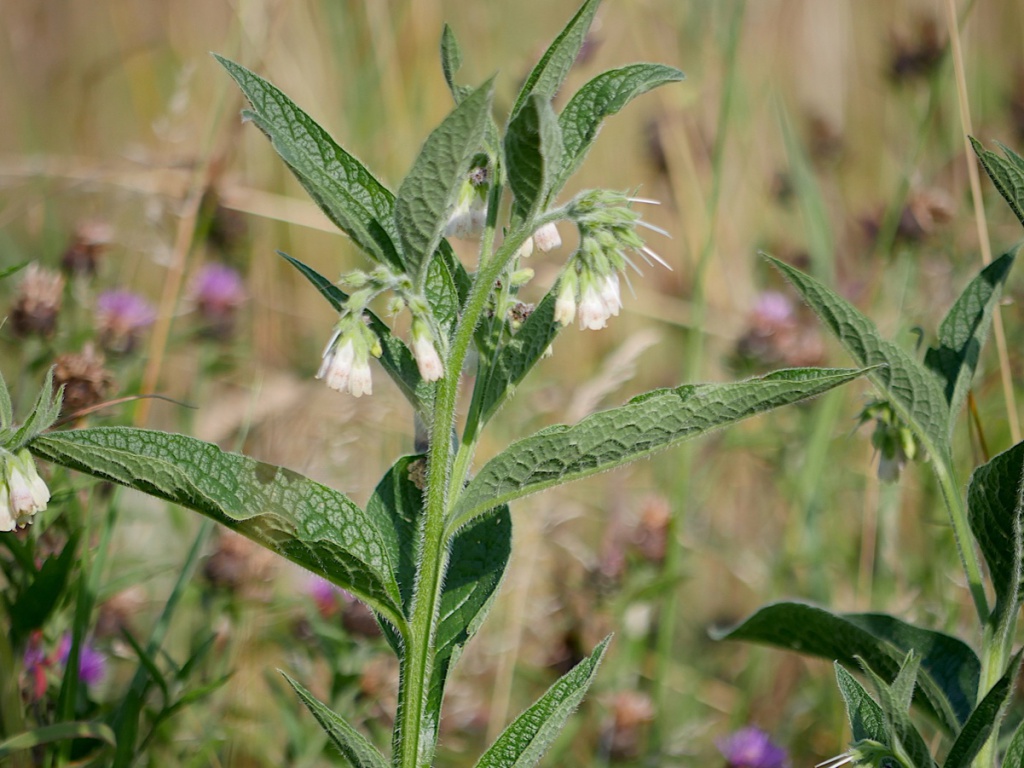
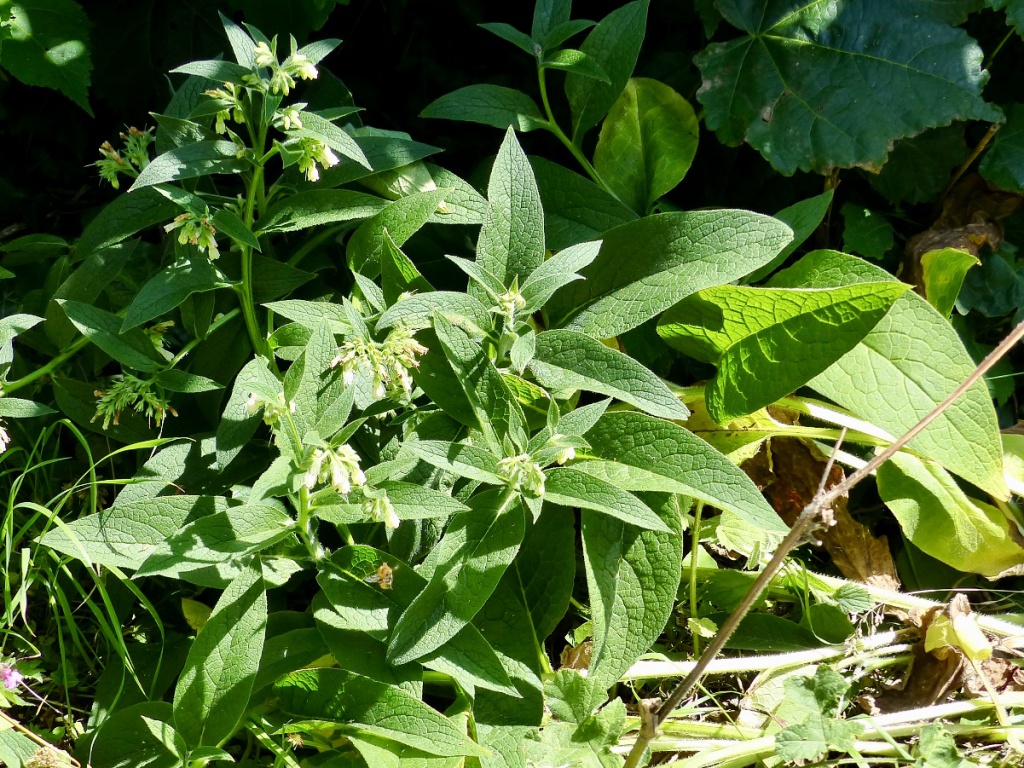
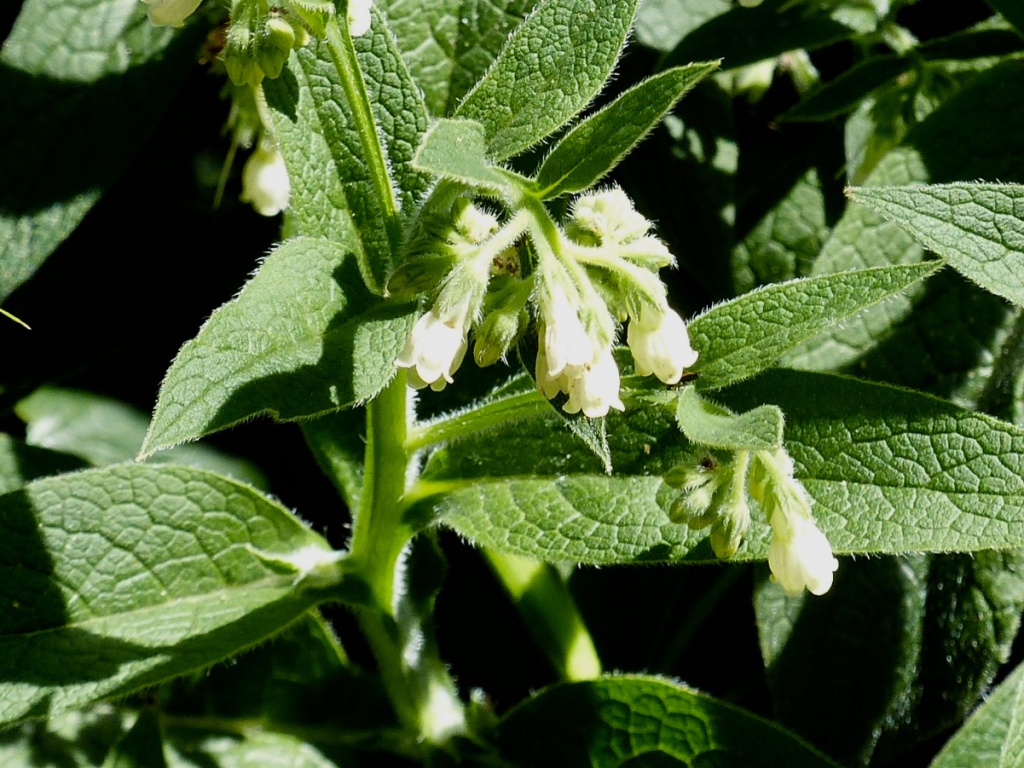
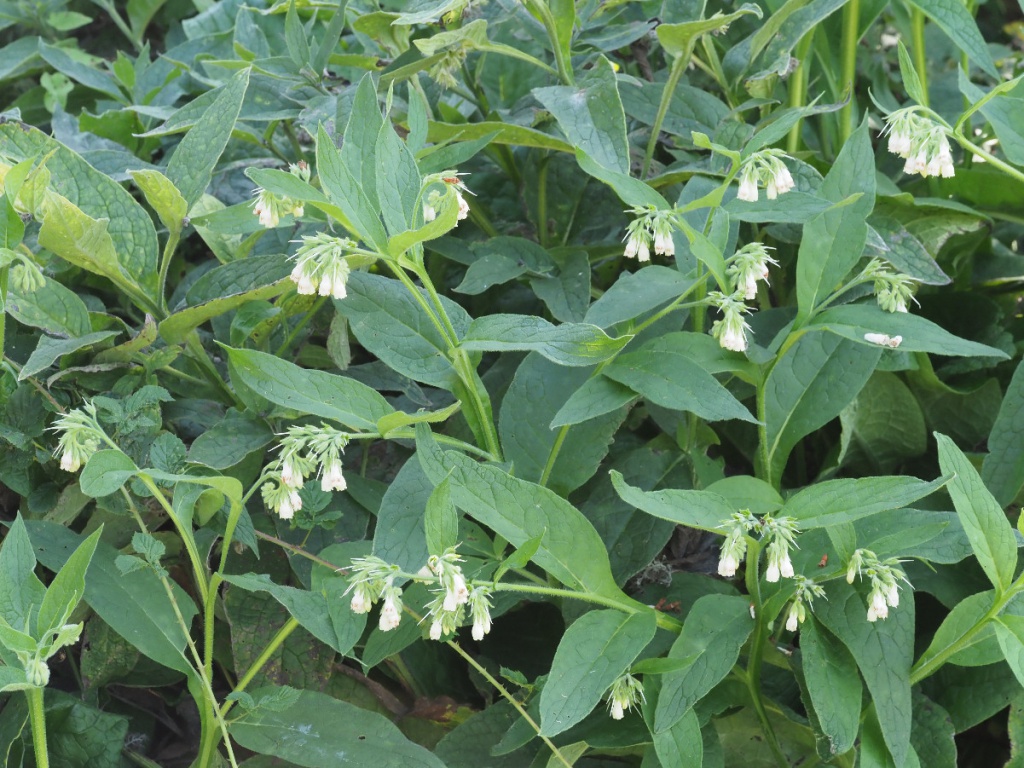
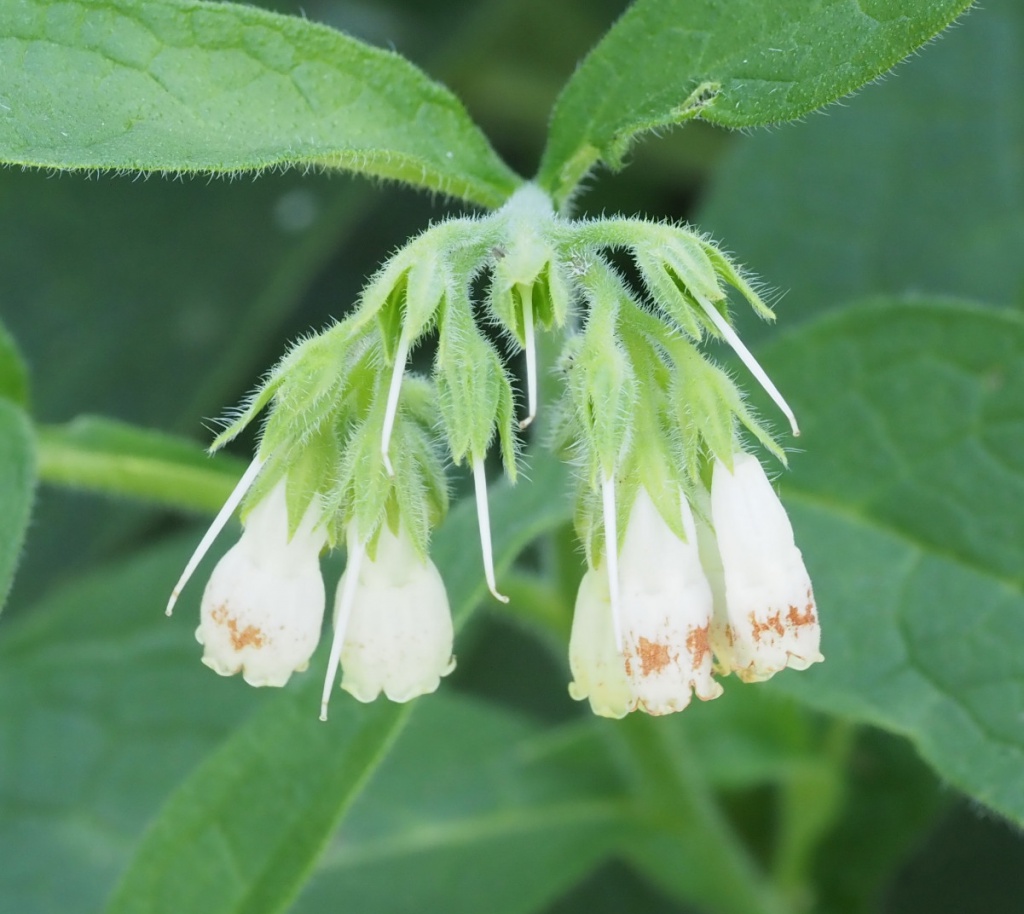
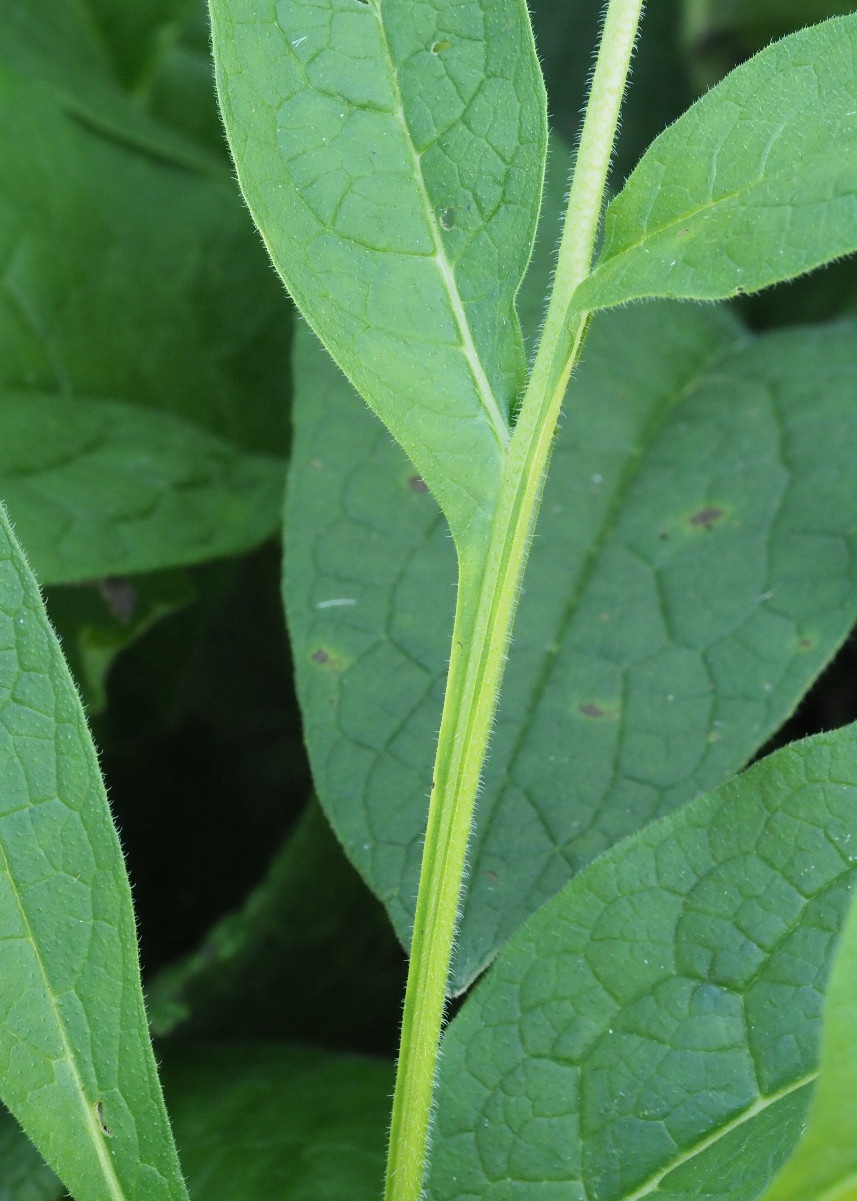
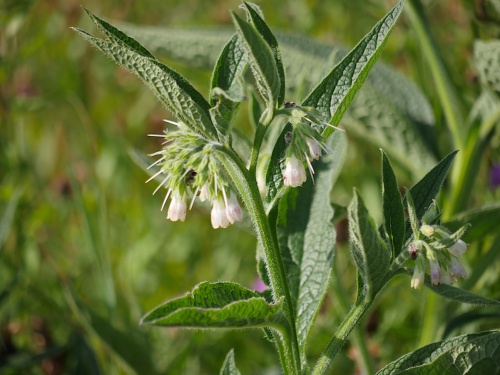
Stout plant to 1.2 metres. Stems erect, widely winged. Leaves large and coarse, untoothed, strongly decurrent (the base running on to the stem) for more than one section of stem between nodes, only the lowest stalked. Flowers, pink, whitish or purple-violet 12 to 18 mm bell shaped with reflexed lobes, borne in forked clusters. Nutlets usually smooth and shining.
Many other species, hybrids and varieties of comfrey with blue, pink or pale flowers - especially Russian Comfrey and Hidcote Comfrey, for which it is often recorded in error.

Provide a photo of the plant in its habitat, plus close-up photos of details of leaves/stems, flowers and nutlets. The photos must show strongly decurrent leaf bases.
Damp grassland, roadside verges and banks of streams.
According to Stace (4th edition) it is locally frequent in the British Isles, but less common that and over-recorded for Russian comfrey (Symphytum x uplandicum)
Despite the name, this is not the commonest comfrey in VC55, but has probably been over-recorded in the past for one of the hybrids. Because of this, status is uncertain, but it may be uncommon or occasional.
 David Nicholls
Watermead Country Park
07 September 2021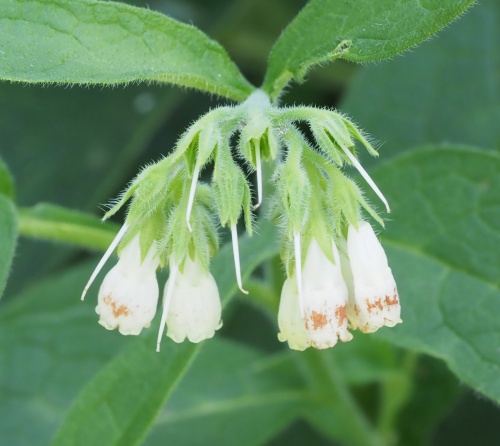 David Nicholls
Watermead Country Park
07 September 2021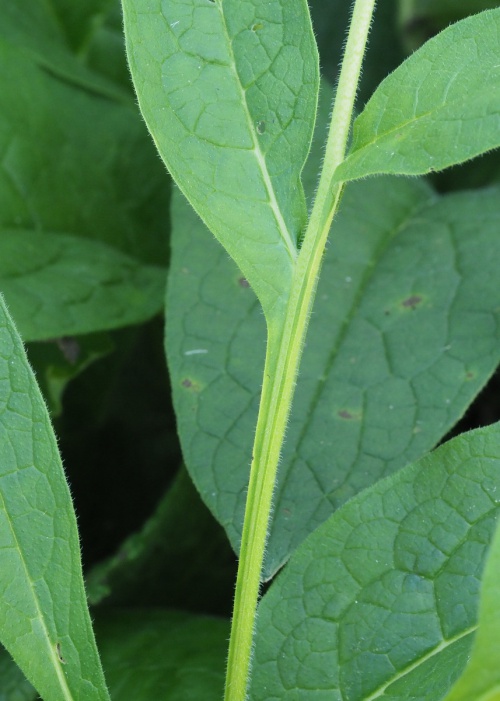 David Nicholls
Watermead Country Park
07 September 2021
Leicestershire & Rutland Map
Enter a town or village to see local records
MAP KEY:
Yellow squares = NBN records (all known data)
Coloured circles = NatureSpot records: 2025+ | 2020-2024 | pre-2020
UK Map
Species profile
- Common names
- Common Comfrey
- Species group:
- flowering plant
- Kingdom:
- Plantae
- Order:
- Boraginales
- Family:
- Boraginaceae
- Records on NatureSpot:
- 3
- First record:
- 03/07/2018 (Charity, Kenneth)
- Last record:
- 07/09/2021 (Nicholls, David)
Total records by month
% of records within its species group
10km squares with records
The latest images and records displayed below include those awaiting verification checks so we cannot guarantee that every identification is correct. Once accepted, the record displays a green tick.
In the Latest Records section, click on the header to sort A-Z, and again to sort Z-A. Use the header boxes to filter the list.
Latest images
Latest records
 rockfowl
Aylestone Meadows
25 July 2019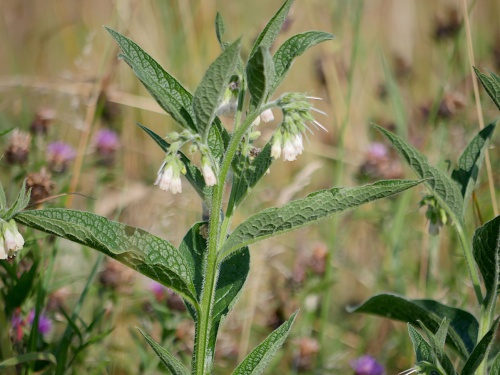 rockfowl
Aylestone Meadows
25 July 2019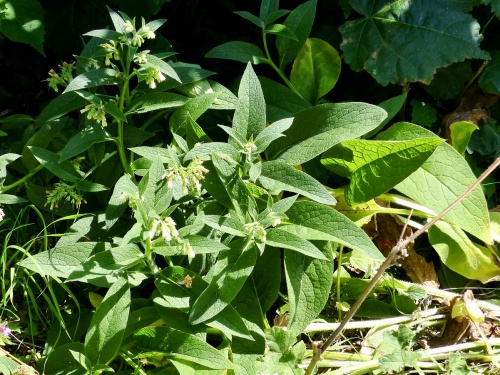 Ken Charity
Top Brand Road. Opp. Cloud Wood.
03 July 2018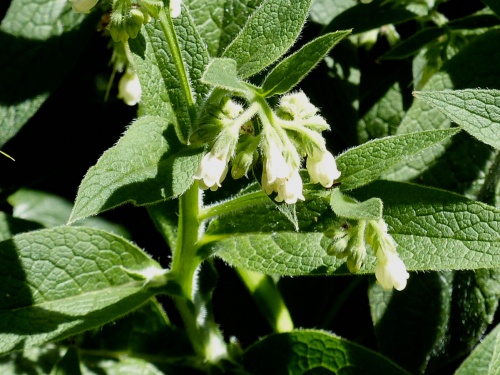 Ken Charity
Top Brand Road. Opp. Cloud Wood.
03 July 2018