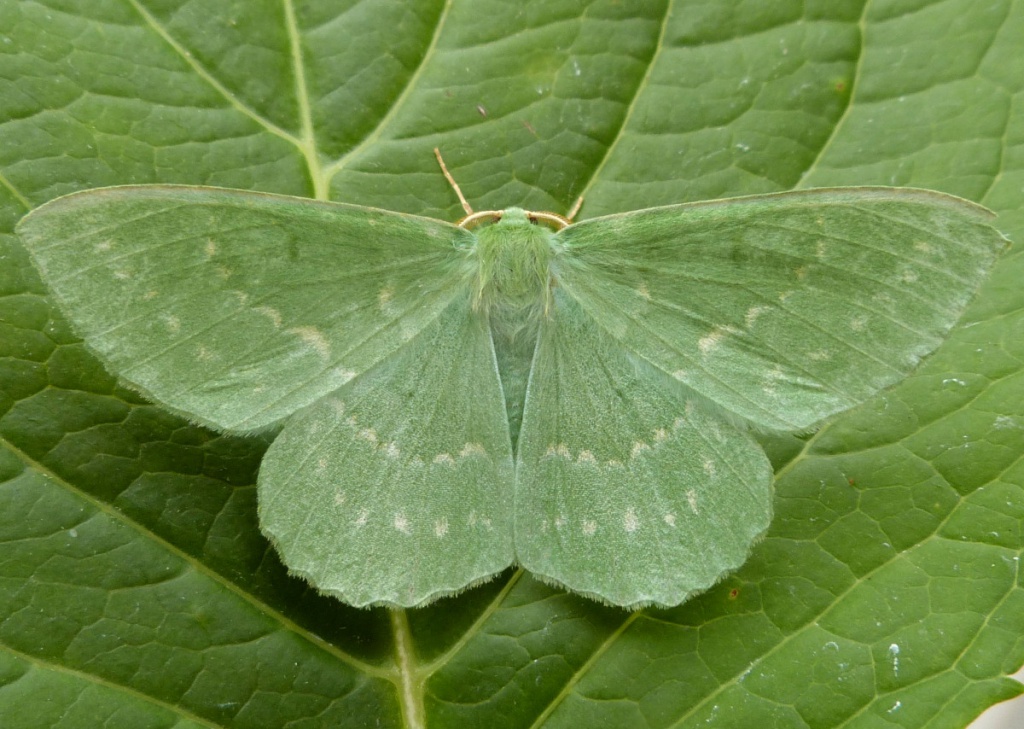
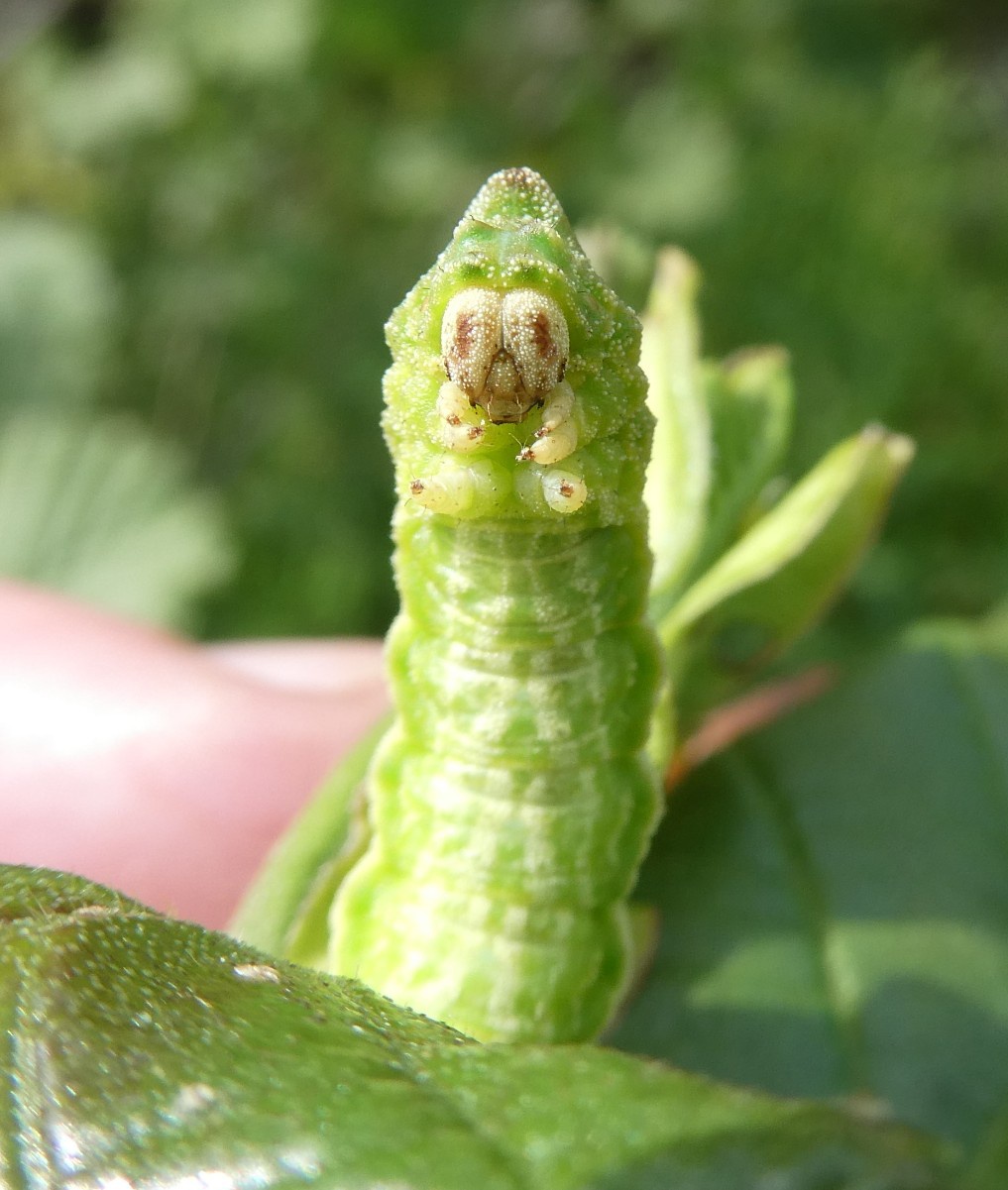
Large Emerald - Geometra papilionaria
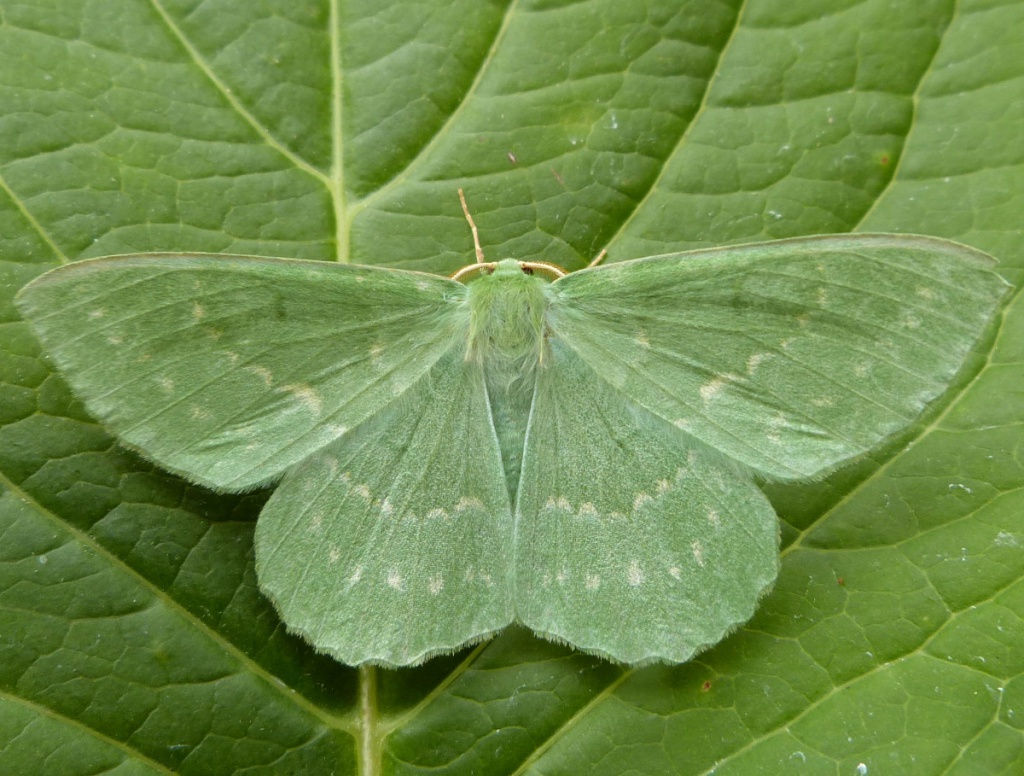
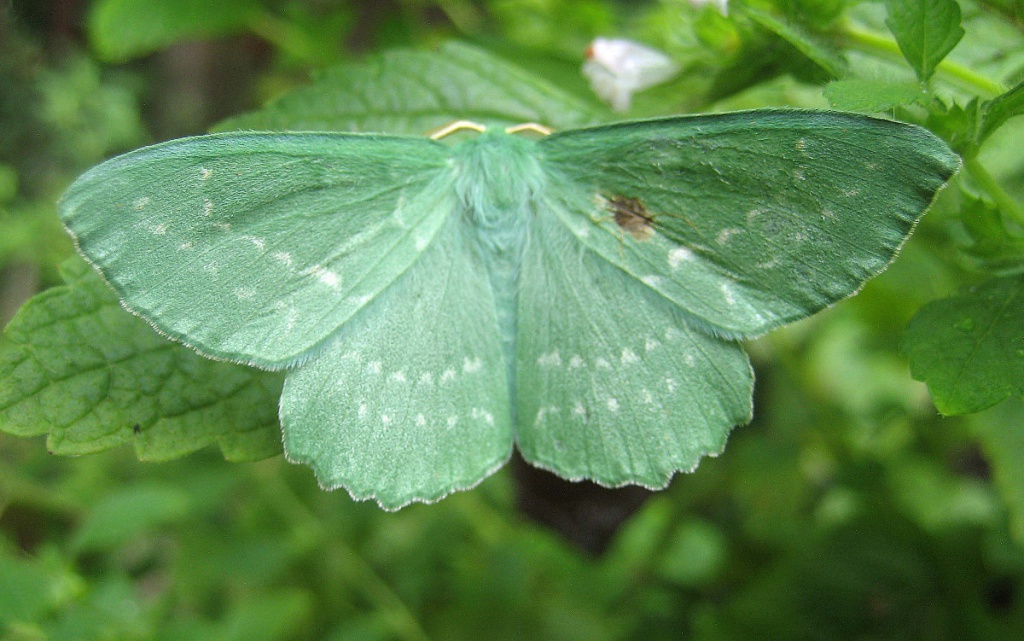
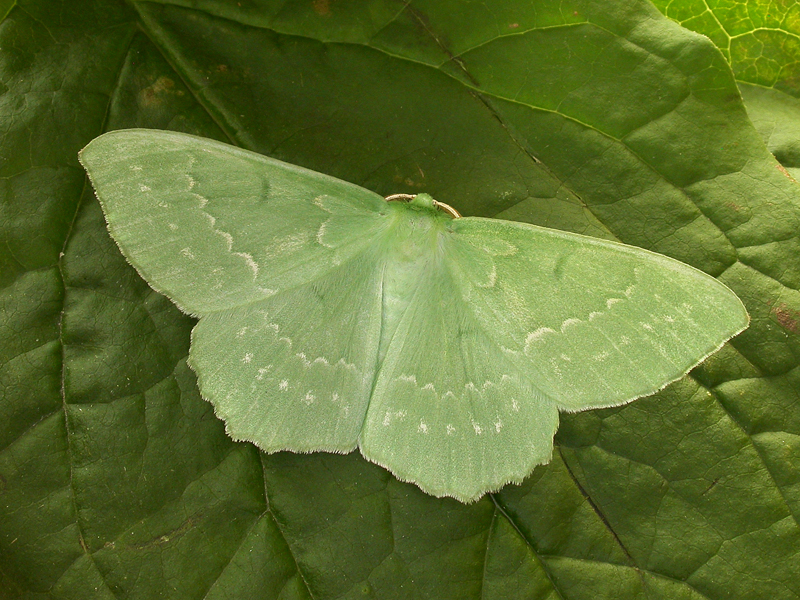
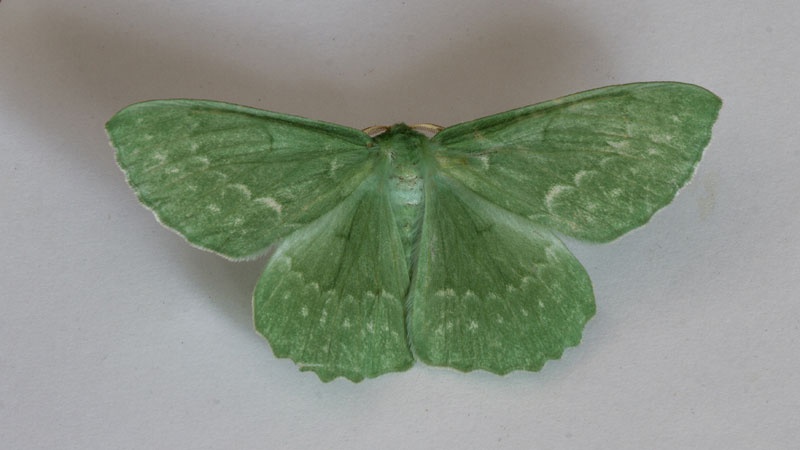
Wingspan 40 to 50 mm. This is the largest of the 'emeralds'.

It inhabits woods, heaths and moors.
Flies at night in June and July, when it is easily attracted by light.
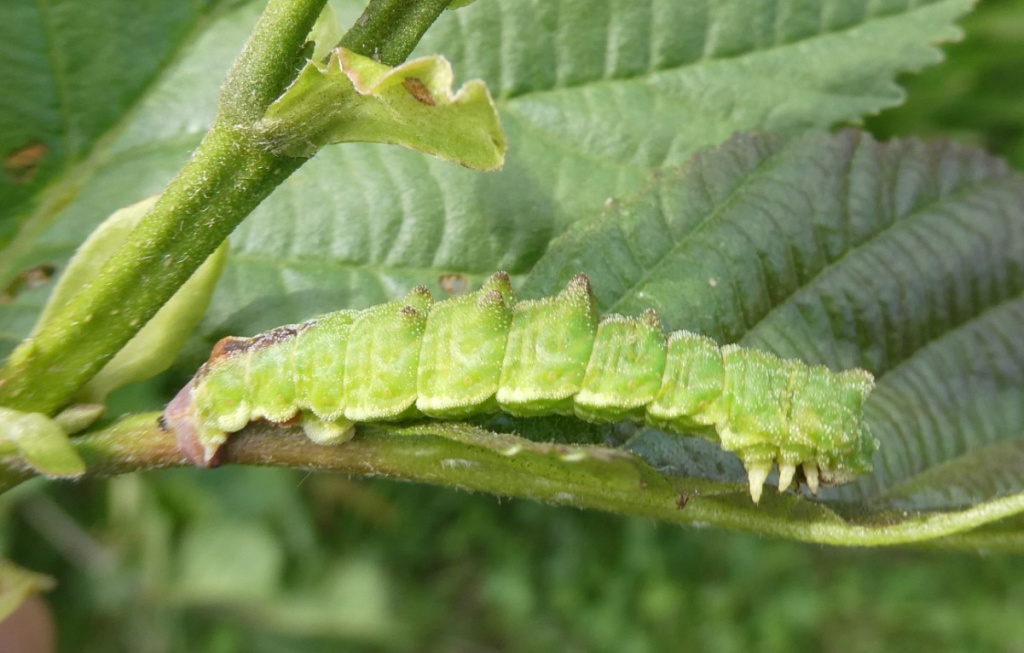
The caterpillar is brown at first, but after overwintering becomes green with brownish 'warts', and feeds mainly on birch.
Fairly frequent throughout most of Britain. In a recent survey to determine the status of all macro moths in Britain this species was classified as common.
Fairly common in Leicestershire and Rutland. L&R Moth Group status = A (common and resident).
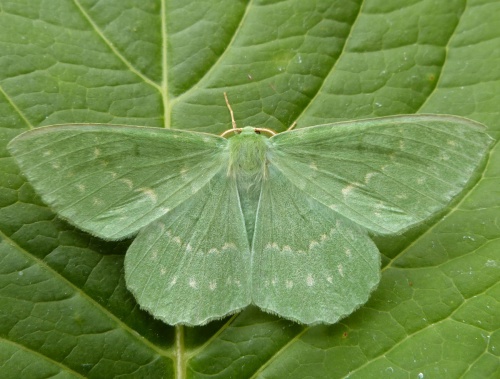 Graham Calow
Sapcote garden1
23 July 2013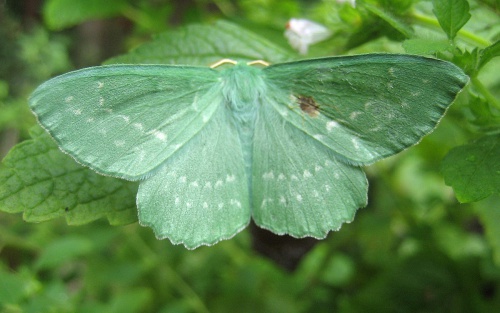 Pete Leonard
Harby
23 July 2013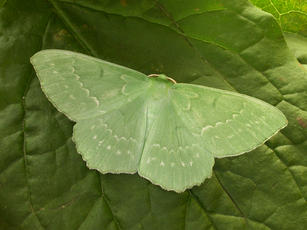 Mark Skevington
Pickworth Great Wood
25 July 2009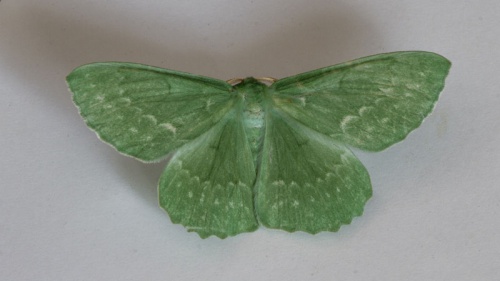 Rod Baker
Newton Harcourt
27 June 2014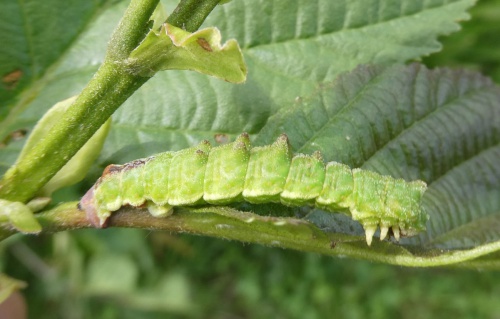 sue
sue
Normanton le Heath, QEII Diamond Jubilee Wood
16 May 2022
Leicestershire & Rutland Map
Enter a town or village to see local records
MAP KEY:
Yellow squares = NBN records (all known data)
Coloured circles = NatureSpot records: 2025+ | 2020-2024 | pre-2020
UK Map
Species profile
- Common names
- Large Emerald
- Species group:
- insect - moth
- Kingdom:
- Animalia
- Order:
- Lepidoptera
- Family:
- Geometridae
- Records on NatureSpot:
- 48
- First record:
- 01/01/1998 (Adrian Russell)
- Last record:
- 06/07/2026 (Gaten, Ted)
Total records by month
% of records within its species group
10km squares with records
The latest images and records displayed below include those awaiting verification checks so we cannot guarantee that every identification is correct. Once accepted, the record displays a green tick.
In the Latest Records section, click on the header to sort A-Z, and again to sort Z-A. Use the header boxes to filter the list.
Latest images
Latest records
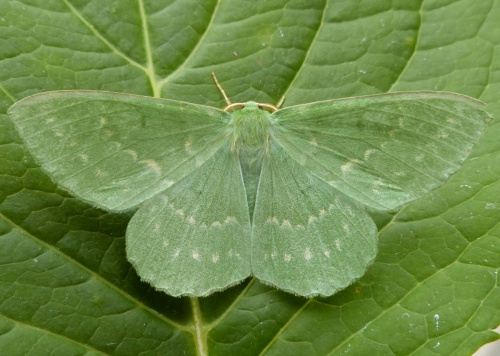 Graham Calow
Sapcote garden1
23 July 2013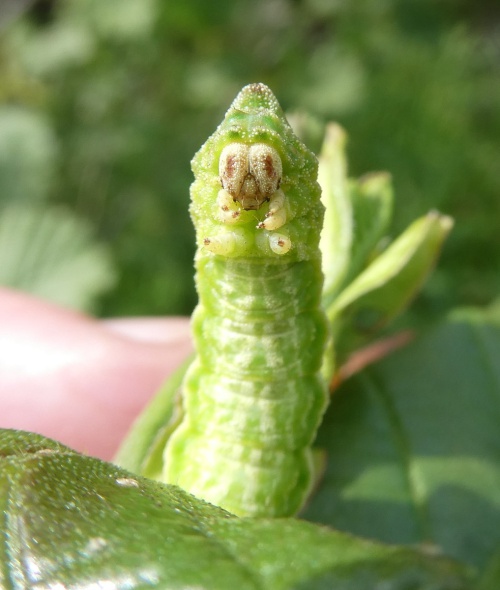 sue
sue
Normanton le Heath, QEII Diamond Jubilee Wood
16 May 2022