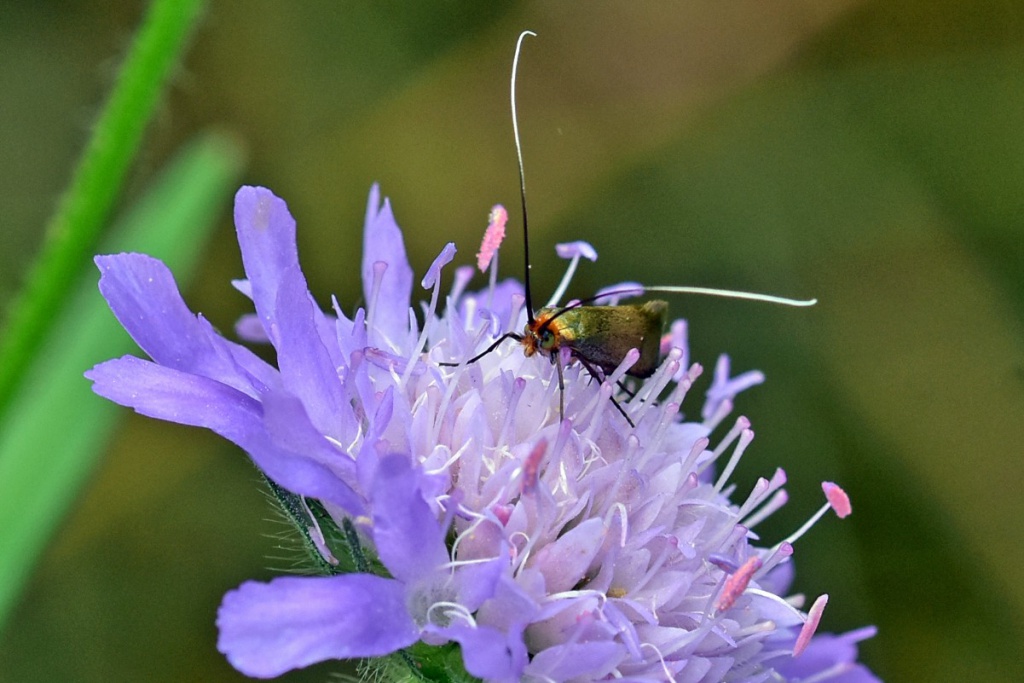
Nemophora metallica
Brassy Long-horn
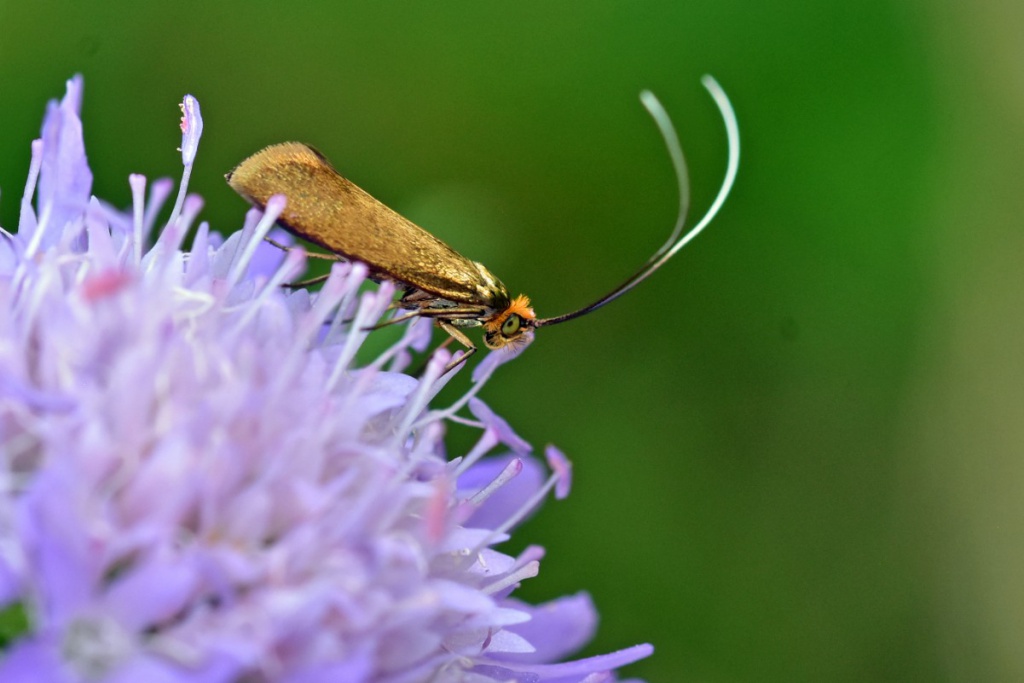
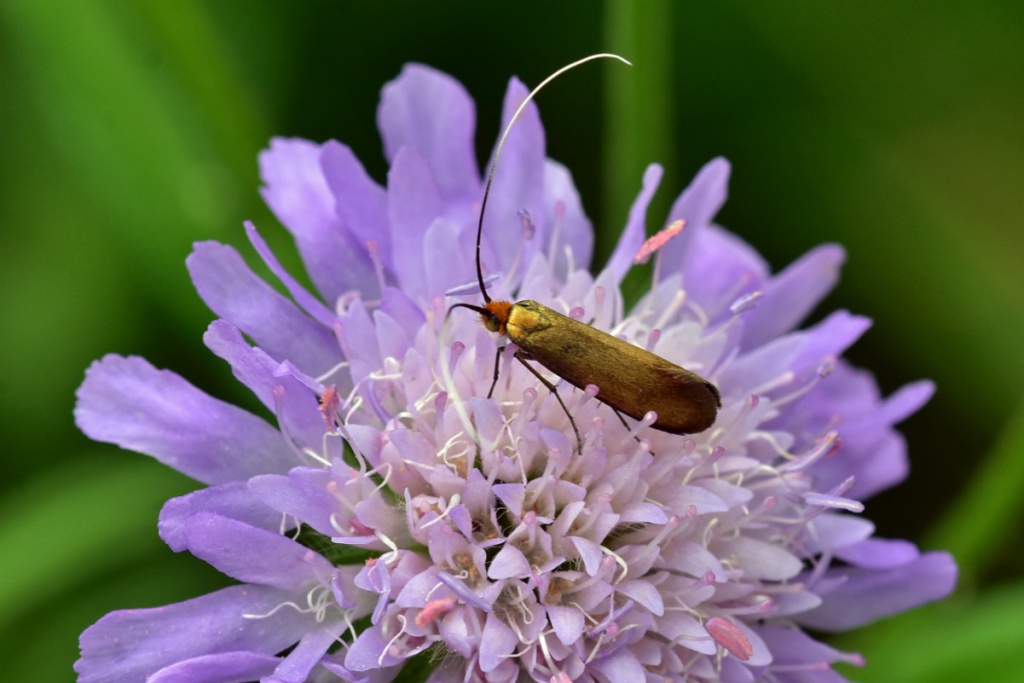
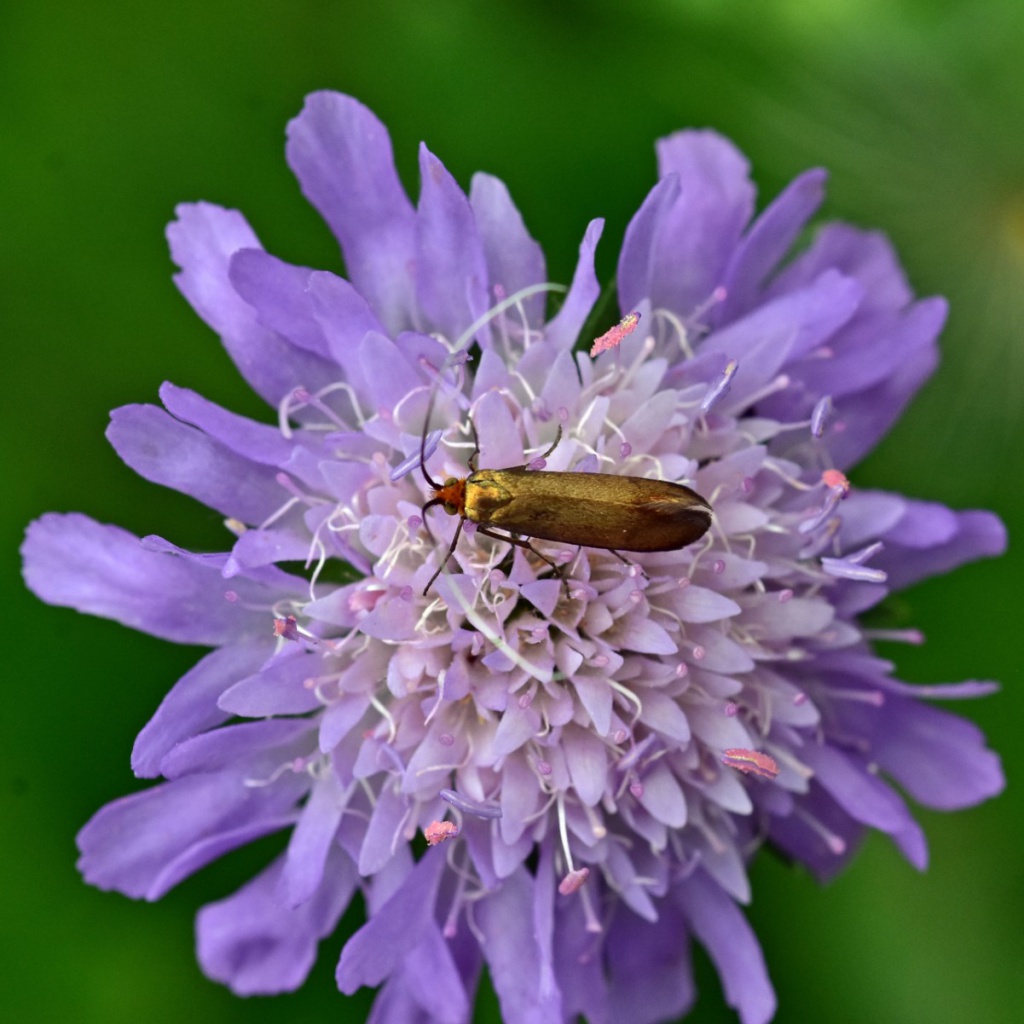
Wingspan 15 to 20 mm. One of the 'longhorn' moths, the male has antennae three times the length of the forewings, the female around half this length. The wings have a relatively plain bronzy sheen.

Good photographs required. Please state if found in association with Field Scabious. Expert confirmation may be necessary.
Where Field Scabious is present.
The moths fly in June and July during the day.
Like other members of the genus, the larvae feed at first on seeds and later on leaves or leaf-litter, mainly of field scabious (Knautia arvensis).
Occurring mainly in the south of England and East Anglia. In the Butterfly Conservation's Microlepidoptera Report 2011 this species was classified as Nationally Scarce B.
Rare in Leicestershire and Rutland where the Empingham garden record of 19/07/2021 appears to be the first VC55 record of this species.
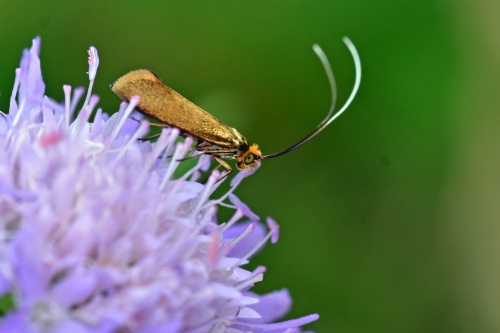 Andy's Rutland
Empingham garden
19 July 2021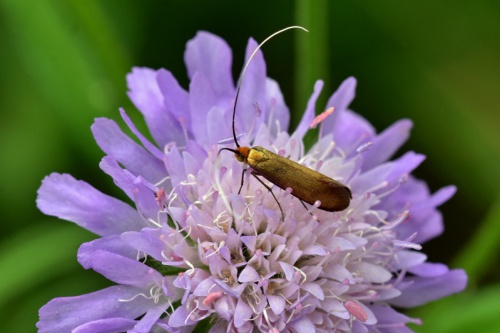 Andy's Rutland
Empingham garden
19 July 2021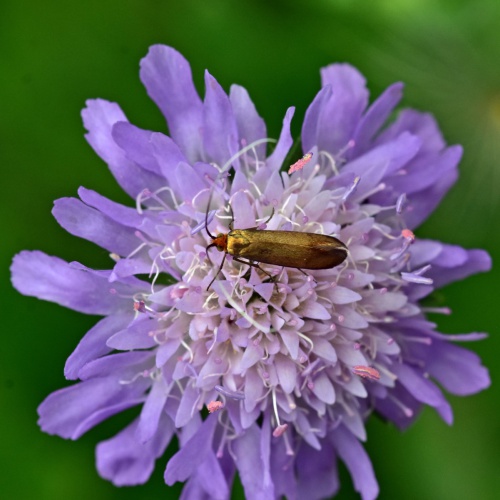 Andy's Rutland
Empingham garden
19 July 2021
Leicestershire & Rutland Map
Enter a town or village to see local records
MAP KEY:
Yellow squares = NBN records (all known data)
Coloured circles = NatureSpot records: 2025+ | 2020-2024 | pre-2020
UK Map
Species profile
- Common names
- Brassy Long-horn
- Species group:
- insect - moth
- Kingdom:
- Animalia
- Order:
- Lepidoptera
- Family:
- Adelidae
- Records on NatureSpot:
- 2
- First record:
- 19/07/2021 (Dejardin, Andrew)
- Last record:
- 17/07/2022 (N, Matt)
Total records by month
% of records within its species group
10km squares with records
The latest images and records displayed below include those awaiting verification checks so we cannot guarantee that every identification is correct. Once accepted, the record displays a green tick.
In the Latest Records section, click on the header to sort A-Z, and again to sort Z-A. Use the header boxes to filter the list.
Latest images
Latest records
 Andy's Rutland
Empingham garden
19 July 2021