

Cleavers - Galium aparine
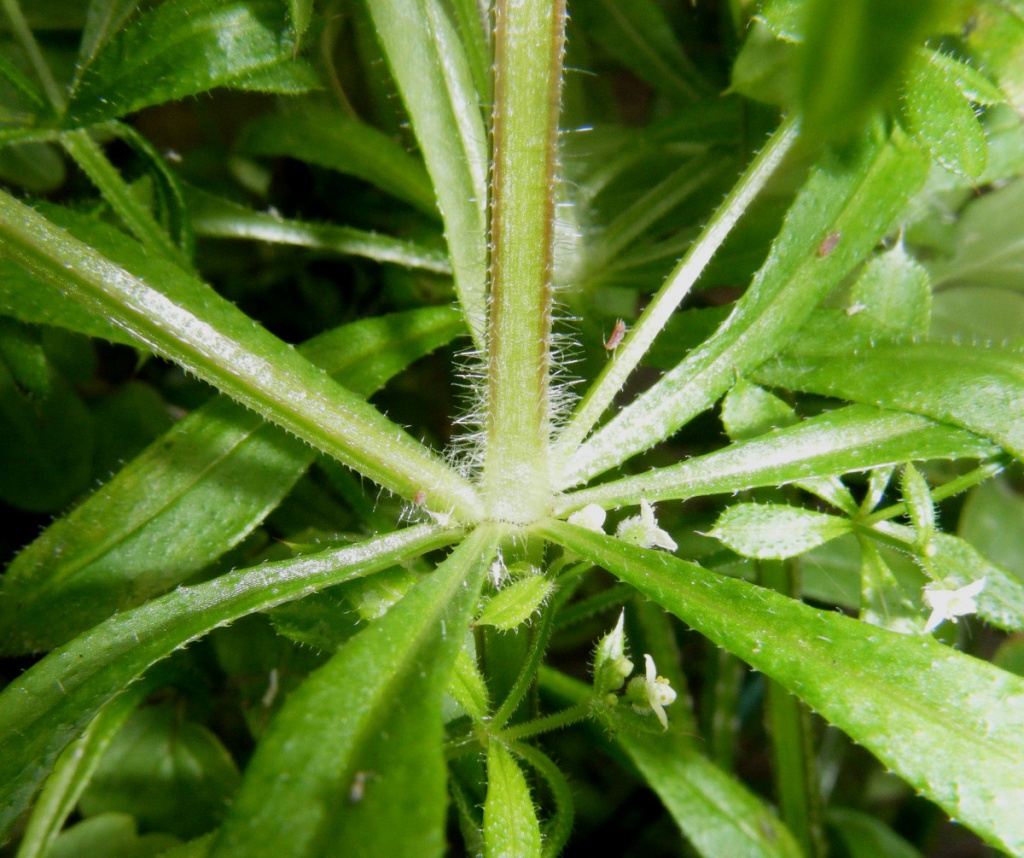
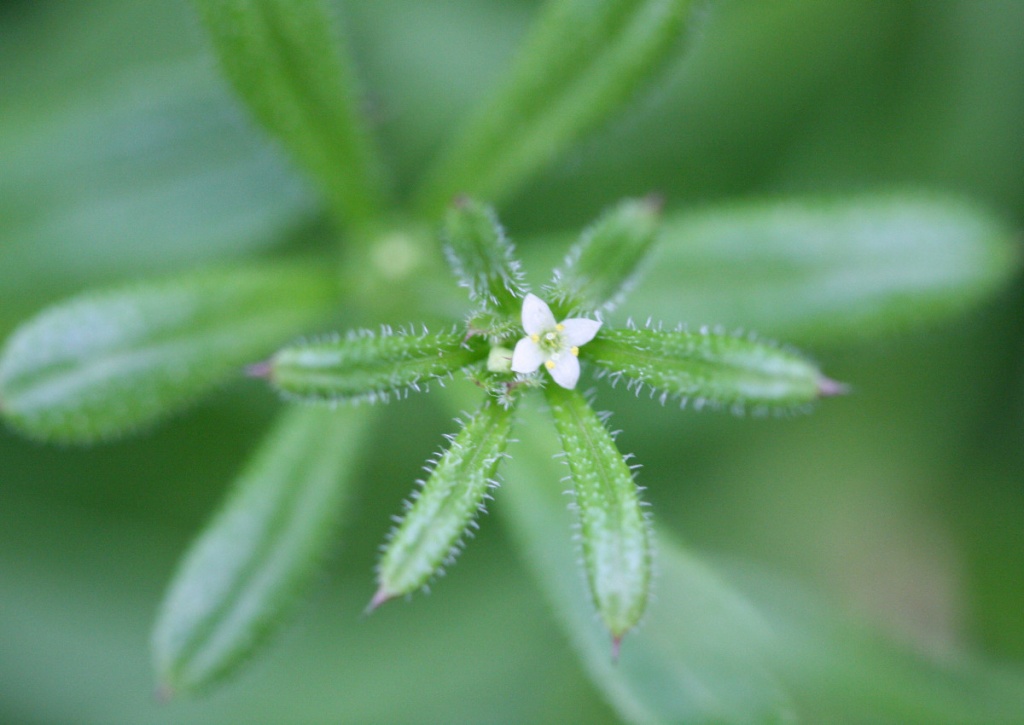
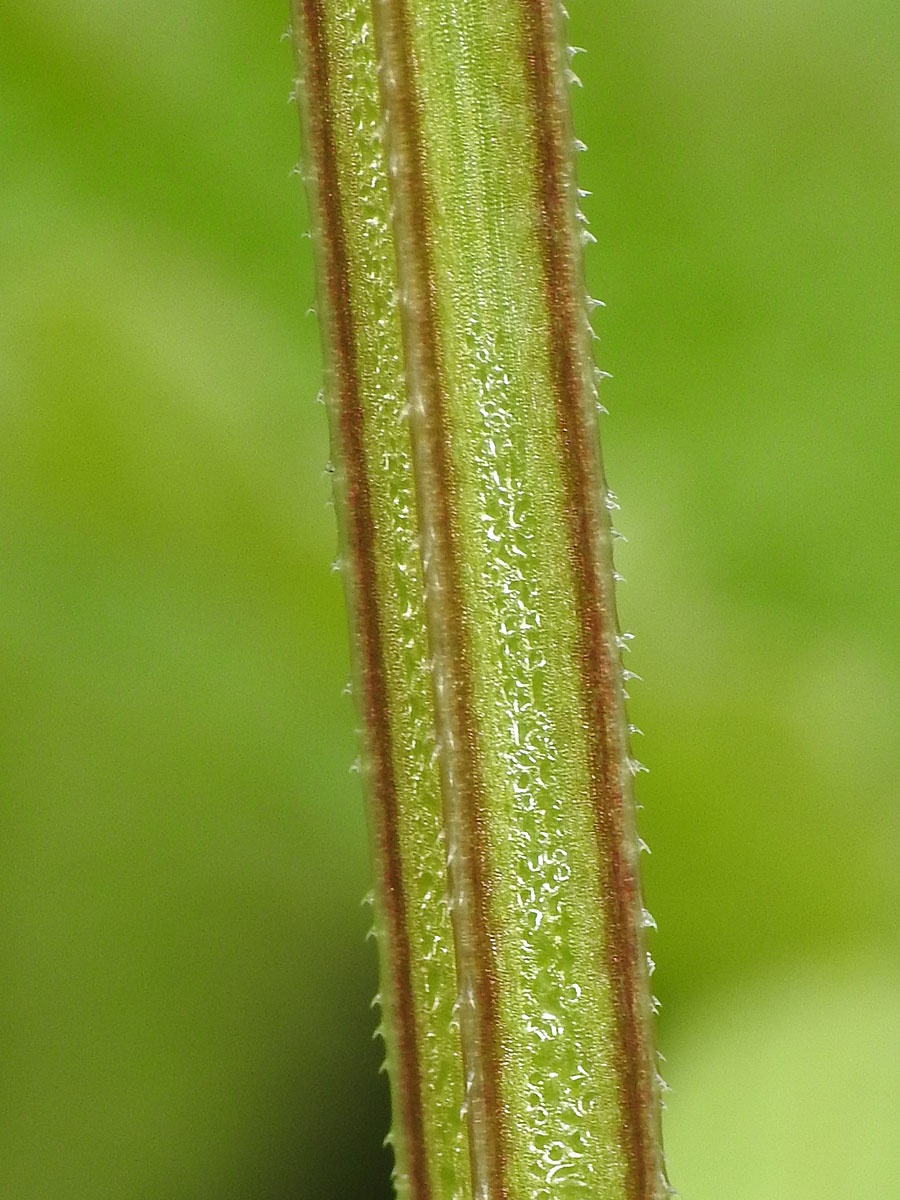
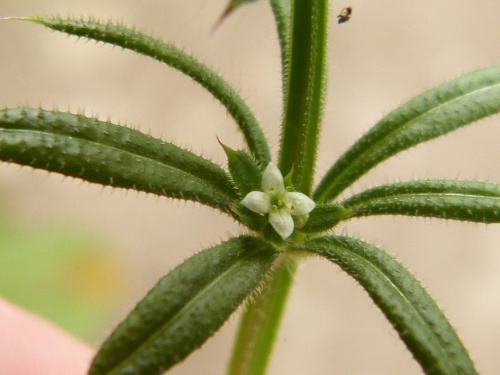
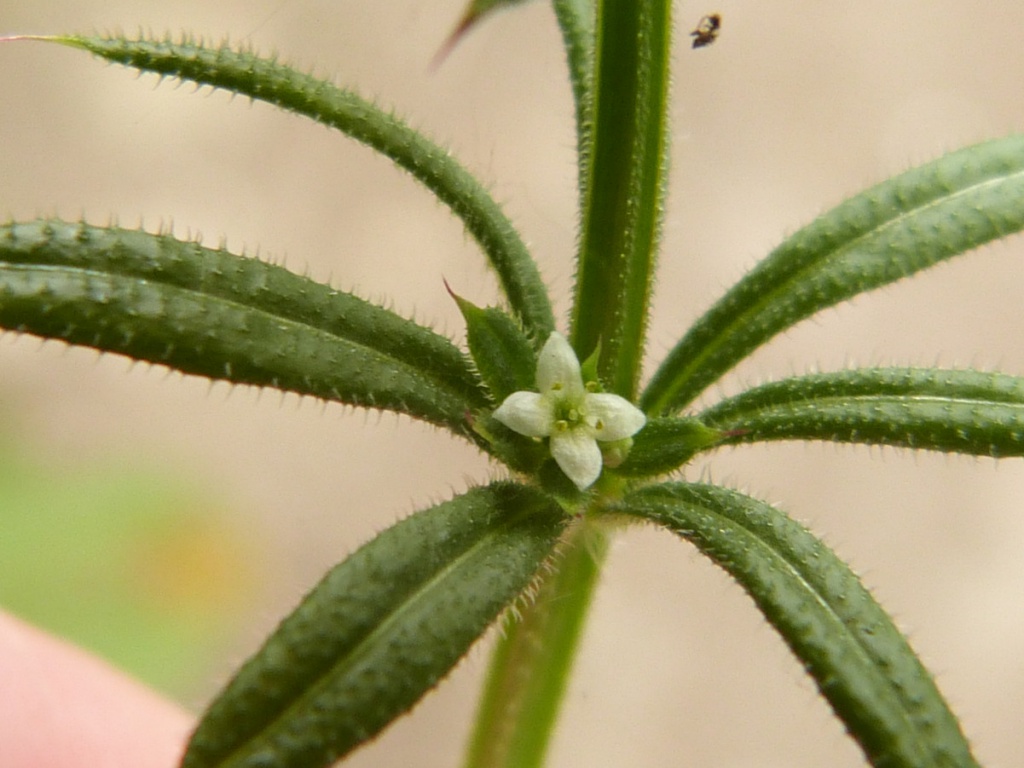
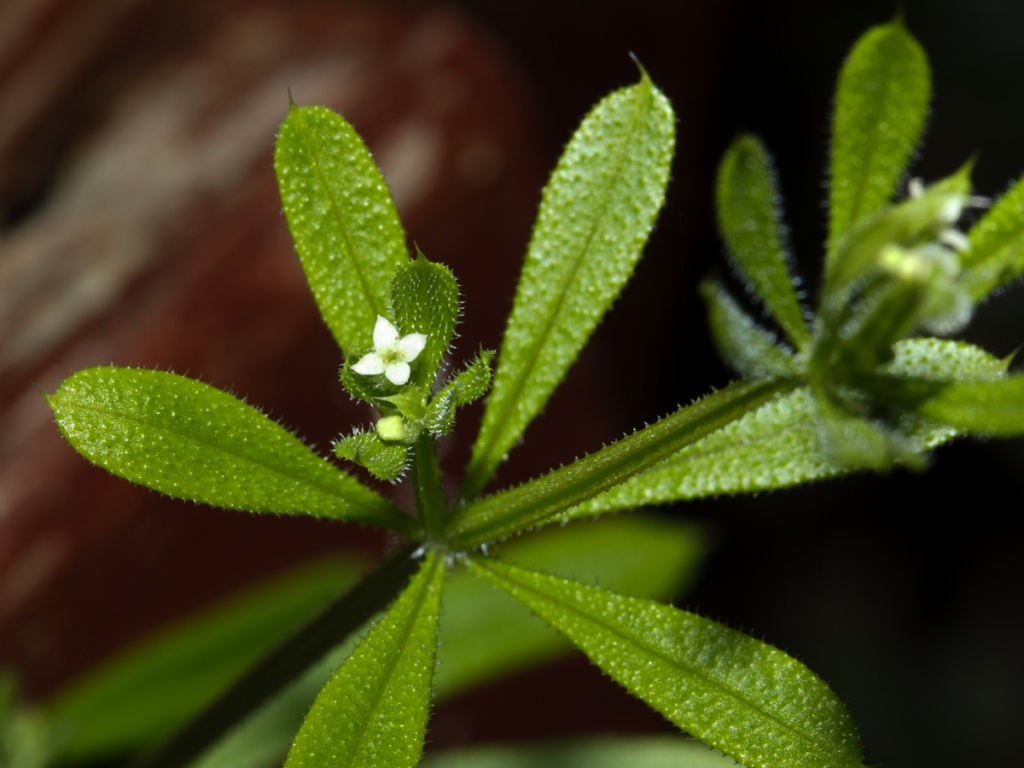
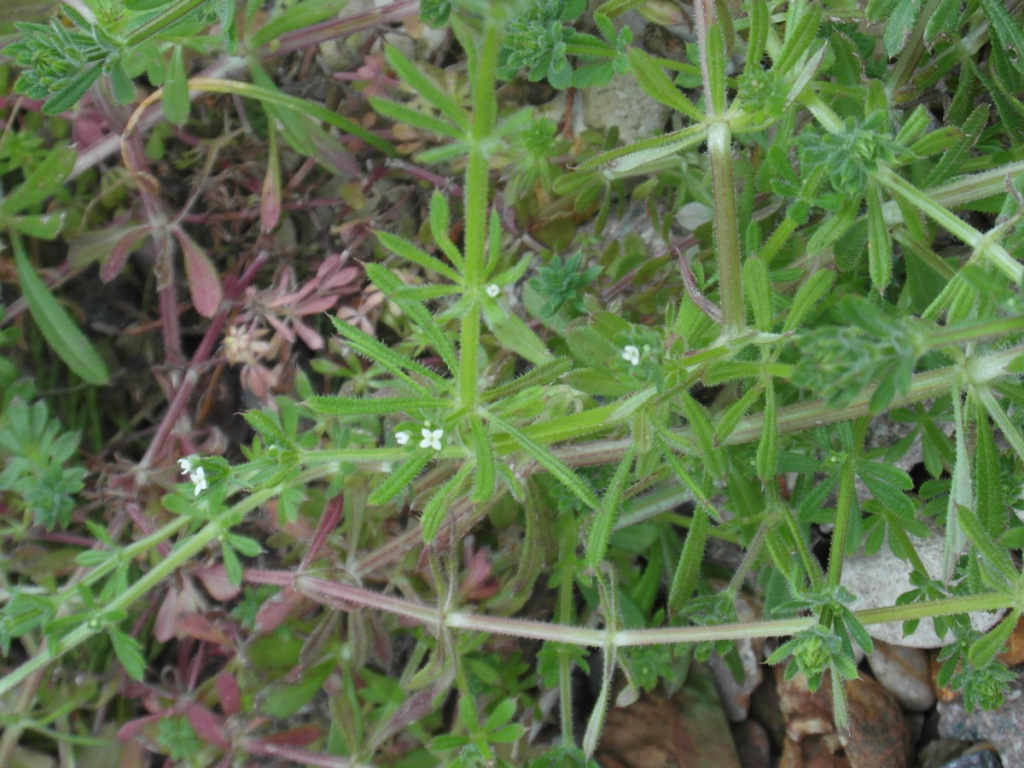
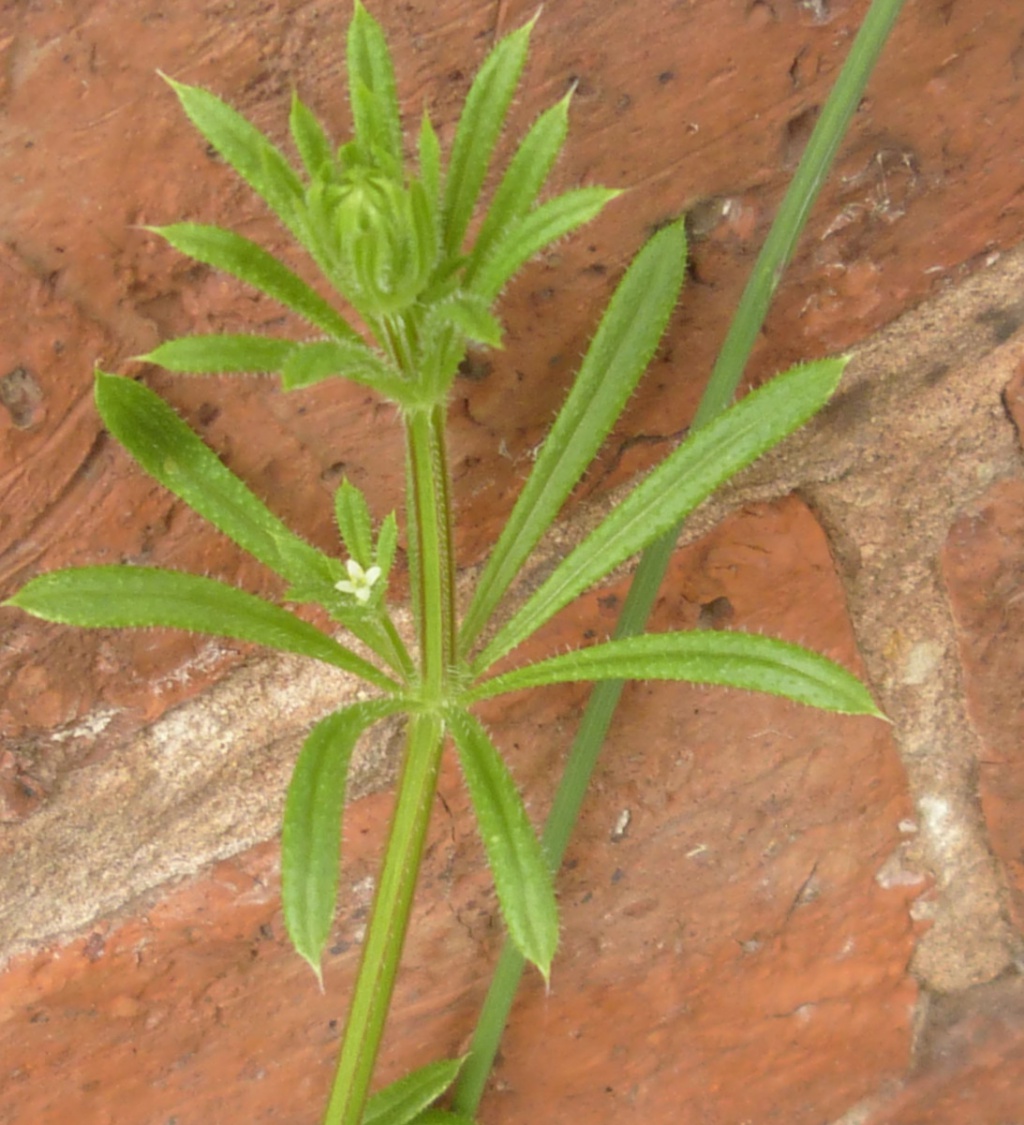
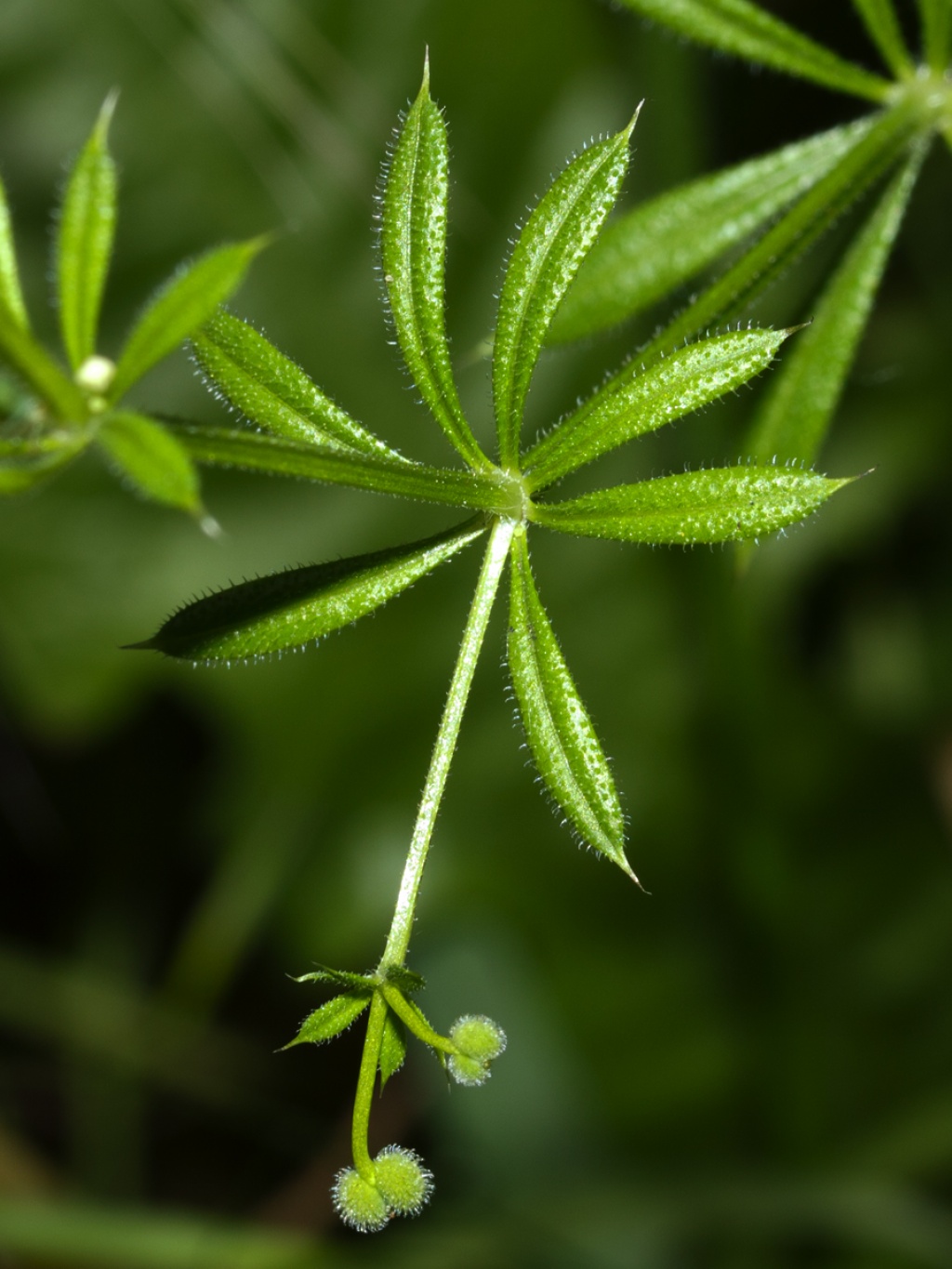
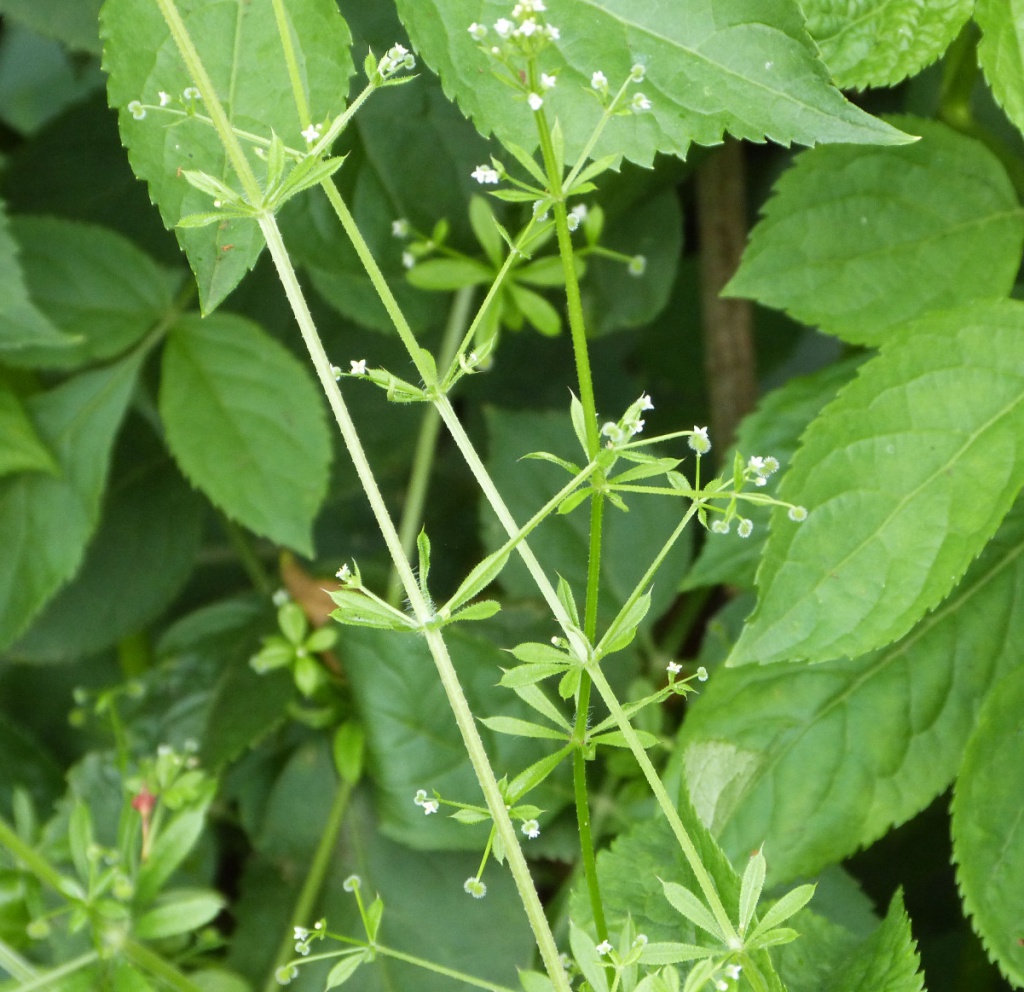
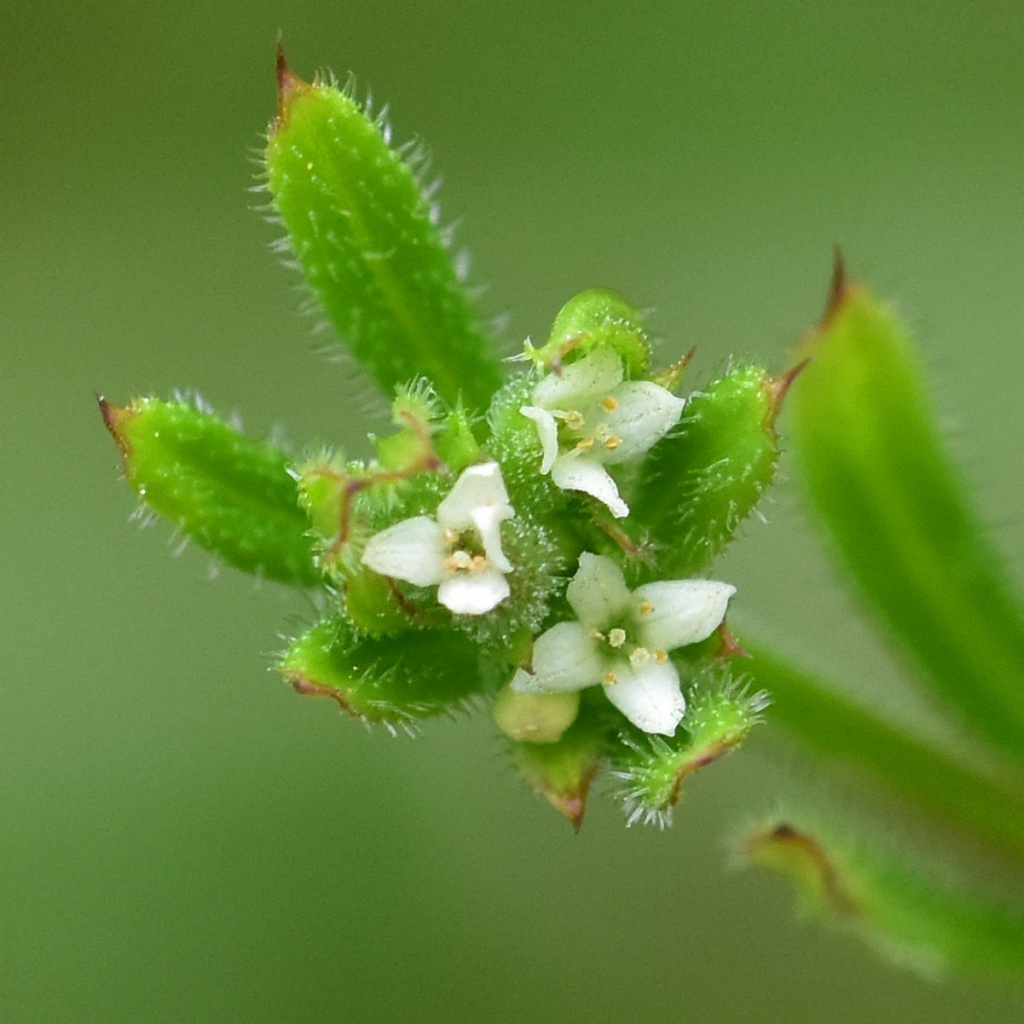
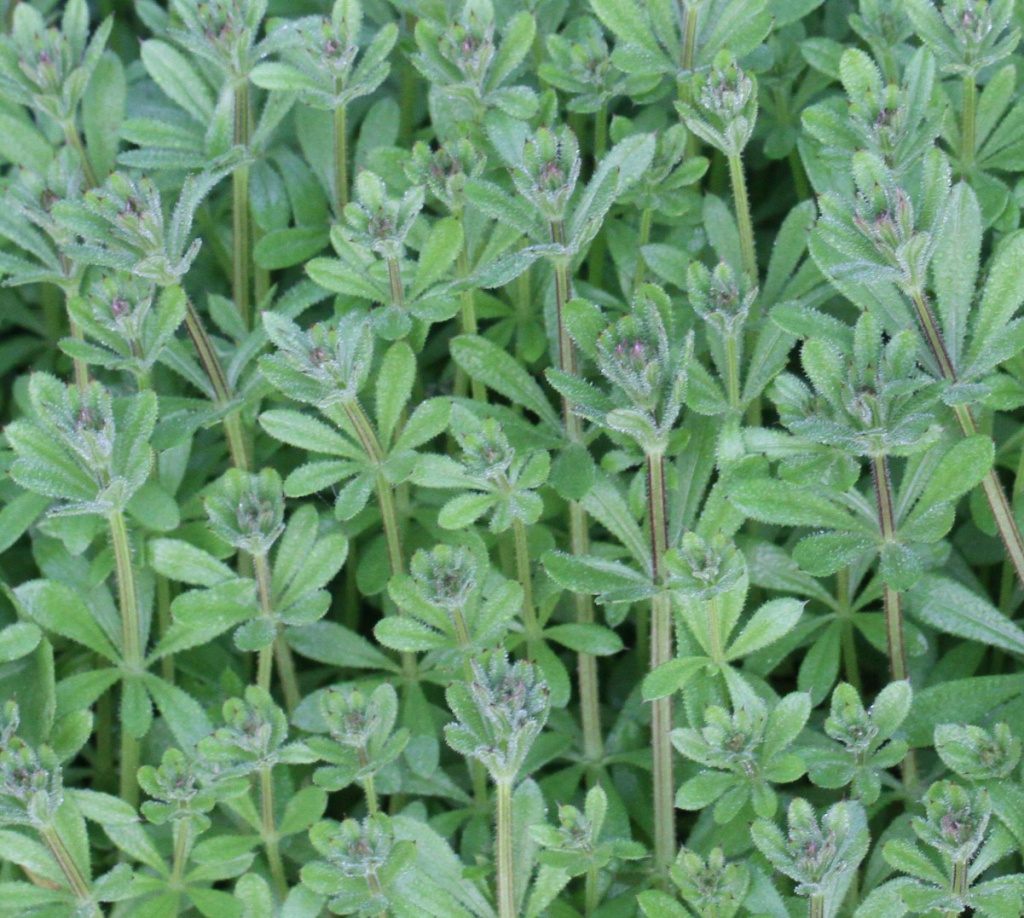
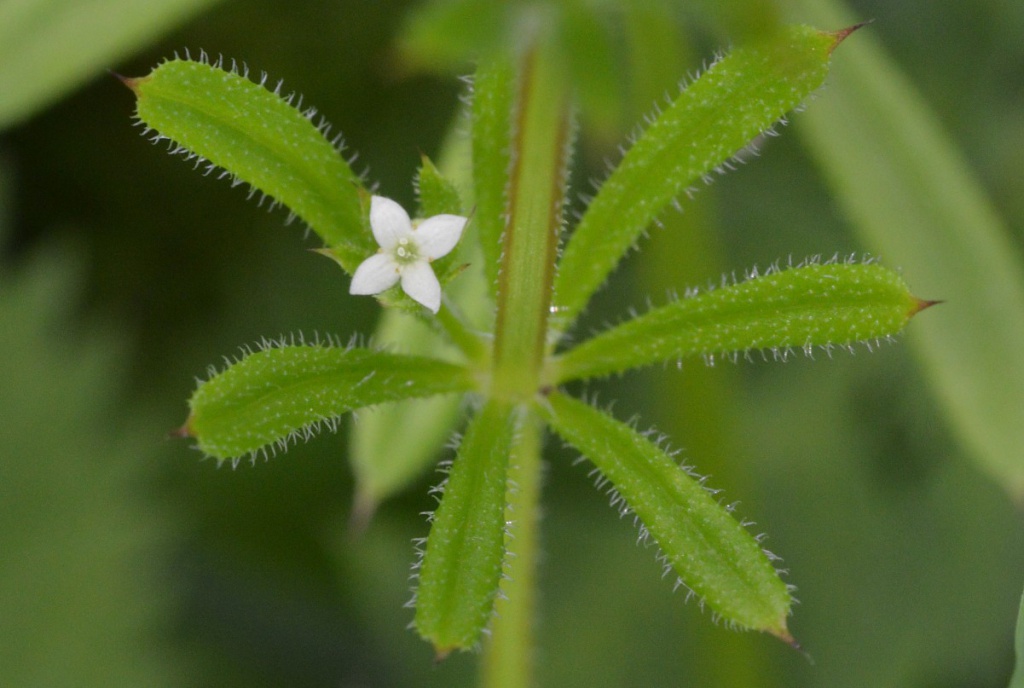
Medium to tall, brittle, scrambling, bristly plant with 4-square stems that have hook like, bristly hairs and are hairy at the nodes. Leaves in whorls of 6 to 9, narrowly elliptical, broadest above the middle, pointed and with bristly margins. Flowers white or greenish, 1.5 to 1.7 mm, stalked, at the base of the upper leaves.

Hedgerows, roadside verges.
May to September.
Annual.
Very common throughout Britain.
Very common in Leicestershire and Rutland. In the 1979 Flora survey of Leicestershire it was found in 604 of the 617 tetrads.
 Field by Leicester Road Lay-By Sapcote SP 5015 9294 (taken 7.6.2006)..JPG) Graham Calow
Graham Calow
Sapcote
07 June 2006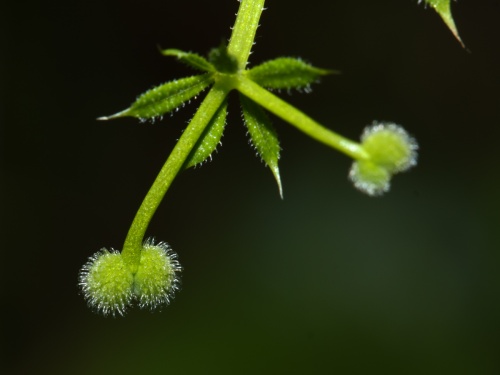 HAPeacock
Leicester Garden
04 June 2012
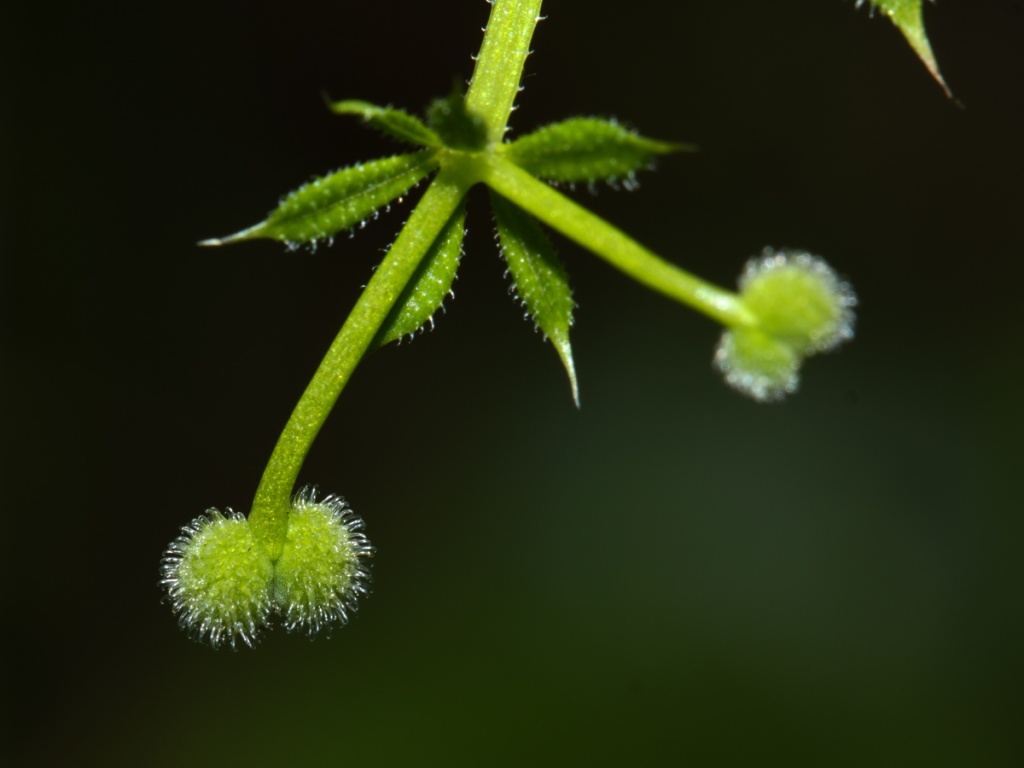
seeds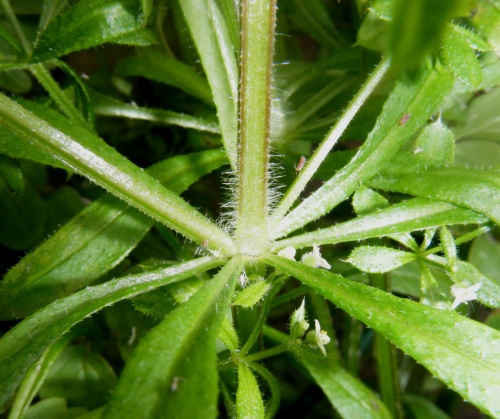 Graham Calow
Sapcote
21 June 2012
stem hairy at the nodes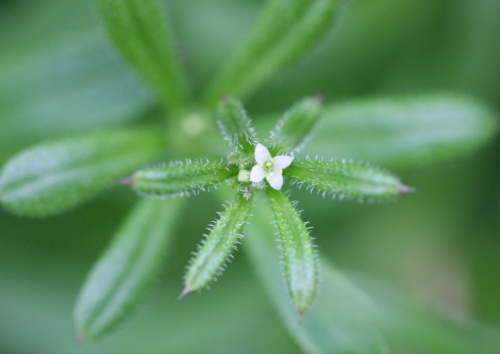 David Nicholls
Thornton Reservoir
05 June 2012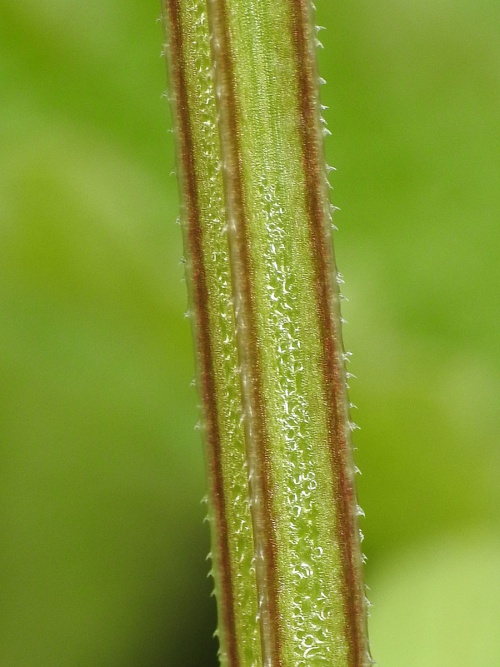 David Gould
Aylestone Meadows
28 April 2017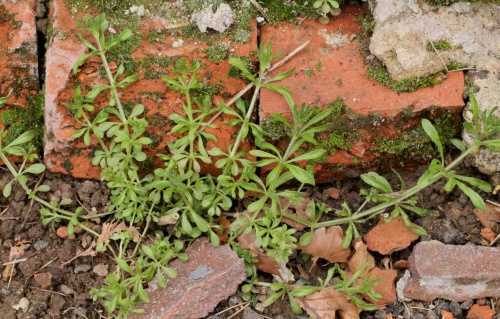 Craig Mabbett
Gilmorton Church Lane
27 March 2021
 Field by Leicester Road Lay-By Sapcote SP 5015 9294 (taken 7.6.2006)..JPG)

Leicestershire & Rutland Map
Enter a town or village to see local records
MAP KEY:
Yellow squares = NBN records (all known data)
Coloured circles = NatureSpot records: 2025+ | 2020-2024 | pre-2020
UK Map
Species profile
- Common names
- Cleavers, Goosegrass
- Species group:
- flowering plant
- Kingdom:
- Plantae
- Order:
- Gentianales
- Family:
- Rubiaceae
- Records on NatureSpot:
- 1080
- First record:
- 11/05/1992 (John Mousley;Steve Grover)
- Last record:
- 13/05/2026 (Carter, Robert)
Total records by month
% of records within its species group
10km squares with records
The latest images and records displayed below include those awaiting verification checks so we cannot guarantee that every identification is correct. Once accepted, the record displays a green tick.
In the Latest Records section, click on the header to sort A-Z, and again to sort Z-A. Use the header boxes to filter the list.
Latest images
Latest records
 Graham Calow
Sapcote
20 May 2014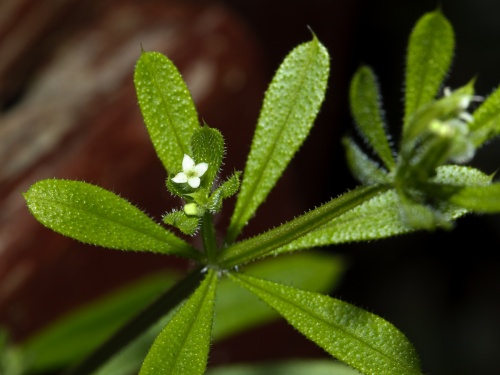 HAPeacock
Leicester Garden
04 June 2012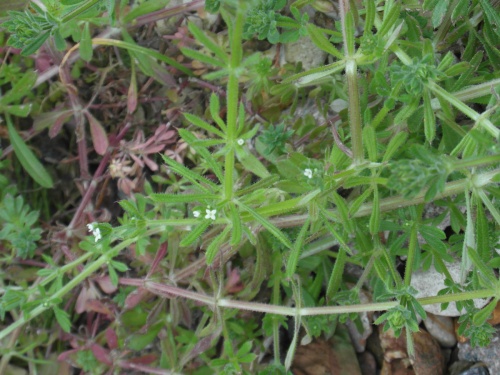 Alan Semper
Harby garden
24 May 2012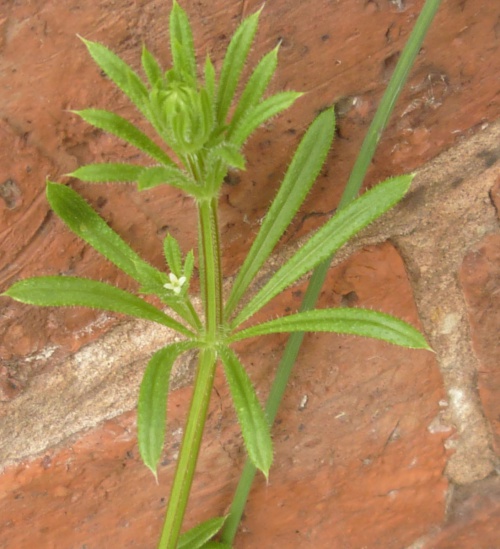 Craig Mabbett
Arnesby St Peters Road verge
04 June 2021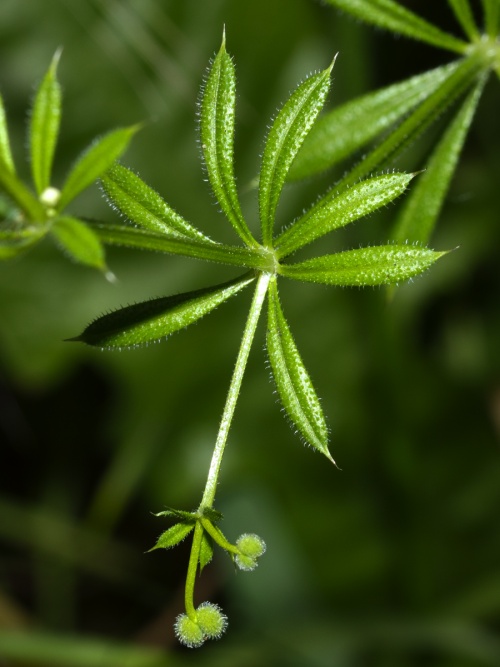 HAPeacock
Leicester Garden
04 June 2012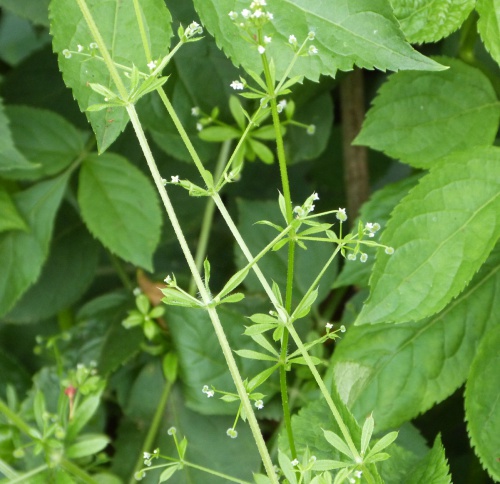 Graham Calow
Path near Huncote Road, Stoney Stanton
23 June 2016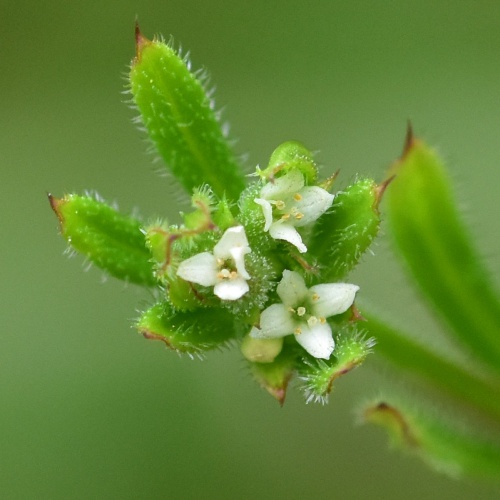 Andy's Rutland
Public footpath on headland-Love's Lane to Gunnel Lane Meadow
24 May 2018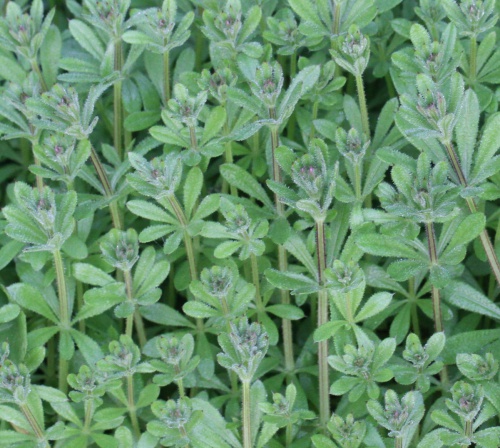 Craig Mabbett
Lutterworth Country Park
25 March 2017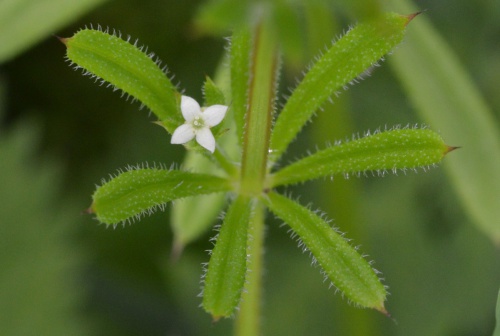 Barbara Cooper
Long Clawson
13 May 2018
Dasineura aparines
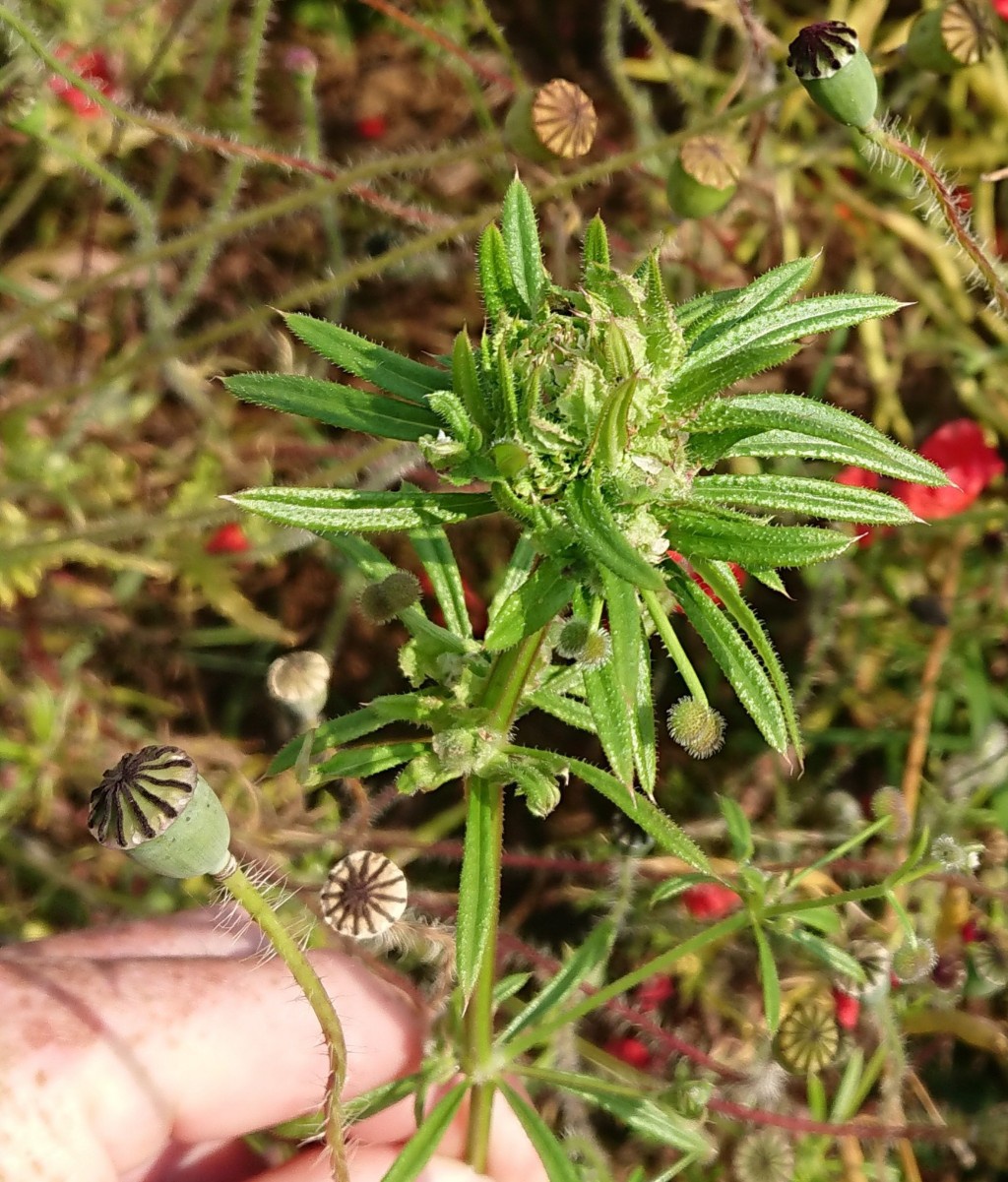
The larvae of the midge Dasineura aparines cause galls on Cleavers causing the buds and adjacent stems to become thickened, hairy and fleshy, sometimes grouped into a rosette like mass at the tops of the stems.
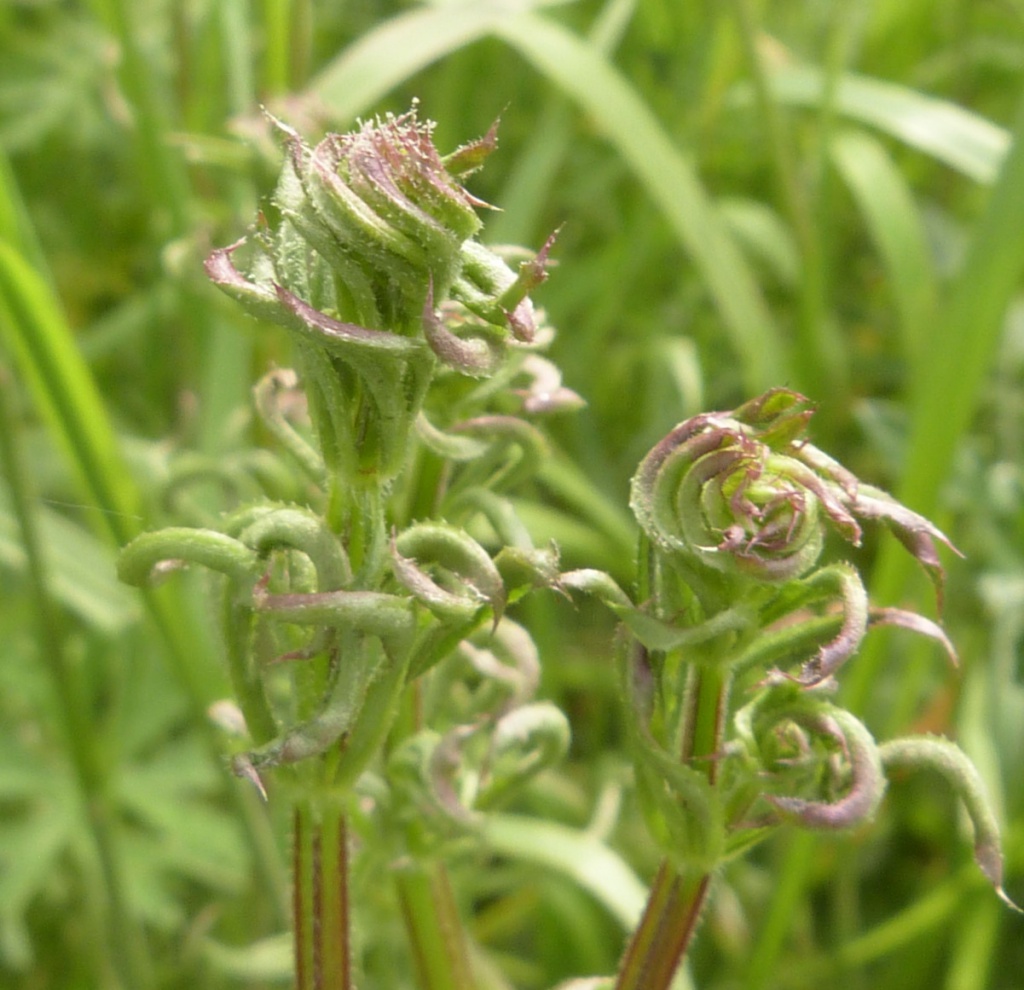
Cecidophyes rouhollahi
The Gall Mite Cecidophyes rouhollahi causes galls to form distorting the leaves of Goosegrass (Galium aparine). These galls were previously thought to be caused by Cecidophyes galii but this has now been disproved, and there is no evidence at present that C. galii causes galls in Britain.