

Oregon-grape - Mahonia aquifolium
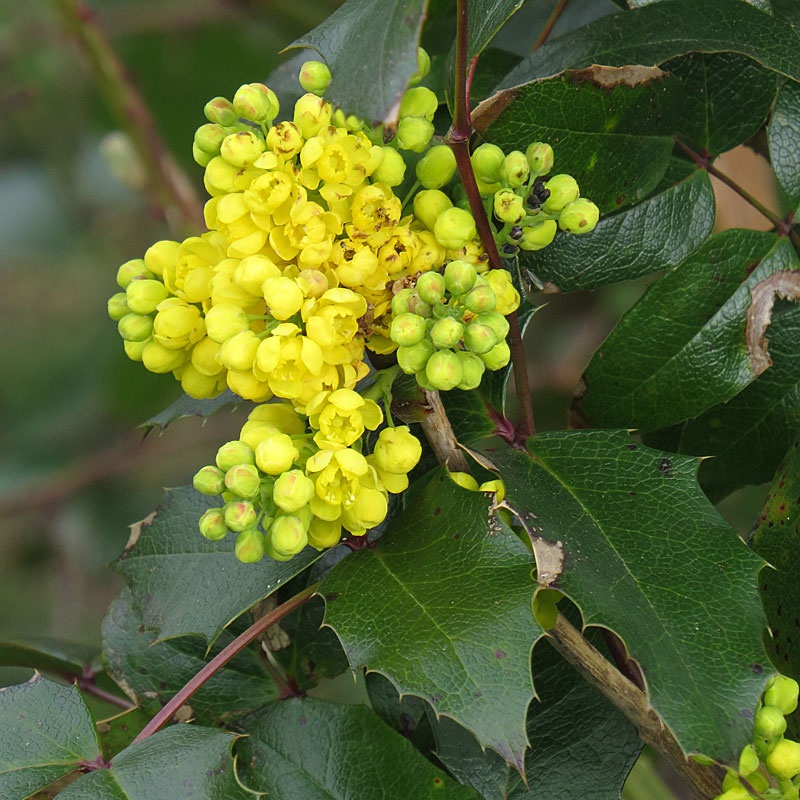
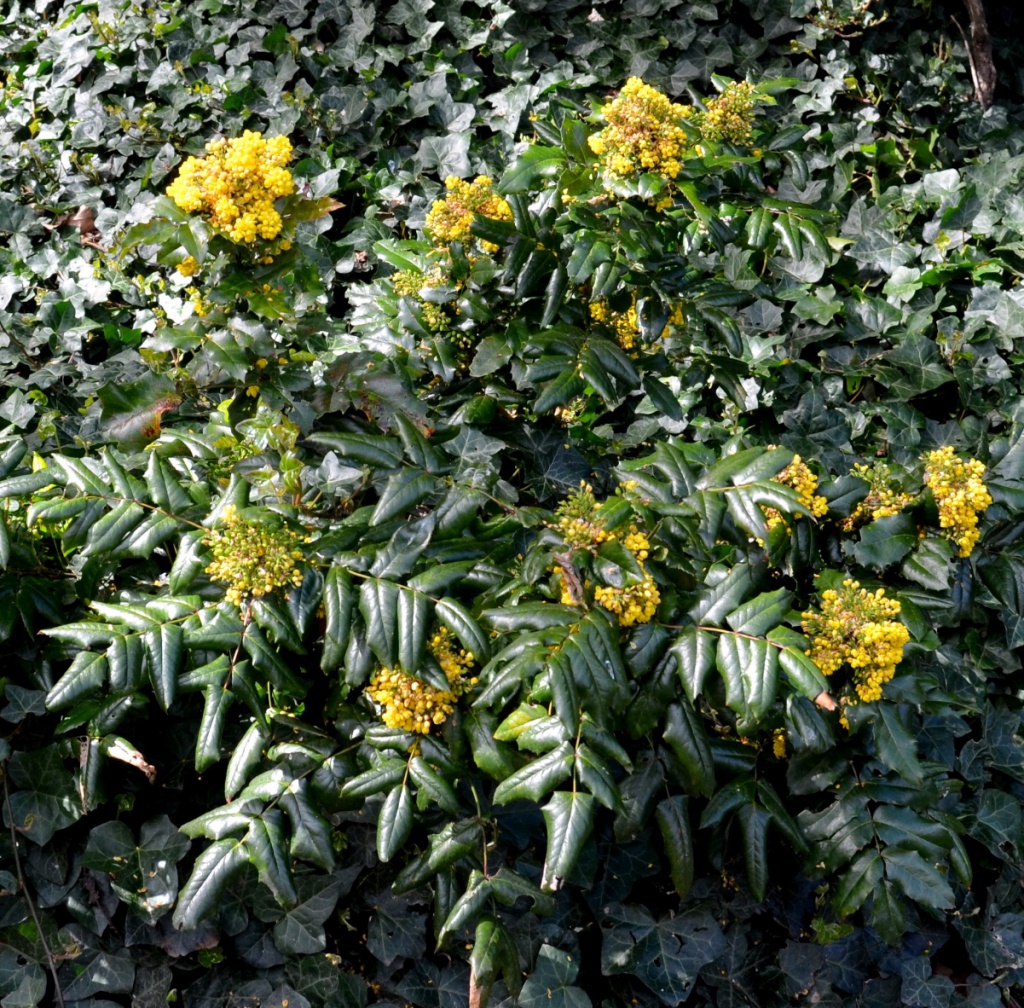
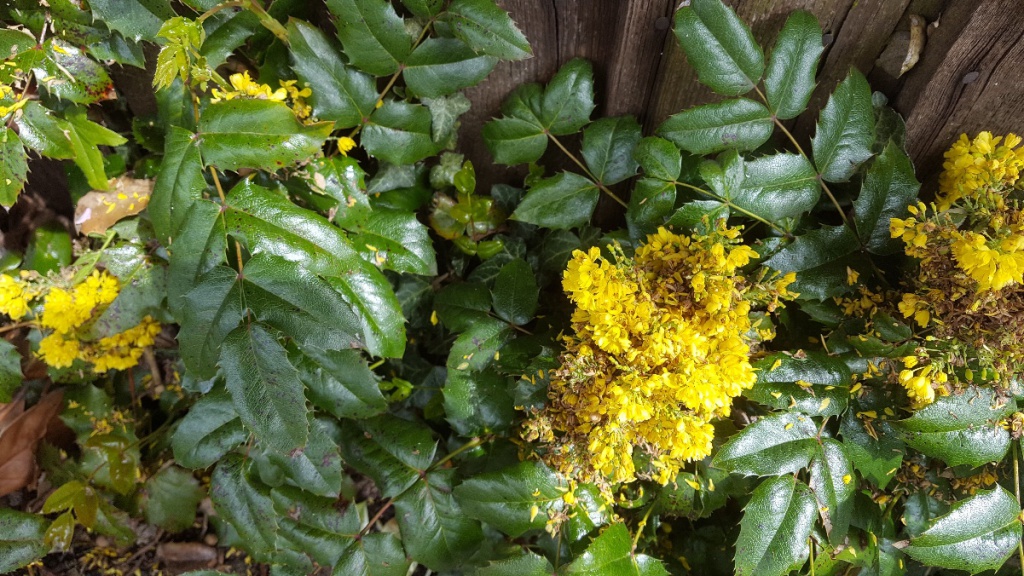
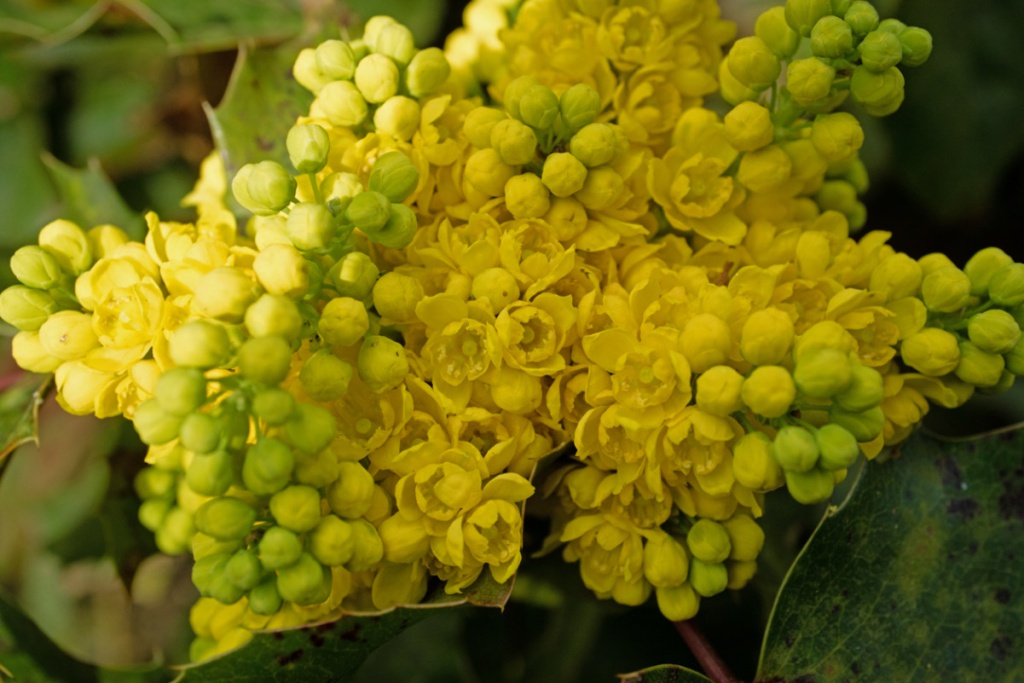
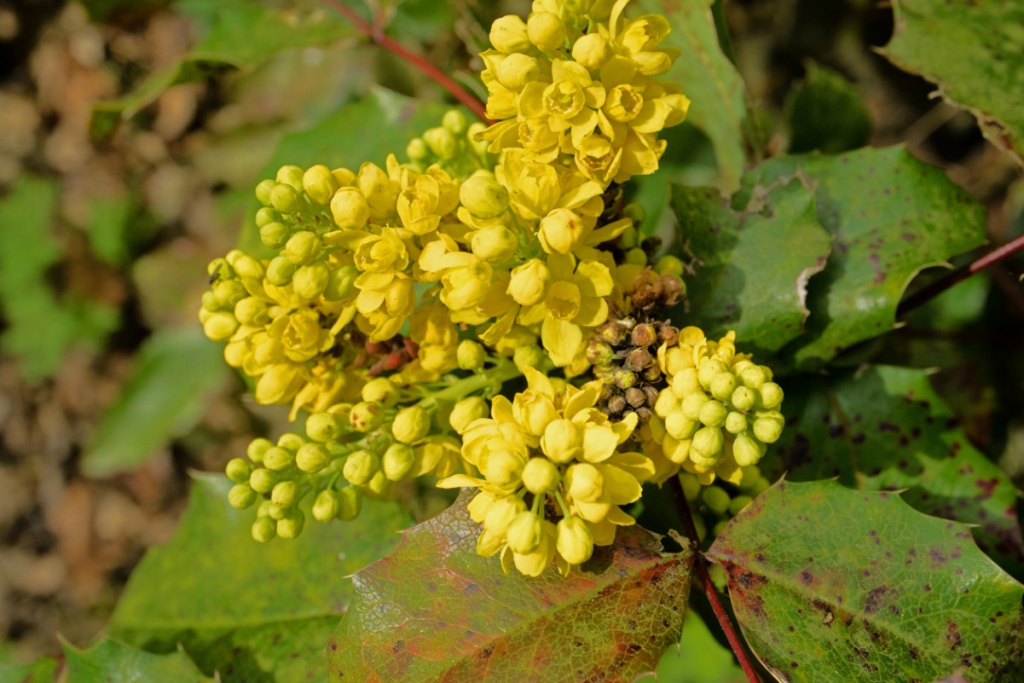
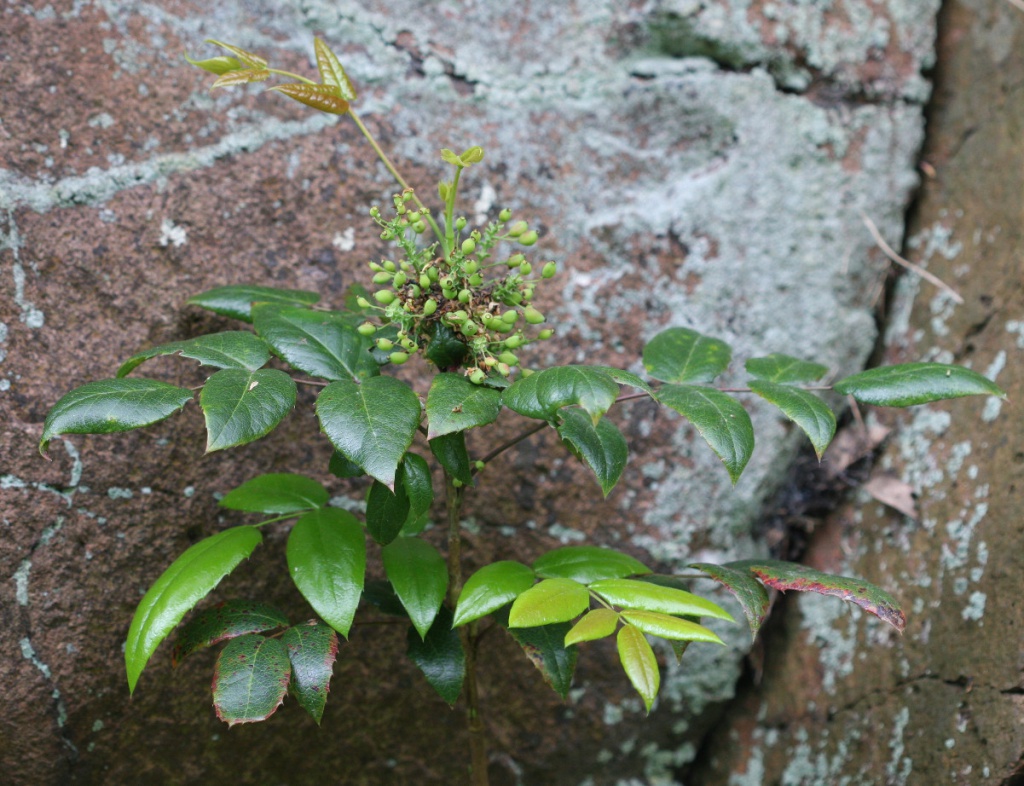
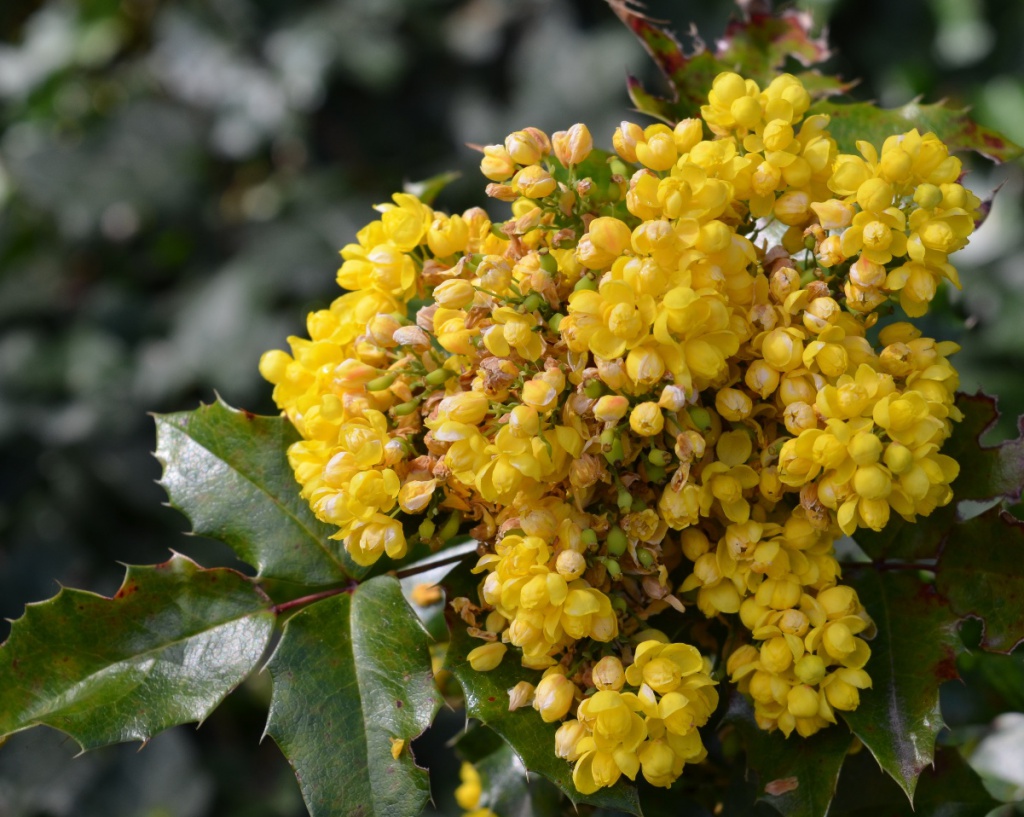
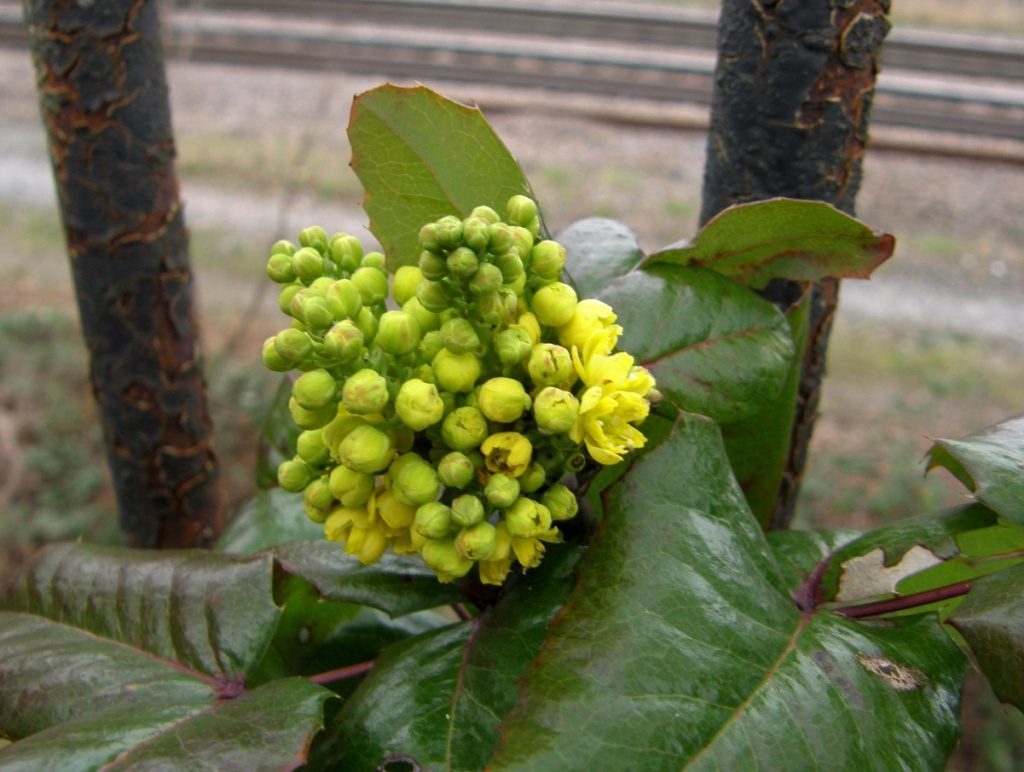
Stoloniferous shrub to 1 metre, with a stout, scarcely branched stem. Leaves deep shiny green spine edged. Flowers yellow in clustered terminal racemes, fragrant. Berry rounded, black.
Other Mahonia species and hybrids are grown in gardens

Wooded areas and hedgebanks, usually in shade.
March to May.
Evergreen. Probably originally established in the wild from garden escapes.
A naturalised plant, found fairly frequently in central and eastern Britain.
Fairly frequent in Leicestershire and Rutland. In the 1979 Flora survey of Leicestershire it was found in 82 of the 617 tetrads.
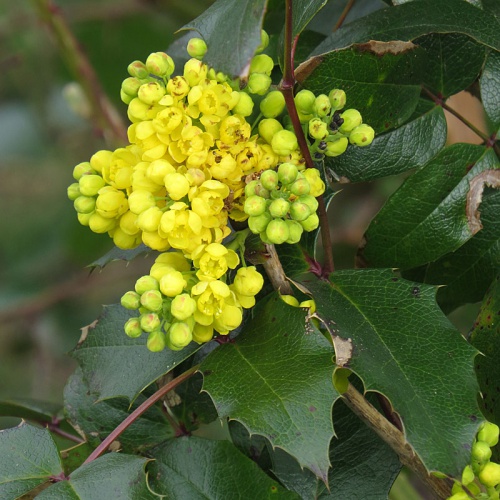 David Gould
Aylestone Meadows, Leicester.
22 March 2015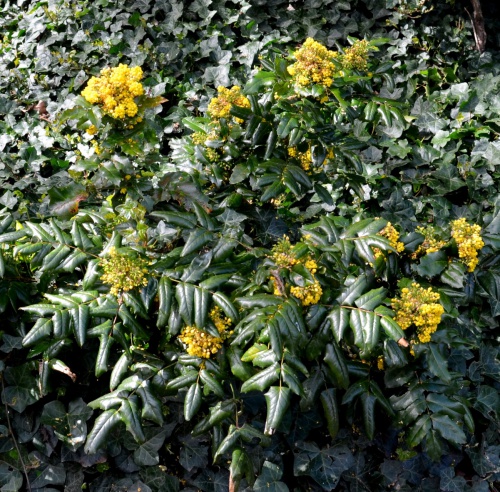 Steve Mathers
Abbey Park
26 April 2017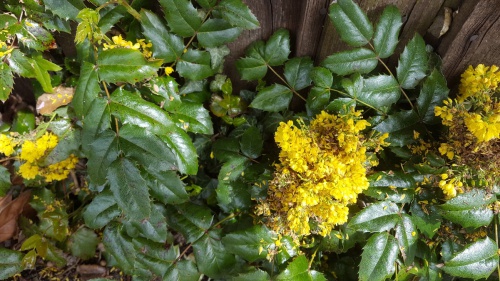 Steve Harris
Southfield Road, Hinckley
30 April 2018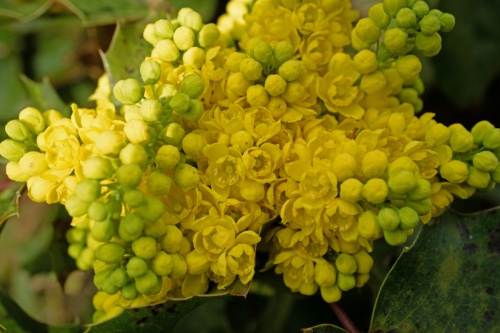 irturner
Charnwood Lodge NR
22 April 2018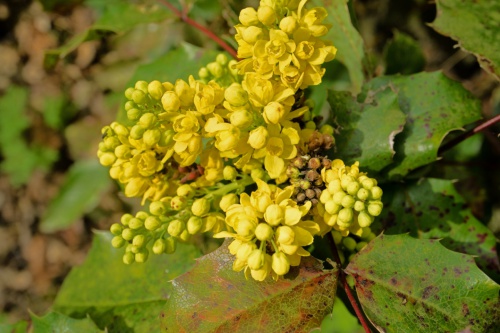 irturner
Charnwood Lodge NR
22 April 2018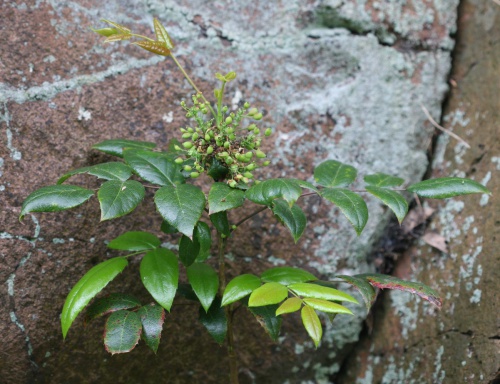 David Nicholls
Croft Pasture
09 May 2014
Leicestershire & Rutland Map
Enter a town or village to see local records
MAP KEY:
Yellow squares = NBN records (all known data)
Coloured circles = NatureSpot records: 2025+ | 2020-2024 | pre-2020
UK Map
Species profile
- Common names
- Oregon-grape
- Species group:
- flowering plant
- Kingdom:
- Plantae
- Order:
- Ranunculales
- Family:
- Berberidaceae
- Records on NatureSpot:
- 54
- First record:
- 03/05/2007 (Dave Wood)
- Last record:
- 10/06/2025 (Calow, Graham)
Total records by month
% of records within its species group
10km squares with records
The latest images and records displayed below include those awaiting verification checks so we cannot guarantee that every identification is correct. Once accepted, the record displays a green tick.
In the Latest Records section, click on the header to sort A-Z, and again to sort Z-A. Use the header boxes to filter the list.
Latest images
Latest records
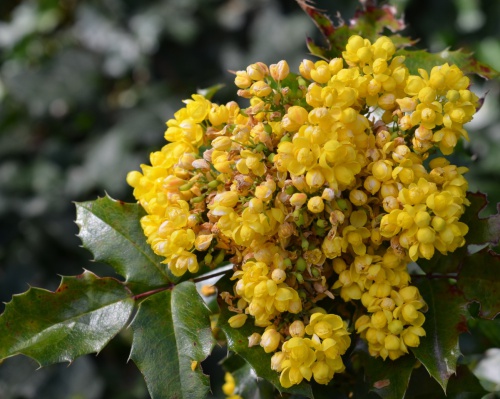 Steve Mathers
Abbey Park
26 April 2017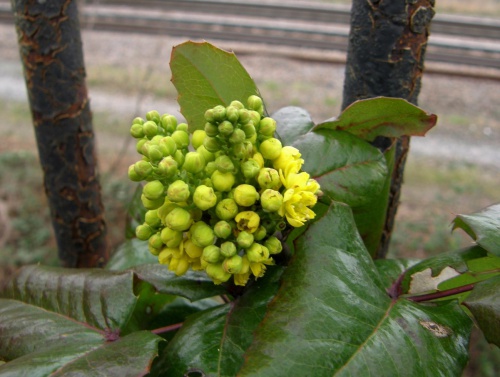 Saharima Roenisch
Welford Road Cemetery
10 March 2017 Church Walk Sapcote SP 4894 9321 (taken 8.4.2008).JPG) Graham Calow
Graham Calow
Sapcote
08 April 2008
Flowers
 Church Walk Sapcote SP 4894 9321 (taken 8.4.2008).JPG)
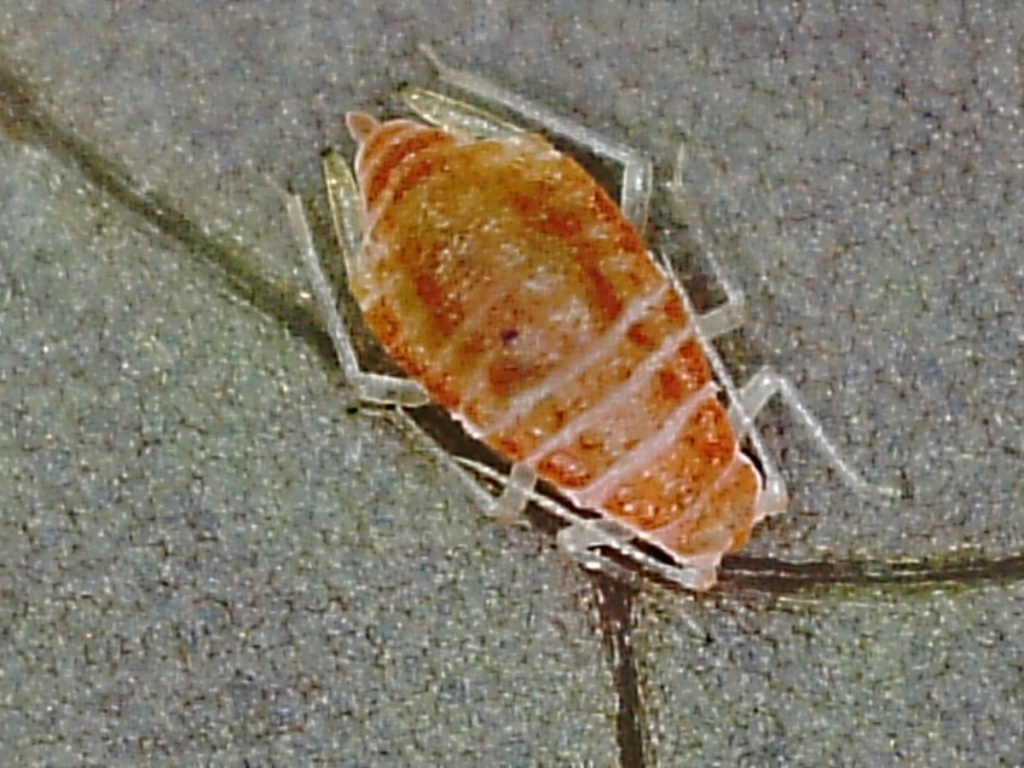
Liosomaphis berberidis
The aphid Liosomaphis berberidis does not host alternate and lives on the underside of leaves of Barberry and Oregon-grape. The alate Liosomaphis berberidis has the head, thorax, antennae and tips of legs darker than in the apterous viviparous female. Some tergites may have pale marginal and dorsal sclerites, sometimes fused into cross bands. Liosomaphis berberidis apterae are greenish yellow or reddish orange with a slight wax powdering.
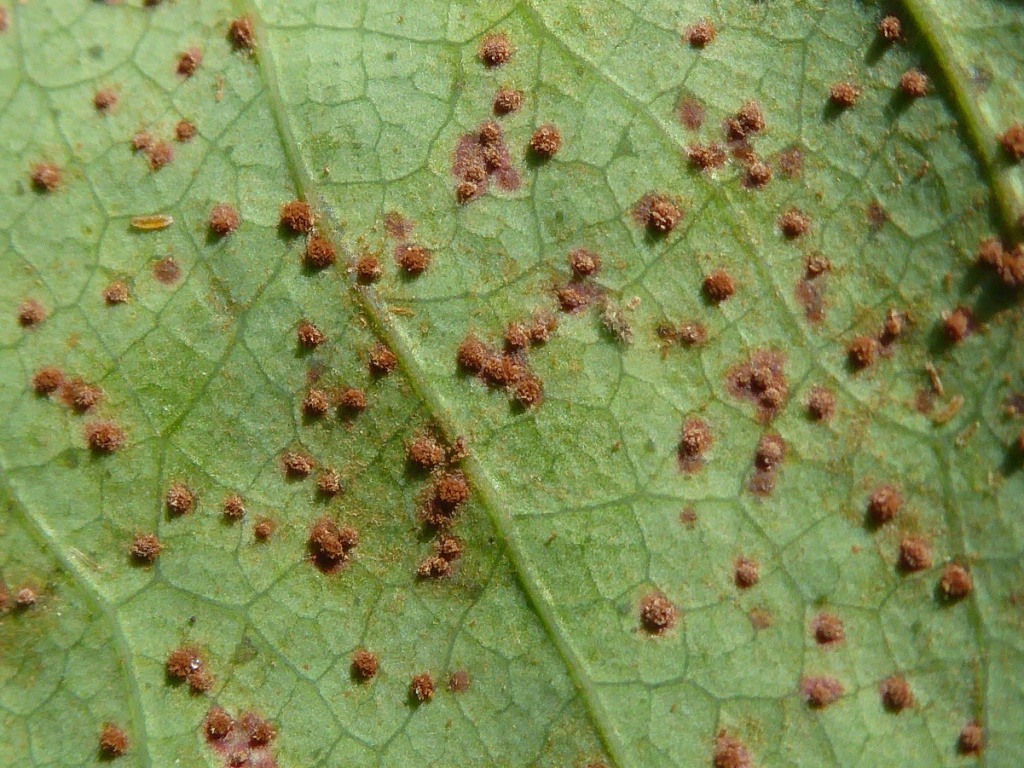
Mahonia Rust
The rust fungus Cumminsiella mirabilissima affects the leaves of Oregon-grape, Mahonia japonica and Berberis repens, . There is no host-plant alternation. Aecia are orange and on leaf undersides; with a corresponding blackish spot above, usually on young leaves. Aecia may also form on fruits. Later, brown sori containing urediniospores and teliospores develop on leaf undersides.