

Myopa buccata
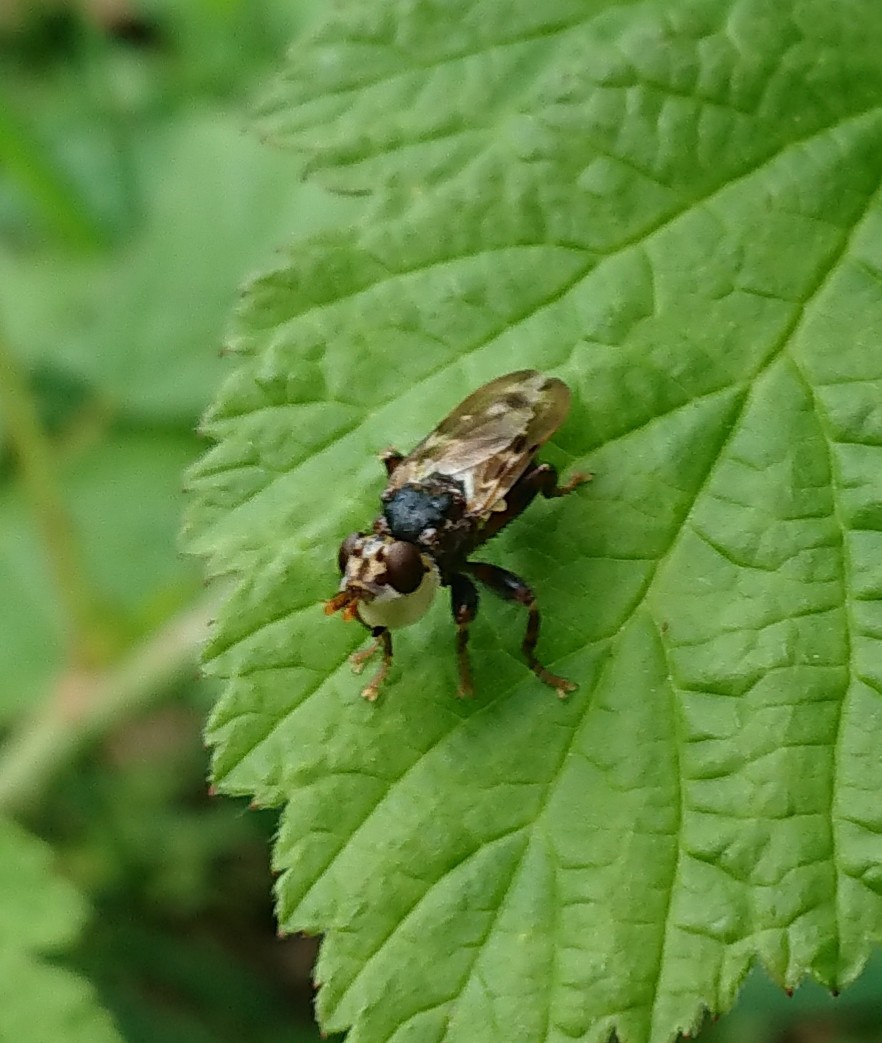
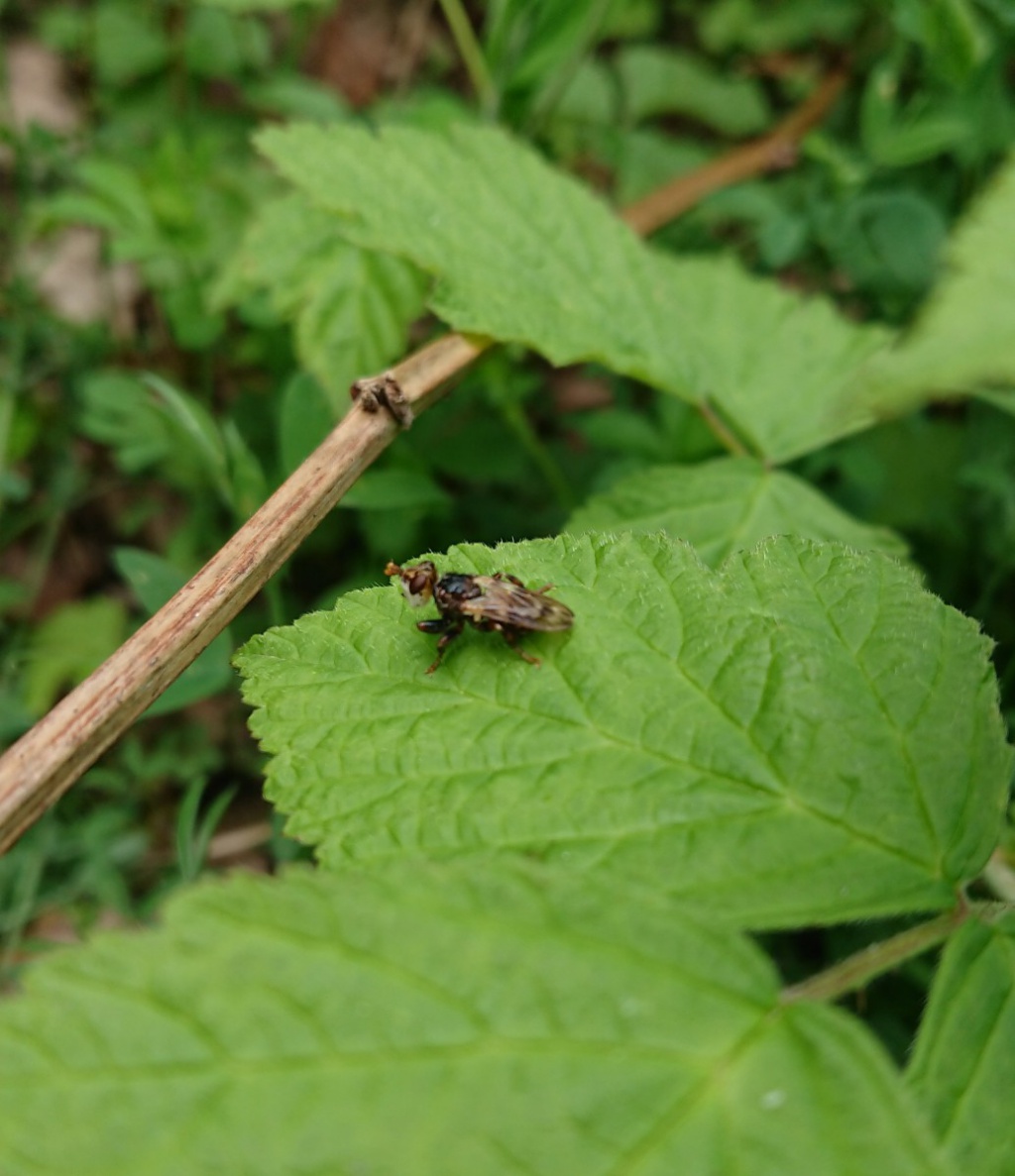
Our most striking Myopa with a number of unique characteristics. The inner cross vein r-m is whitish without the dark spot found in other spring-flying 'bearded' Myopa species; the side of the head behind the eyes (the occiput) has 1 to 4 brown spots; the wings also have milky-white patches that help create a disruptive camouflage when it is sitting on blossom. Males have distinct dust patches on the reddish tergites but these are poorly formed in females. The size and appearance is much more variable than in other Myopa species, with a body length that can vary from 7 to 12 mm.

Unless identified by a recognised expert, a photo is required. If the photo doesn't show the key ID features then in the comments box describe the size and identifying characters you have observed.
Usually seen visiting spring-blossoming shrubs such as Blackthorn, hawthorns, Crab Apple and Rowan; also Wood Spurge, Bilberry, dandelions and Ground Elder.
The larvae are endoparasites of bees. It seems to use a variety of Andrena hosts but possibly with a preference for those in the closely related subgenera Andrena and Hoplandrena, including species such as A. synadelpha, A. fucata, A. lapponica, A. scotica and A. ferox.
M .buccata is widespread and fairly frequent – it becomes the commonest Myopa in Scotland.
Status in Leicestershire and Rutland not known.
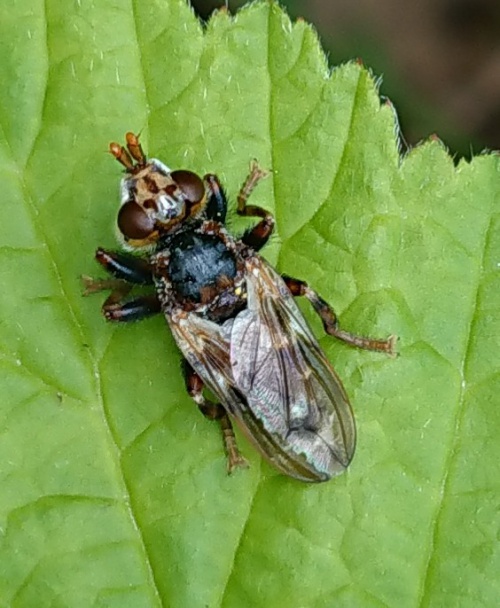 steven lewis
Pickworth Great wood
04 June 2019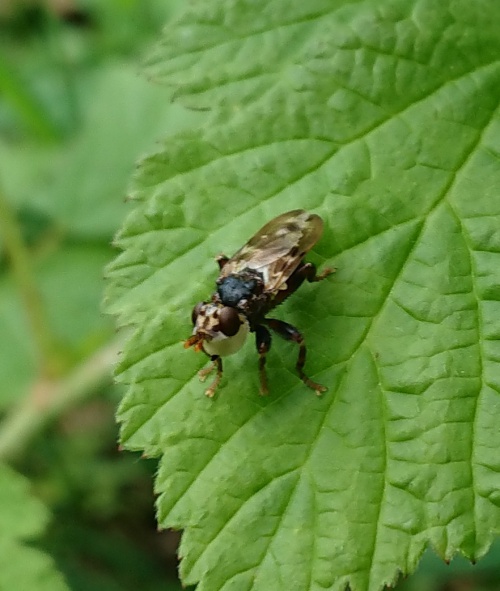 steven lewis
Pickworth Great wood
04 June 2019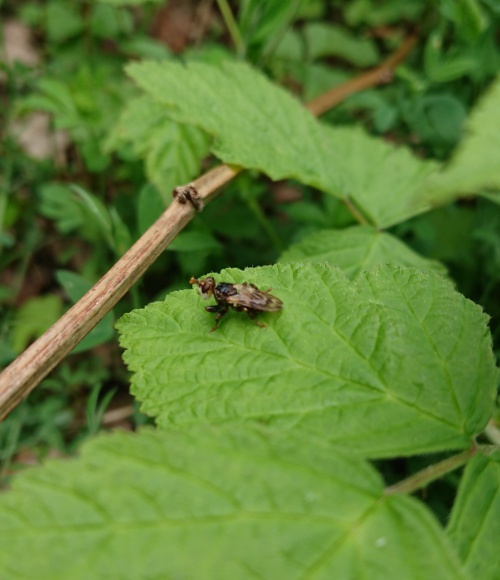 steven lewis
Pickworth Great wood
04 June 2019
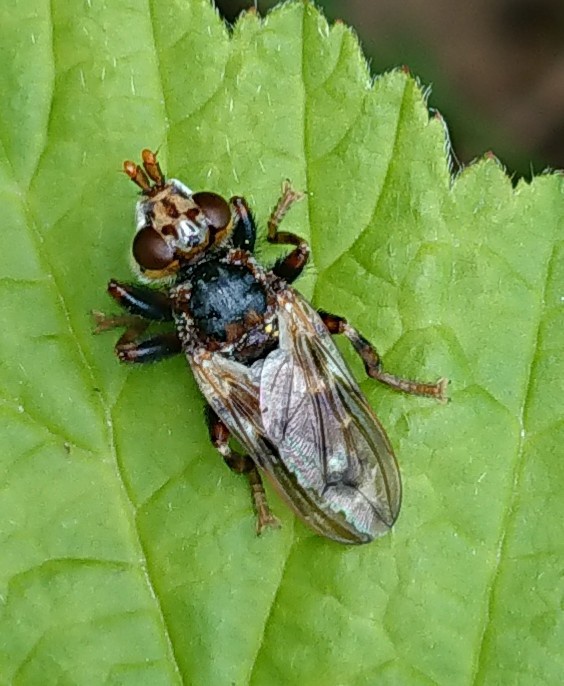
Leicestershire & Rutland Map
Enter a town or village to see local records
MAP KEY:
Yellow squares = NBN records (all known data)
Coloured circles = NatureSpot records: 2025+ | 2020-2024 | pre-2020
UK Map
Species profile
- Species group:
- insect - true fly (Diptera)
- Kingdom:
- Animalia
- Order:
- Diptera
- Family:
- Conopidae
- Records on NatureSpot:
- 2
- First record:
- 04/06/2019 (Lewis, Steven)
- Last record:
- 13/04/2024 (Dejardin, Andrew)
Total records by month
% of records within its species group
10km squares with records
The latest images and records displayed below include those awaiting verification checks so we cannot guarantee that every identification is correct. Once accepted, the record displays a green tick.
In the Latest Records section, click on the header to sort A-Z, and again to sort Z-A. Use the header boxes to filter the list.