

Scarce Footman - Eilema complana
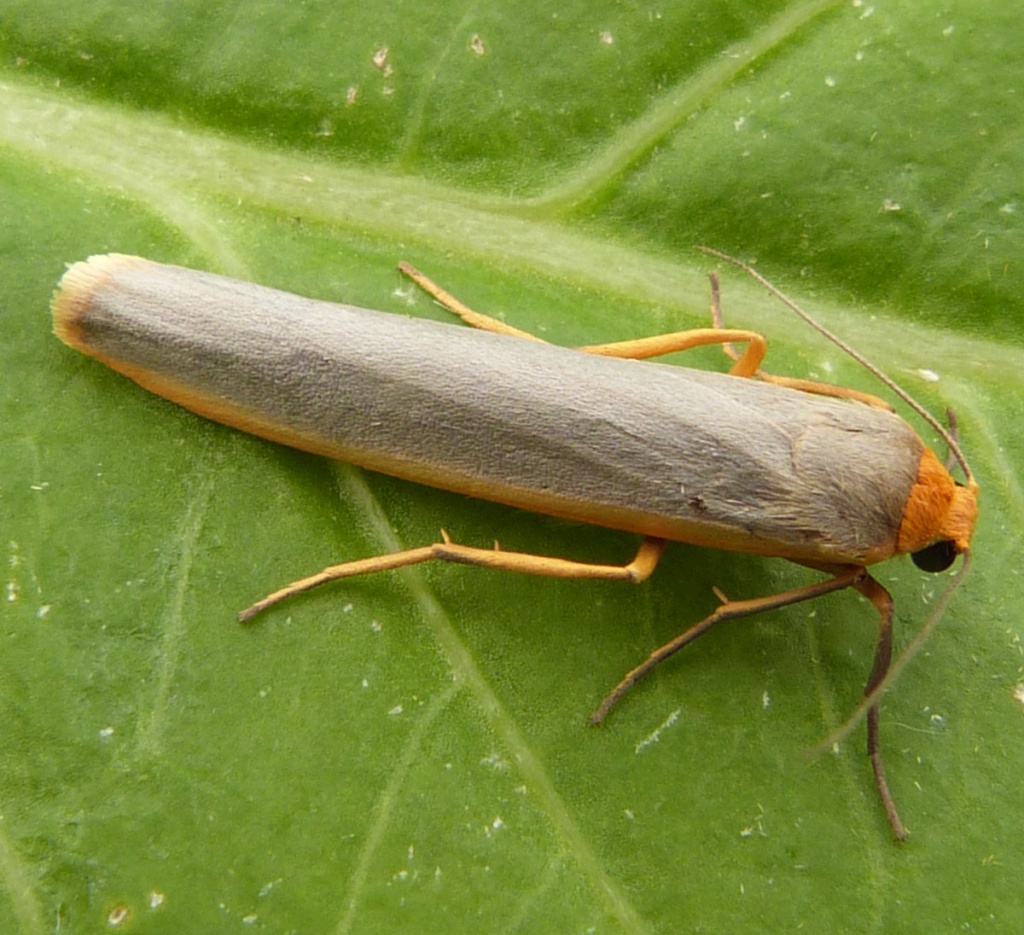
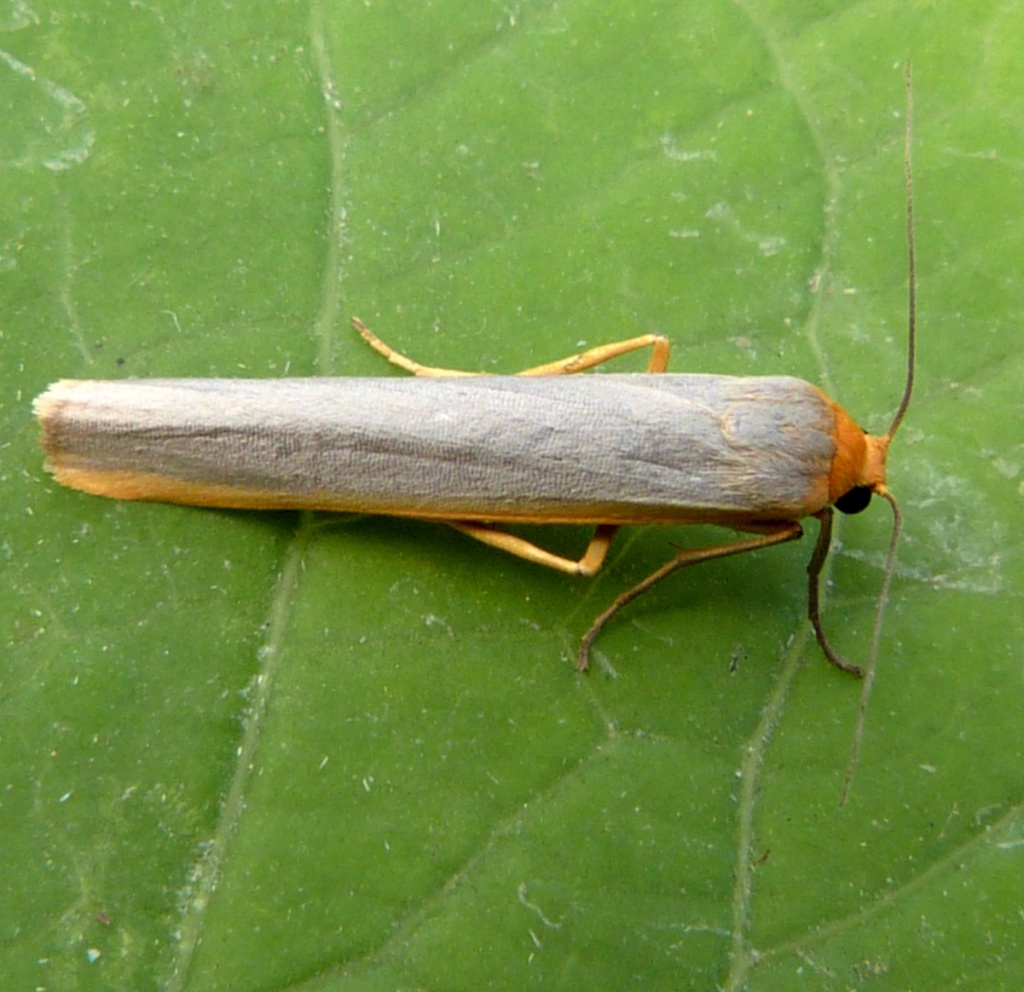
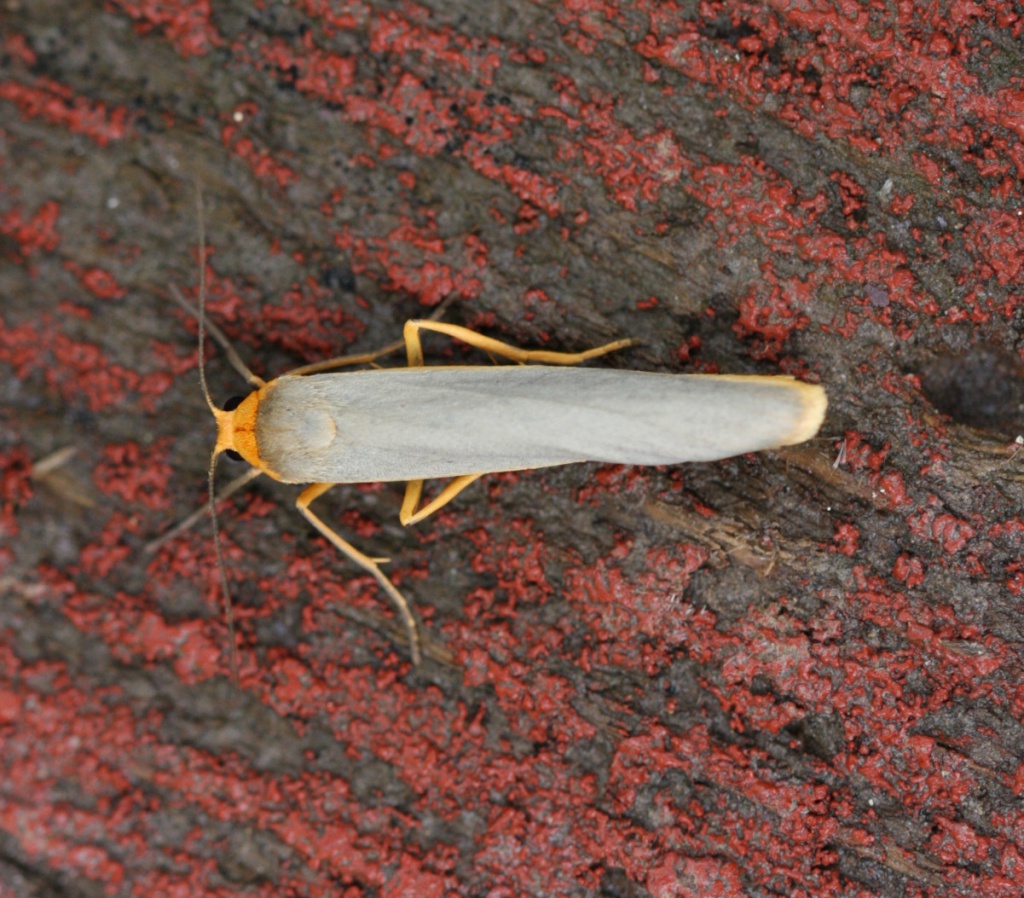
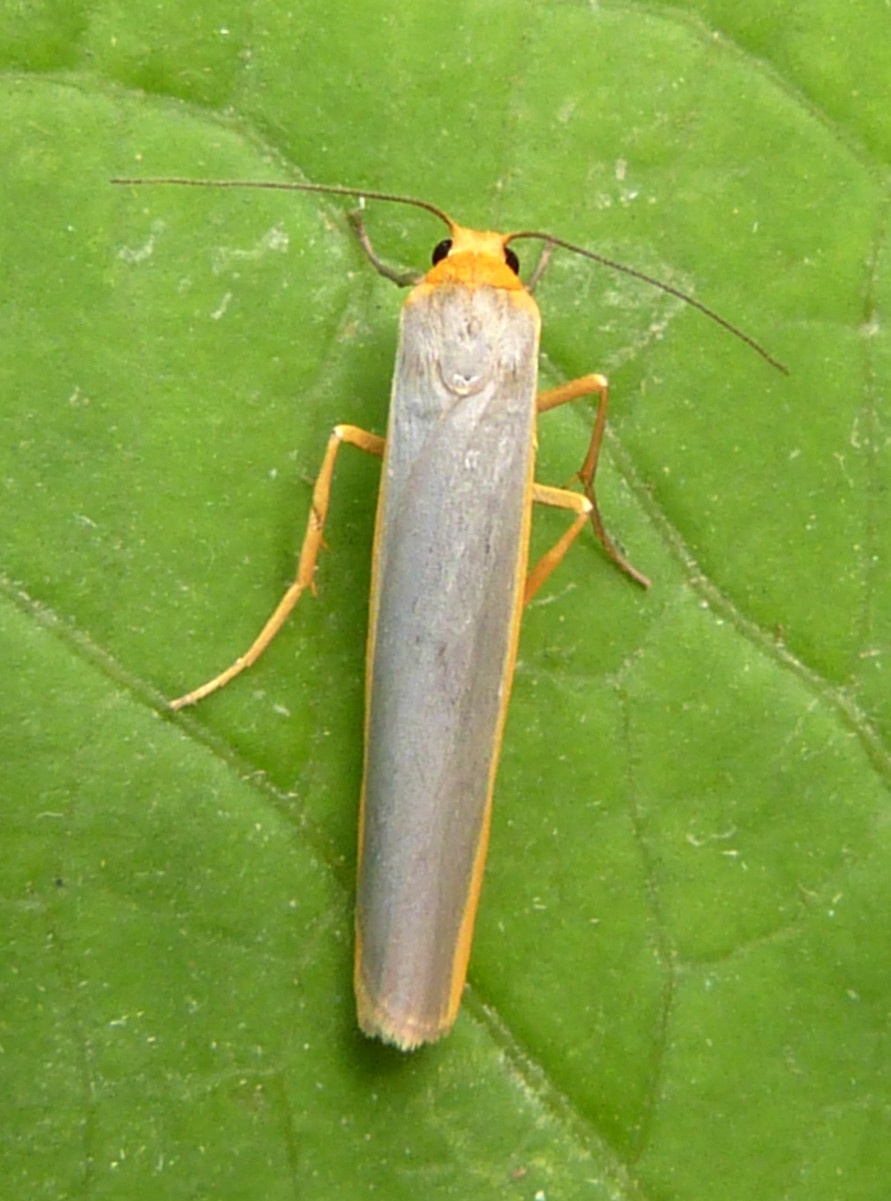
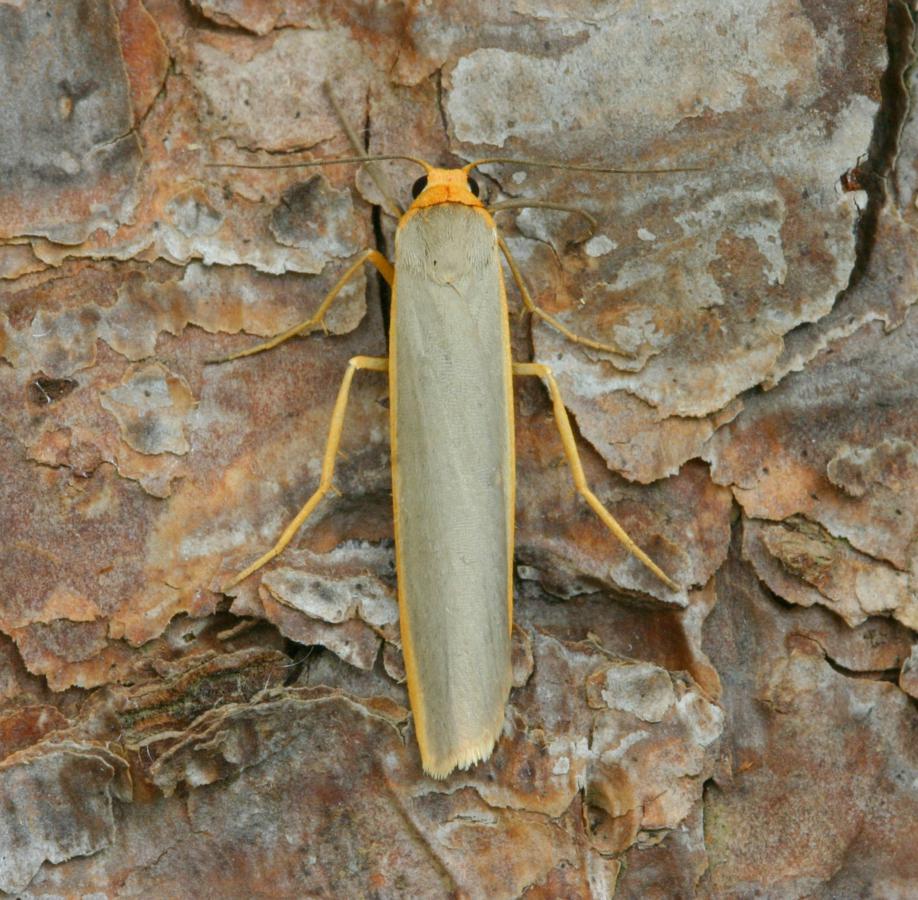
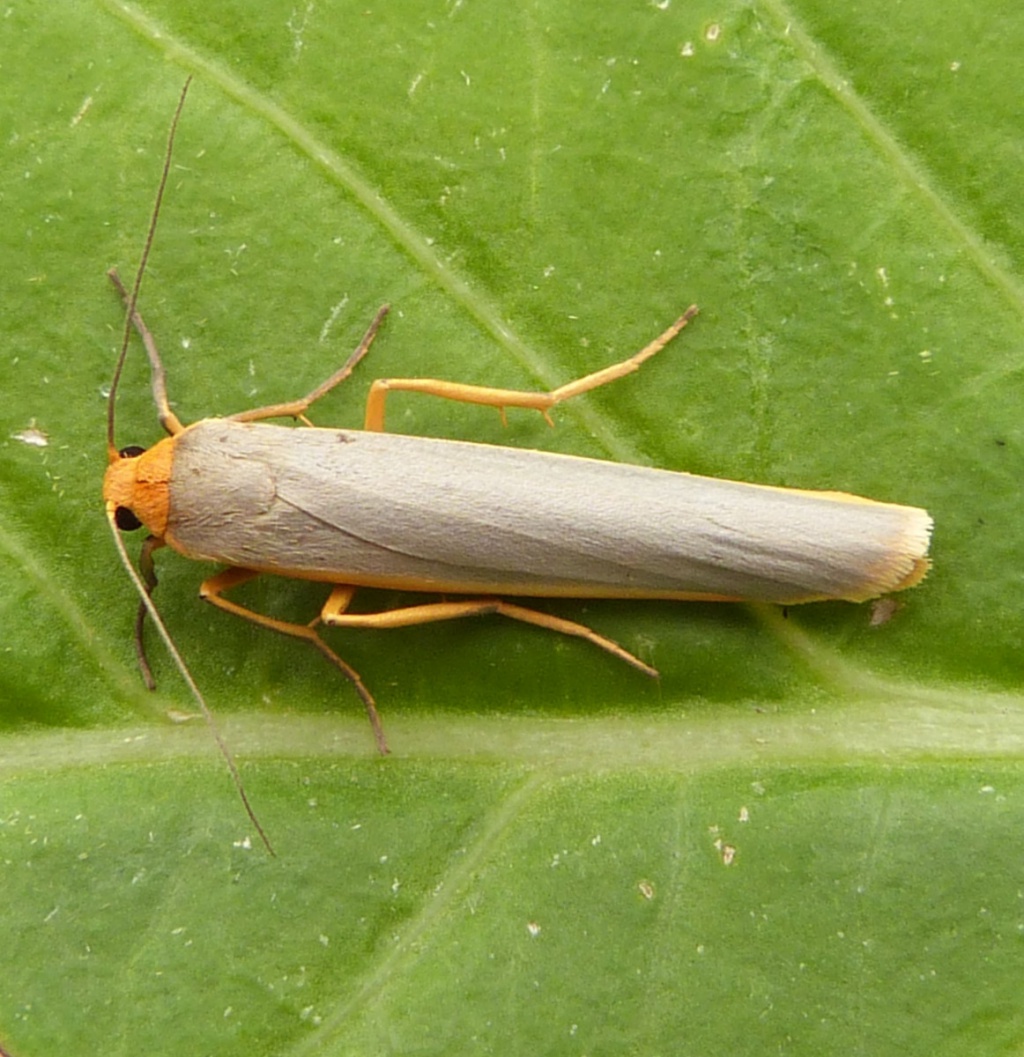
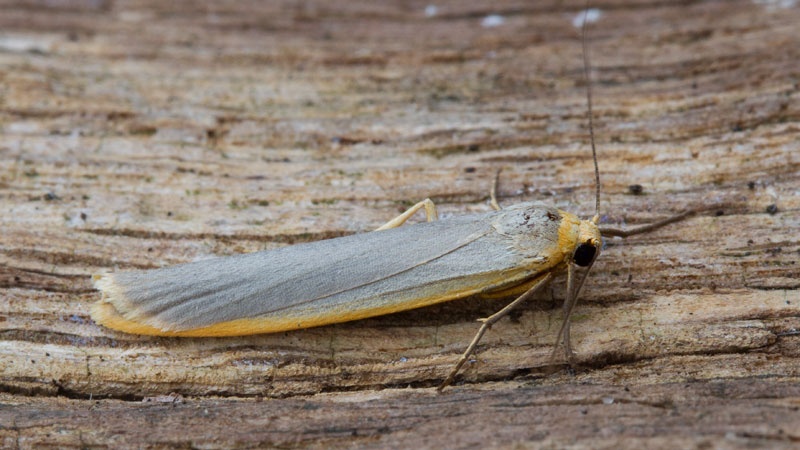
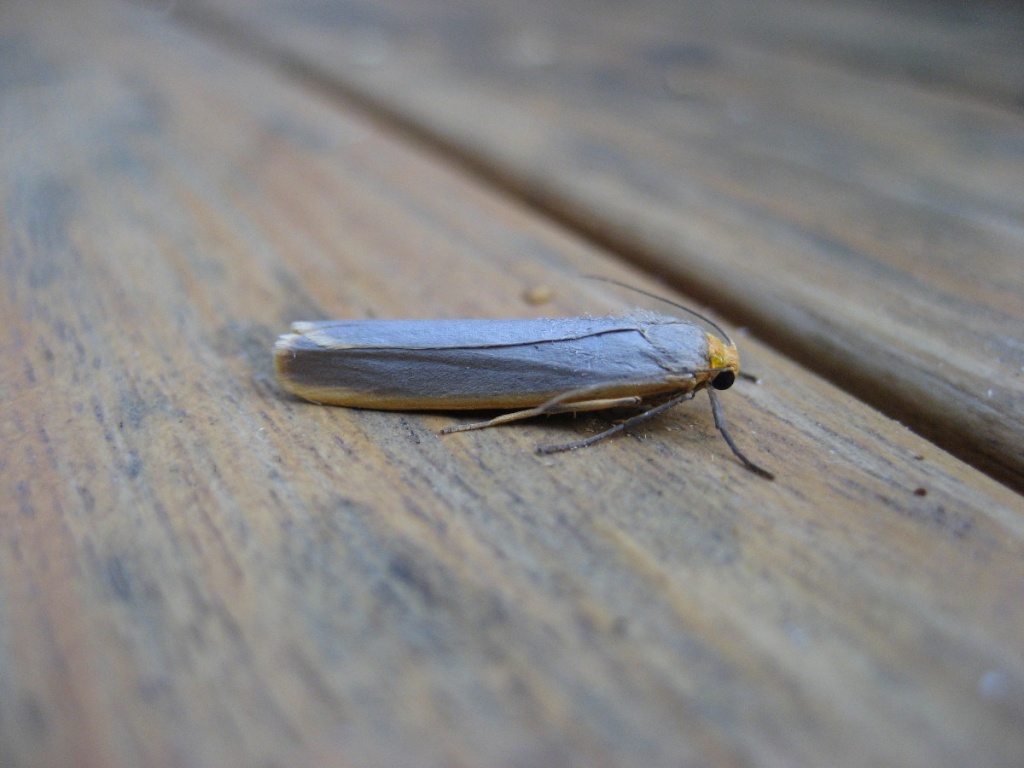
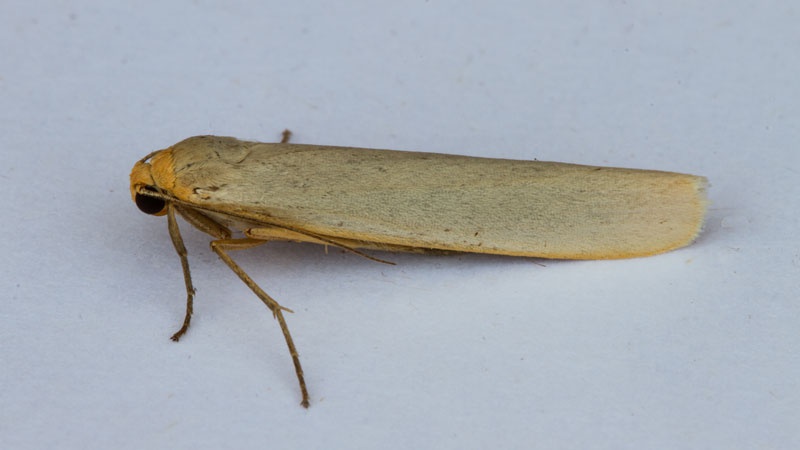
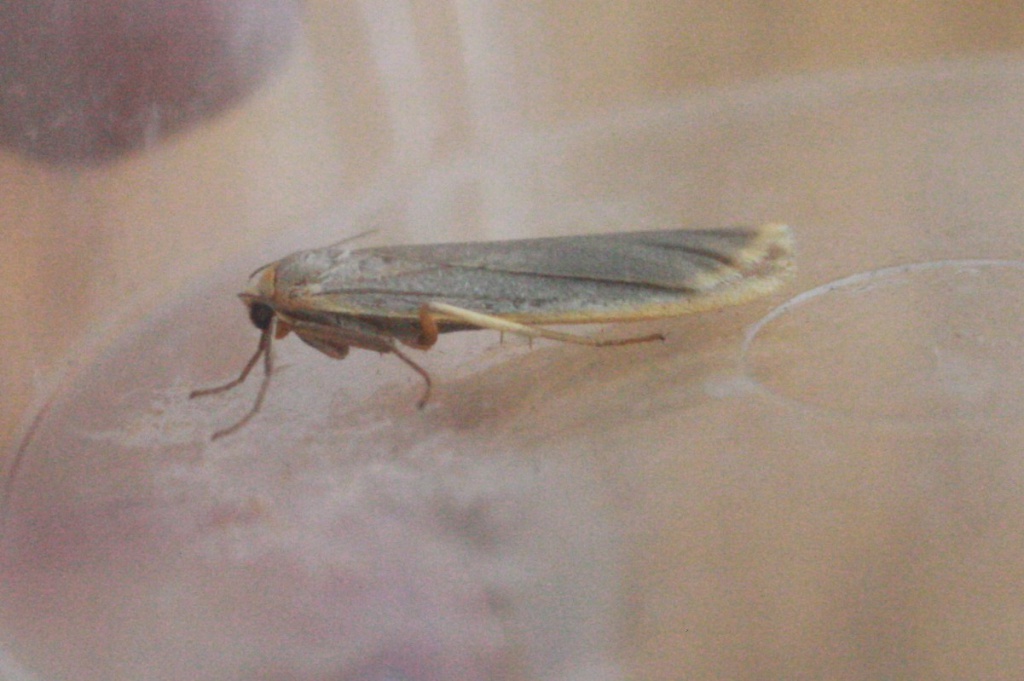
Wingspan 28-35 mm. Similar to the Common Footman (E. Lurideola) in appearance but holds its wings furled tightly around the body and presents a much slimmer outline than the flatter appearance of E. lurideola.
Common Footman, Dingy Footman, Scarce Footman and Buff Footman are all similar but can be distinguished by shape and colour - see Identification Aids below; c.f. Hoary Footman - Eilema caniola.

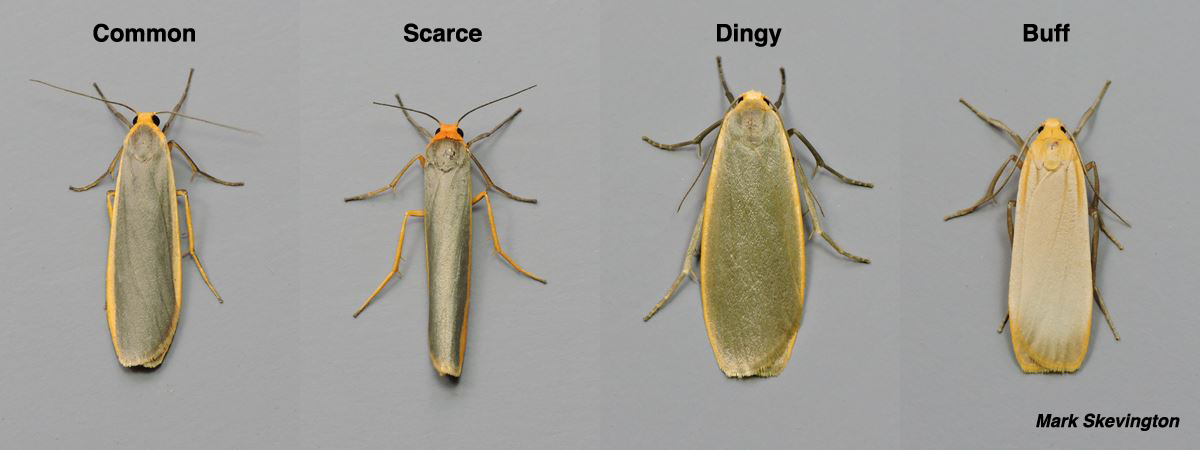
From left to right: Common Footman, Scarce Footman, Dingy Footman, Buff Footman.
Of these Common Footman is by far the commonest, and the Buff Footman probably the most scarce. The Dingy Footman shows a wide 'melonseed' shape, so stands out versus Common Footman. Even for a Dingy Footman in the yellower colour form, the shape should help separate from Buff Footman. On the Buff Footman, there is a distinct 'crease' coming from the thorax down the center of the basal part of the forewing, and in the resting posture the back end always looks 'squarer' than on the Common Footman. The Scarce Footman pretty much speaks for itself with its tightly wrapped resting posture.
Credit: Mark Skevington
Tends to inhabit more heathy and moorland habitats.
It flies in July and August.
The larvae feed on lichens mostly but also will eat moss and the leaves of some low plants.
It is distributed in England, mainly in the south and east, and in Wales and Ireland where it is more coastal. In a recent survey to determine the status of all macro moths in Britain this species was classified as local.
Fairly frequent but not common in Leicestershire and Rutland. L&R Moth Group status = B (scarce resident or restricted distribution or regular migrant)
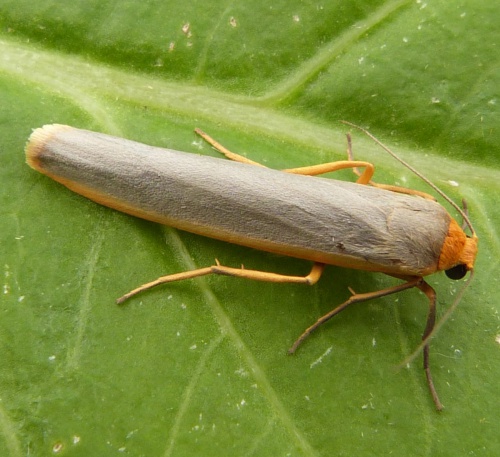 Graham Calow
Sapcote garden1
13 July 2013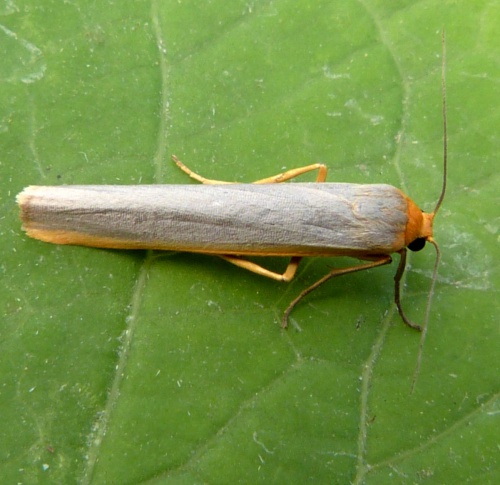 Graham Calow
Sapcote garden1
20 July 2014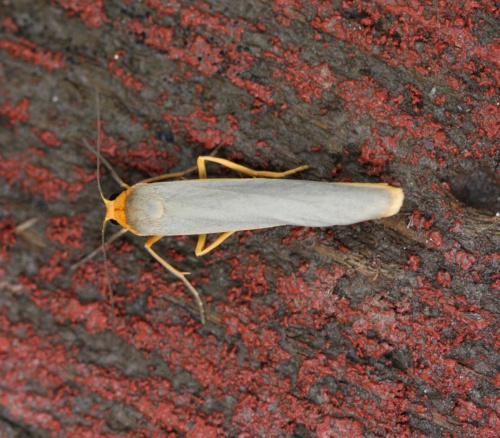 David Nicholls
Ratby garden
09 July 2016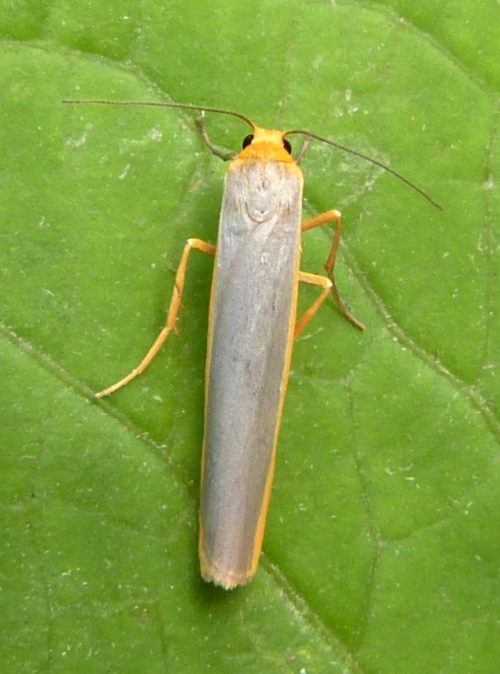 Graham Calow
Sapcote garden1
20 July 2014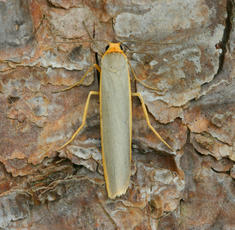 David Nicholls
Ratby garden1
03 September 2007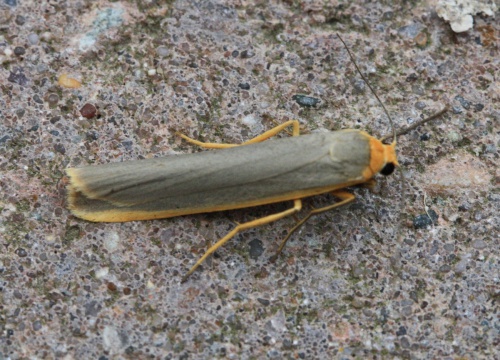 Craig Mabbett
Broughton Astley Garden
31 July 2016 M69 Island Sapcote SP 4635 9382 (taken 9.4.2010).JPG) Graham Calow
Graham Calow
M69 Island, Sapcote
09 April 2010
larva
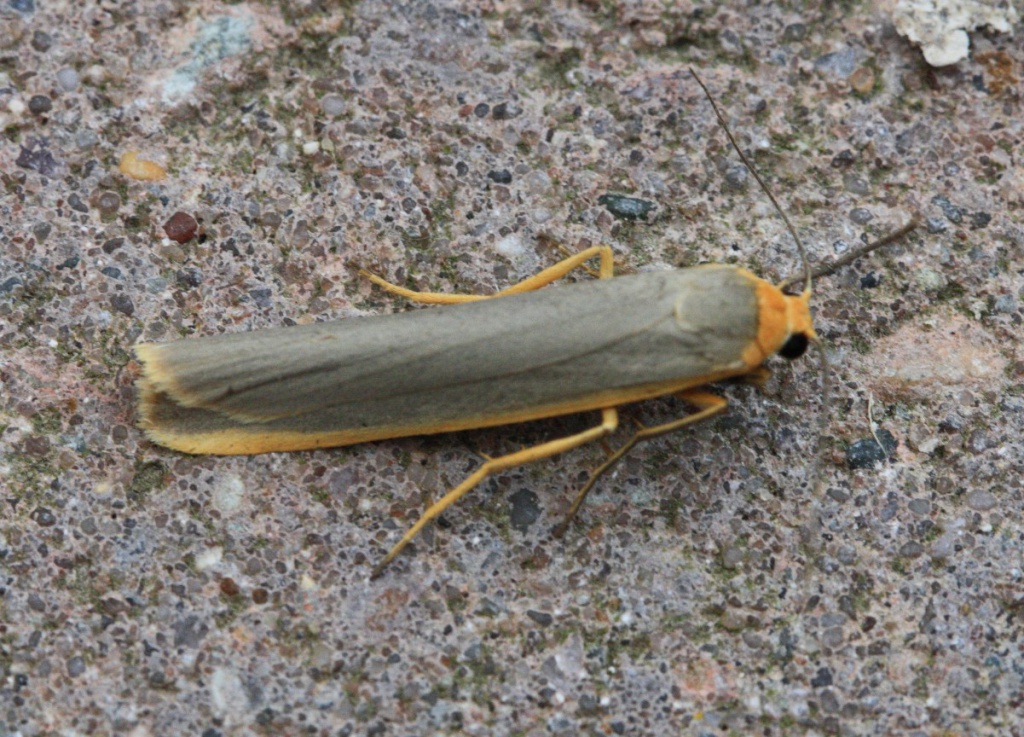
 M69 Island Sapcote SP 4635 9382 (taken 9.4.2010).JPG)
Leicestershire & Rutland Map
Enter a town or village to see local records
MAP KEY:
Yellow squares = NBN records (all known data)
Coloured circles = NatureSpot records: 2025+ | 2020-2024 | pre-2020
UK Map
Species profile
- Common names
- Scarce Footman
- Species group:
- insect - moth
- Kingdom:
- Animalia
- Order:
- Lepidoptera
- Family:
- Erebidae
- Records on NatureSpot:
- 374
- First record:
- 05/07/2003 (Skevington, Mark)
- Last record:
- 28/07/2025 (Hagley, Neil)
Total records by month
% of records within its species group
10km squares with records
The latest images and records displayed below include those awaiting verification checks so we cannot guarantee that every identification is correct. Once accepted, the record displays a green tick.
In the Latest Records section, click on the header to sort A-Z, and again to sort Z-A. Use the header boxes to filter the list.
Latest images
Latest records
 Harecroft Crescent, Sapcote SP49019371 (taken 2.7.2010),.JPG) Graham Calow
Graham Calow
Sapcote garden1
02 July 2010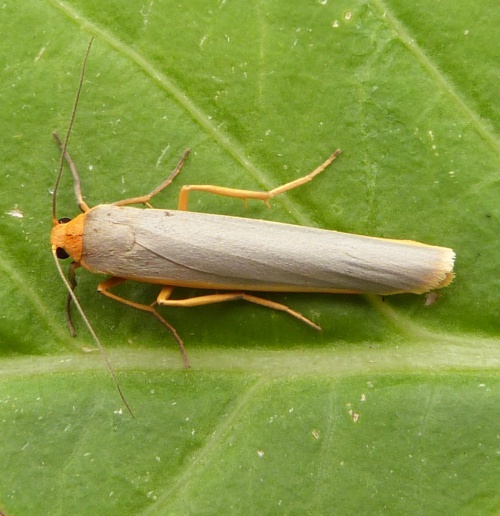 Graham Calow
Sapcote garden1
13 July 2013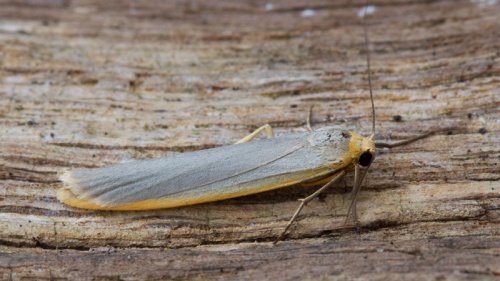 Rod Baker
Newton Harcourt
19 July 2012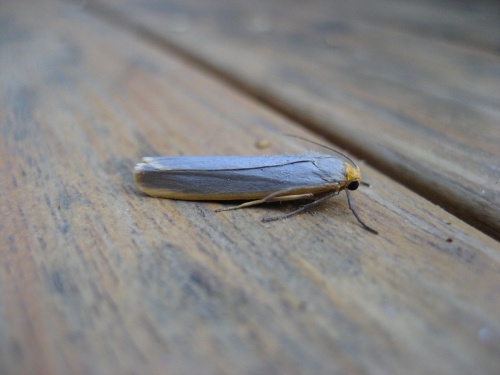 Pete Leonard
Harby
27 July 2012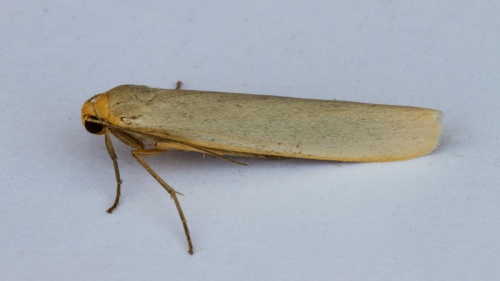 Rod Baker
Wigston Magna
08 June 2014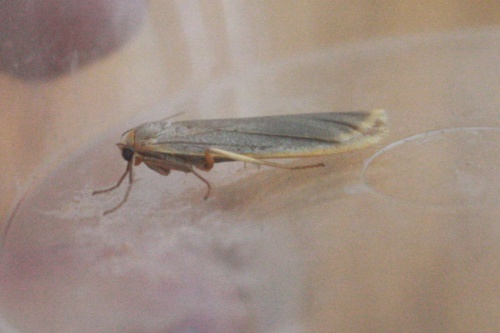 Craig Mabbett
broughton astley garden
09 August 2015 Harecroft Crescent, Sapcote SP49019371 (taken 2.7.2010).JPG) Graham Calow
Graham Calow
Sapcote garden1
02 July 2010
 Harecroft Crescent, Sapcote SP49019371 (taken 2.7.2010),.JPG)
 Harecroft Crescent, Sapcote SP49019371 (taken 2.7.2010).JPG)