

Dichrorampha sedatana
Dingy Drill
Wingspan around 14 mm. This species requires identification by genitalia dissection – it resembles Dichrorampha plumbana but is generally slightly larger, and has a yellowish suffusion around the base of the forewing not present in that species.

It inhabits rough ground, verges and embankments etc. where Tansy, the larval foodplant grows.
Adults fly in April and May. The male flies actively during hot sunny weather but the female usually remains at rest on the Tansy plants; both sexes fly at dusk.
The larvae feed in the roots of Tansy (Tanacetum vulgare).
In the Butterfly Conservation's Microlepidoptera Report 2011 this species was classified as Nationally Scarce B.
It appears to be uncommon in Leicestershire and Rutland, where there are few records. L&R Moth Group status = D (rare or rarely recorded).
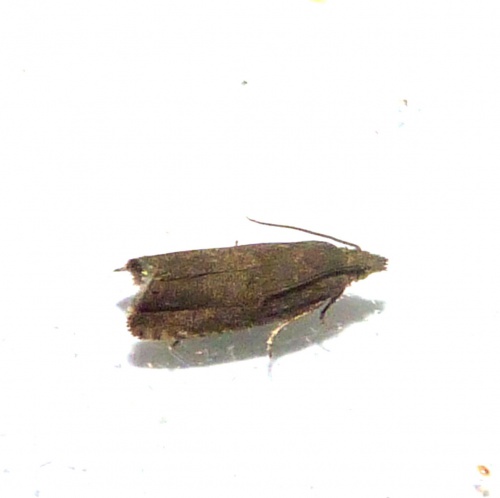 Graham Calow
Stoney Stanton, Footpath to Stoney Woods
07 May 2020
Confirmed by gen det
Leicestershire & Rutland Map
Enter a town or village to see local records
MAP KEY:
Yellow squares = NBN records (all known data)
Coloured circles = NatureSpot records: 2025+ | 2020-2024 | pre-2020
UK Map
Species profile
- Common names
- Dingy Drill, Tansy Moth
- Species group:
- insect - moth
- Kingdom:
- Animalia
- Order:
- Lepidoptera
- Family:
- Tortricidae
- Records on NatureSpot:
- 2
- First record:
- 25/05/2004 (Skevington, Mark)
- Last record:
- 07/05/2020 (Calow, Graham)
Total records by month
% of records within its species group
10km squares with records
The latest images and records displayed below include those awaiting verification checks so we cannot guarantee that every identification is correct. Once accepted, the record displays a green tick.
In the Latest Records section, click on the header to sort A-Z, and again to sort Z-A. Use the header boxes to filter the list.